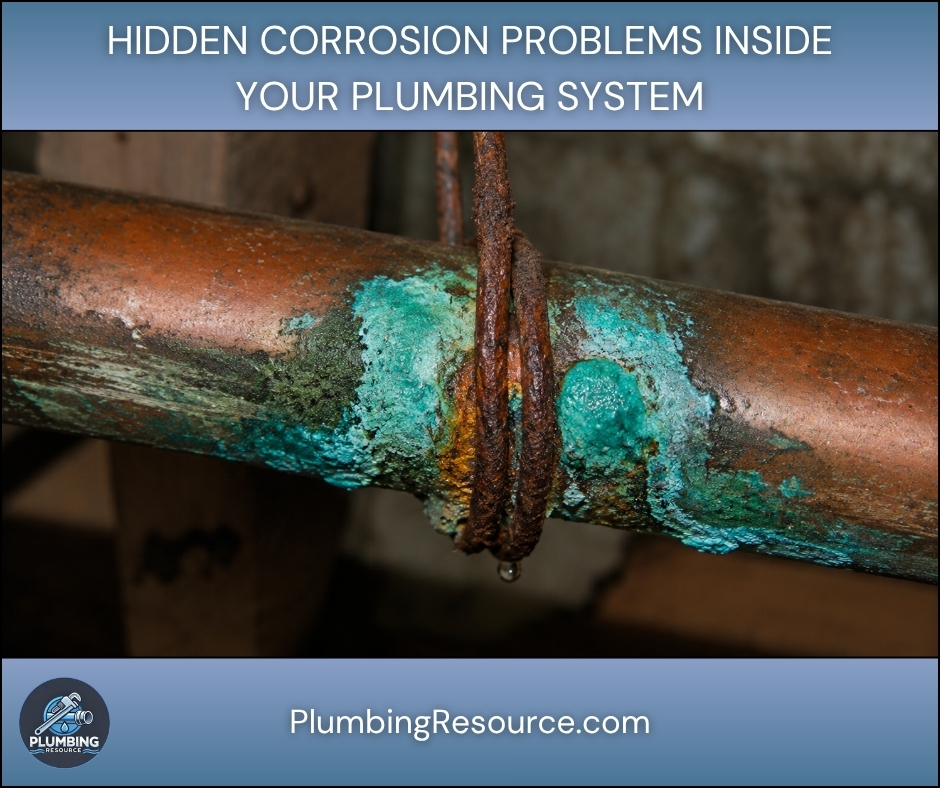
You open the cabinet under your kitchen sink and notice a faint green stain near a copper fitting. However, the pipes still work normally, so it does not seem urgent.
Weeks later, you notice a musty smell near the bathroom wall. Unfortunately, hidden corrosion problems inside your plumbing system often develop slowly and silently before major leaks appear.
Many homeowners overlook early signs because the plumbing system still functions. Meanwhile, corrosion may already be weakening pipe walls, fittings, and water supply lines behind the scenes.
❌ Why Homeowners Make This Mistake
Most corrosion problems begin gradually. Therefore, many homeowners assume discoloration or buildup is harmless.
Small stains around fixtures or exposed pipes often seem cosmetic. Because no major leak exists yet, the issue gets ignored.
Some homeowners also believe only older plumbing systems experience corrosion. However, water chemistry, high pressure, moisture, and poor installation practices can affect newer homes as well.
In addition, corrosion frequently develops inside walls, under flooring, and inside cabinets where homeowners rarely inspect.
🔍 What Happens Inside the Plumbing System
Hidden corrosion problems inside your plumbing system slowly weaken metal pipes and fittings. Over time, moisture and chemical reactions begin breaking down pipe walls from the inside out.
Copper pipes may develop pinhole leaks. Meanwhile, galvanized steel pipes often collect rust and mineral buildup internally.
As corrosion spreads, water flow through the plumbing system becomes restricted. Consequently, fixtures may experience low pressure or inconsistent water delivery.
Corrosion can also affect:
- Shut-off valves
- Water heater fittings
- Supply lines
- Drain line connections
- Pipe joints
- Venting components
Eventually, weakened plumbing materials may crack or burst unexpectedly.
⚠️ Early Warning Signs Most People Miss
Many homeowners fail to recognize the early symptoms of plumbing corrosion.
Hidden Corrosion Problems Inside Your Plumbing System Often Start Small
Watch for these warning signs:
- Green or blue stains on copper pipes
- Rust-colored water
- White mineral deposits around fittings
- Damp cabinet floors
- Water spots near walls or ceilings
- Metallic-smelling water
- Low water pressure
- Dripping valves or fittings
Even small signs may indicate serious pipe deterioration inside the plumbing system.
Hidden Pipe Corrosion Damage Behind Walls
Corrosion hidden inside walls often creates indirect symptoms first.
For example, homeowners may notice:
- Bubbling paint
- Warped drywall
- Mold odors
- Soft flooring
- Increased water bills
These problems often develop long before a visible plumbing leak appears.
🛠️ Short-Term Plumbing Problems
Hidden corrosion problems inside your plumbing system can quickly create smaller plumbing issues throughout the home.
First, weakened fittings may begin leaking slowly under sinks or near fixtures. Although the leak appears minor, moisture damage can spread rapidly.
Next, corrosion buildup inside pipes can reduce water flow. Therefore, showers and faucets may lose pressure over time.
Corrosion may also damage shut-off valves and supply connections. As a result, emergency plumbing situations become harder to control.
In some cases, sediment from corroded pipe walls can travel through the plumbing system and clog aerators or fixture cartridges.
💸 Long-Term Damage This Can Cause
Long-term corrosion damage can become extremely expensive if left untreated.
Hidden Corrosion Problems Inside Your Plumbing System Can Lead to Major Repairs
Small leaks behind walls may eventually rot framing, damage insulation, and destroy drywall. In addition, long-term moisture exposure encourages mold growth.
Older galvanized piping systems are especially vulnerable. As corrosion narrows the inside diameter of the pipe, water pressure decreases significantly.
Eventually, homeowners may require complete repiping of the plumbing system.
Corrosion near water heaters also creates serious risks. Damaged fittings and weakened supply lines may fail suddenly under pressure.
In severe cases, hidden leaks can affect flooring, cabinetry, and even structural components of the home.
🚫 Common Myths and Bad Advice
Many homeowners receive inaccurate advice about plumbing corrosion.
Myth: Corrosion Is Only Surface Deep
Visible stains often indicate deeper internal pipe damage. Therefore, ignoring corrosion allows hidden problems to worsen.
Myth: A Small Leak Is Not Serious
Even slow leaks can create major water damage over time. In addition, constant moisture can weaken surrounding building materials.
Myth: Pipe Tape Fixes Corrosion
Pipe tape may temporarily slow dripping. However, it does not repair weakened pipe walls or corroded fittings.
Myth: Only Old Homes Have Corroded Pipes
Newer plumbing systems can corrode due to water conditions, poor installation, or improper pipe material combinations.
✅ The Correct Way to Handle the Situation
The best solution is early inspection and preventative maintenance.
Homeowners should regularly inspect exposed plumbing lines near fixtures, water heaters, and shut-off valves. In addition, any visible corrosion should receive prompt attention.
Licensed plumbers may recommend:
- Replacing corroded fittings
- Repairing damaged supply lines
- Testing water pressure
- Evaluating water quality
- Replacing aging galvanized piping
- Installing dielectric unions where needed
Proper Solutions for Hidden Corrosion Problems Inside Your Plumbing System
Addressing corrosion early prevents larger plumbing system failures later.
For example, replacing a damaged fitting is far less expensive than repairing major water damage from a burst pipe.
Routine plumbing inspections also help identify hidden corrosion before serious leaks develop.
👨🏻🔧 DIY vs When to Call a Licensed Plumber
Homeowners can safely monitor visible pipes and fittings for signs of corrosion or moisture.
Basic homeowner maintenance may include:
- Checking under sinks regularly
- Monitoring water pressure
- Watching for stains or buildup
- Keeping plumbing areas dry
However, professional plumbing help becomes necessary when:
- Pipe walls appear heavily corroded
- Leaks develop behind walls
- Water pressure drops significantly
- Pipes require replacement
- Water discoloration continues
- Sewer line corrosion is suspected
Licensed plumbers use specialized equipment to inspect hidden plumbing system damage safely and accurately.
🧰 Prevention Tips That Actually Work
Preventing corrosion requires consistent plumbing maintenance habits.
Prevention Tips for Hidden Pipe Corrosion Damage
Follow these practical recommendations:
- Inspect exposed pipes every few months
- Repair leaks immediately
- Flush water heaters annually
- Monitor household water pressure
- Replace aging supply lines
- Avoid mixing incompatible pipe materials
- Keep cabinets dry and ventilated
- Address condensation quickly
- Schedule periodic plumbing inspections
In addition, homeowners should never ignore discoloration or buildup around plumbing fittings and fixtures.
❓ FAQ
What causes hidden corrosion problems inside your plumbing system?
Moisture, water chemistry, oxygen exposure, age, and high water pressure commonly contribute to plumbing corrosion.
Can hidden pipe corrosion cause water damage?
Yes. Small leaks behind walls or under floors can create serious structural damage over time.
How do I know if my plumbing pipes are corroded?
Warning signs include discolored water, low pressure, visible buildup, stains, moisture, and recurring leaks.
Are corroded plumbing pipes dangerous?
Corroded pipes can eventually burst, leak, or contaminate water supplies with rust and sediment.
Can a plumber detect hidden corrosion problems inside your plumbing system?
Yes. Licensed plumbers use specialized inspection tools to identify hidden plumbing deterioration and leaks.
✅ Conclusion
Hidden corrosion problems inside your plumbing system often begin with subtle warning signs that homeowners overlook. However, small stains, moisture spots, and buildup can eventually lead to serious plumbing failures and expensive repairs.
Regular inspections and early maintenance help protect your home from hidden leaks and long-term water damage.
By addressing corrosion problems early, homeowners can extend the life of their plumbing system and avoid costly structural repairs later.
👋🏼 Before You Go…
If this guide helped you recognize hidden plumbing corrosion warning signs, save this page for future reference. Also, consider sharing it with someone who may not realize how quickly corrosion can damage a plumbing system behind the scenes.