A homeowner notices their kitchen sink draining slower every month. At first, the issue seems harmless. However, the drain eventually begins gurgling after every use.
Soon afterward, sewer odors appear near the cabinets. Eventually, a plumber discovers that sagging horizontal pipes quietly damaged the plumbing system behind the walls for years.
Unfortunately, this hidden plumbing problem is more common than most homeowners realize.
❌ Why Homeowners Make This Mistake
Many homeowners assume horizontal pipes can support themselves. Because the plumbing system initially works, the installation may appear completely normal.
However, horizontal drain lines constantly carry wastewater, debris, and weight. Over time, unsupported sections begin sagging under pressure.
In addition, many DIY plumbing projects skip proper pipe hangers or support brackets. Some homeowners also believe lightweight PVC pipe does not require frequent support.
Unfortunately, that misunderstanding often leads to serious plumbing system damage later.
Internet advice can also create confusion. For example, quick DIY videos may ignore proper drain slope and plumbing code requirements.
🔍 What Happens Inside the Plumbing System
Sagging Horizontal Pipes Quietly Damage Drainage Flow
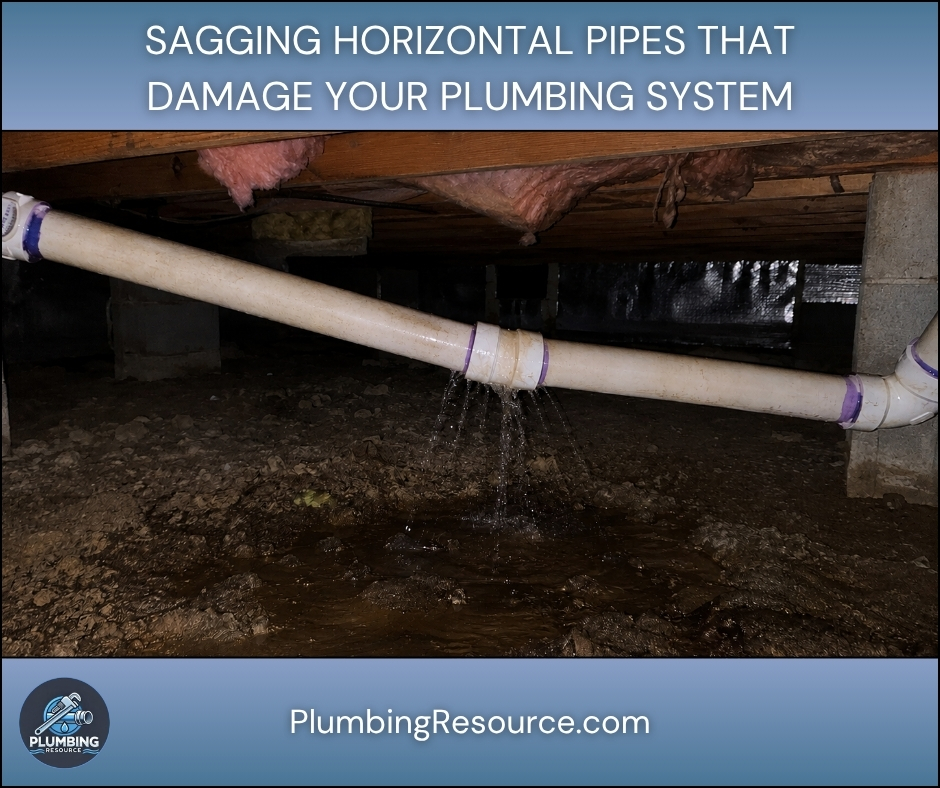
When horizontal pipes begin sagging, wastewater no longer flows correctly through the drain line. Instead, low spots develop inside the piping system.
Consequently, debris starts collecting in those sagging sections.
Grease, soap residue, food particles, sludge, and hair slowly accumulate inside the pipe. Eventually, the buildup restricts drainage flow and creates recurring blockages.
As the sag worsens, standing wastewater may remain trapped inside the line for extended periods.
Pipe Movement Creates Hidden Stress
Sagging horizontal pipes also create constant stress on fittings and joints. Because the pipes flex during use, connections weaken over time.
Eventually, glue joints, couplings, threaded fittings, or pipe walls may begin leaking.
In addition, repeated movement can damage surrounding framing materials and nearby fixtures.
⚠️ Early Warning Signs Most People Miss
Sagging Horizontal Pipes Often Start With Small Symptoms
Most homeowners miss the early warning signs because the plumbing system still partially functions.
However, these symptoms often appear first:
- Slow-draining sinks
- Gurgling drains
- Sewer odors
- Recurring clogs
- Standing wastewater
- Dripping sounds behind walls
- Water stains on ceilings
- Mold or mildew smells
- Pipe movement noises
Because the damage develops slowly, many people ignore these warning signs until major repairs become necessary.
Drainage Problems Usually Get Worse Over Time
Sagging horizontal pipes rarely improve on their own. Instead, the buildup inside the pipe continues increasing.
As a result, backups and blockages become more frequent.
🛠️ Short-Term Plumbing Problems
Sagging Horizontal Pipes Can Restrict Wastewater Flow
One of the earliest plumbing problems involves poor drainage performance. Because wastewater collects inside low spots, debris builds up much faster.
Consequently, homeowners may experience:
- Slow bathtub drainage
- Kitchen sink backups
- Toilet clogs
- Washing machine drain overflows
- Frequent drain cleaning issues
In addition, standing wastewater increases bacteria growth inside the plumbing system.
Pipe Supports May Begin Failing
As sagging worsens, pipe hangers and supports may loosen further. Therefore, the plumbing system experiences even greater movement and stress.
This movement often accelerates fitting damage and pipe wear.
💸 Long-Term Damage This Can Cause
Hidden Water Damage Can Become Expensive
Sagging horizontal pipes quietly damage walls, ceilings, flooring, and framing materials when leaks develop.
Because these leaks often remain hidden, structural damage may continue for months or years before discovery.
Long-term damage may include:
- Mold growth
- Rotting wood
- Damaged insulation
- Ceiling stains
- Flooring deterioration
- Cabinet damage
- Foundation moisture problems
Additionally, wastewater leaks can create unhealthy living conditions inside the home.
Severe Drain Line Sagging Can Require Major Repairs
If the drain line develops a severe belly or low spot, wastewater may stop flowing entirely.
Eventually, homeowners may need:
- Pipe replacement
- Wall demolition
- Crawlspace excavation
- Sewer line rerouting
- Slab tunneling
- Extensive leak repairs
These plumbing repairs can become extremely costly.
🚫 Common Myths and Bad Advice
“PVC Pipe Supports Itself”
This is one of the most common plumbing myths online. Although PVC pipe is lightweight, horizontal piping still requires proper support spacing.
Wastewater adds significant weight during normal plumbing use.
“The Pipe Still Drains Fine”
A drain line may continue functioning while hidden damage worsens internally.
Unfortunately, many homeowners wait until severe backups develop.
“Foam Insulation Holds Pipes Securely”
Spray foam should never replace approved pipe supports. While foam may reduce movement slightly, it does not provide proper structural support.
“One Pipe Strap Is Enough”
Pipe supports must be installed at proper intervals. Otherwise, unsupported sections may still sag between support points.
✅ The Correct Way to Handle the Situation
Proper Pipe Support Prevents Plumbing Damage
The best solution involves installing approved supports throughout the plumbing system.
Different pipe materials require different support methods. For example:
- PVC drain lines require frequent support to maintain proper slope
- Copper pipes require secure strapping
- PEX tubing requires support that prevents sagging
- Cast iron piping requires heavy-duty supports
In addition, horizontal drain lines must maintain proper pitch for wastewater drainage.
Support Pipes Near Fittings and Turns
Pipe movement often increases near elbows, tees, and connection points. Therefore, additional support near fittings helps reduce stress and movement.
This improves long-term plumbing reliability.
👨🏻🔧 DIY vs When to Call a Licensed Plumber
What Homeowners Can Safely Inspect
Homeowners can usually:
- Check exposed piping
- Look for visible sagging
- Tighten loose pipe supports
- Monitor for leaks
- Watch for sewer odors
However, proper plumbing repairs still require caution.
When Professional Plumbing Help Is Necessary
Call a licensed plumber if you notice:
- Severe pipe sagging
- Sewer odors
- Hidden leaks
- Wastewater backups
- Mold growth
- Broken fittings
- Structural damage
- Improper drain slope
Professional plumbers may use drain cameras, leak detection equipment, or pressure testing tools to inspect hidden plumbing problems.
Additionally, plumbing code requirements often apply to support spacing and pipe installation methods.
🧰 Prevention Tips That Actually Work
Inspect Exposed Pipes Regularly
Check basements, crawlspaces, garages, and utility rooms for unsupported pipes or visible sagging.
Early detection helps prevent larger plumbing problems later.
Install Proper Pipe Hangers
Always use approved pipe supports designed for the specific pipe material being installed.
Improper supports may damage pipe walls over time.
Avoid Heavy Drain Buildup
Grease, debris, and sludge increase stress on horizontal drain lines. Therefore, avoid dumping grease or food waste into sinks.
Address Minor Pipe Movement Early
Small pipe movement can eventually become severe sagging. Consequently, early repairs help prevent expensive damage later.
Schedule Plumbing Inspections
Professional plumbing inspections help identify hidden drainage issues before major failures occur.
❓ FAQ
Can sagging horizontal pipes cause sewer odors?
Yes. Sagging drain lines can trap standing wastewater inside low spots. Consequently, sewer odors may develop inside the home.
Are sagging drain pipes dangerous?
They can become serious over time. Severe sagging may cause leaks, backups, mold growth, and structural water damage.
How do plumbers fix sagging pipes?
Licensed plumbers may install additional supports, correct the drain slope, or replace damaged piping sections.
Can unsupported pipes cause leaks?
Yes. Unsupported pipes often flex during normal use. Eventually, fittings, joints, and pipe walls may begin leaking.
How can homeowners spot hidden pipe sagging?
Slow drains, recurring clogs, sewer odors, and unusual pipe noises often indicate hidden sagging problems.
✅ Conclusion
Sagging horizontal pipes quietly damage your plumbing system over time. Although the problem often starts slowly, the long-term consequences can become severe.
Because hidden sagging affects drainage flow, fittings, and pipe stability, homeowners may eventually face costly plumbing repairs and water damage.
Fortunately, proper pipe support, routine inspections, and early maintenance can help prevent major plumbing failures. Paying attention to small warning signs now can protect your plumbing system for years to come.
👋🏼 Before You Go…
If this article helped you understand the risks of sagging horizontal pipes, consider saving it for future reference. Also, share it with friends or family members who may be dealing with hidden plumbing problems in their home.