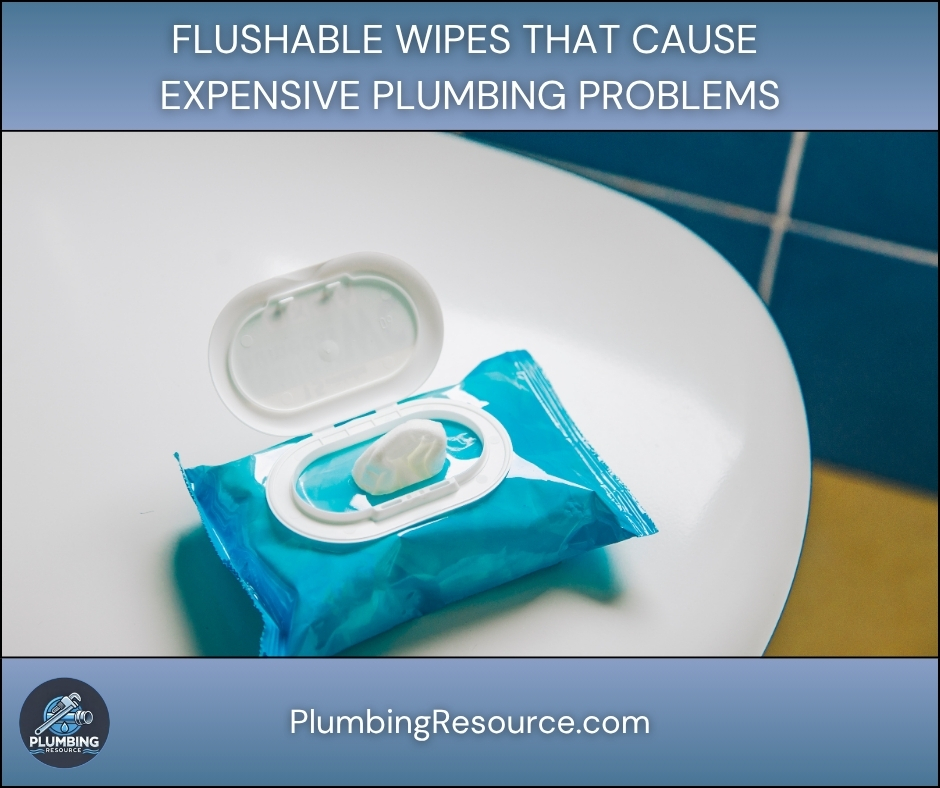
You flush a wipe because the package says “flushable.” The toilet flushes normally, so everything seems fine. However, weeks later, the bathroom sink drains slowly, the toilet gurgles, and wastewater backs up into the tub.
Many homeowners never realize that flushable wipes that cause expensive plumbing problems are often responsible for hidden sewer line blockages and recurring drain issues. Although the wipes disappear after flushing, they frequently remain inside the plumbing system much longer than expected.
As a result, homeowners often face expensive plumbing repairs without understanding what caused the problem in the first place.
❌ Why Homeowners Make This Mistake
Most people trust the word “flushable” on the packaging. In addition, wipes feel softer and thinner than paper towels, so they appear safe to flush.
Many homeowners also believe that if a toilet flushes properly, the material must break down inside the drain line. However, that assumption is inaccurate.
Unlike toilet paper, flushable wipes are designed to stay durable while wet. Therefore, they do not dissolve quickly inside wastewater systems.
Some homeowners also flush:
- Paper towels
- Cleaning wipes
- Baby wipes
- Makeup wipes
- Feminine hygiene products
Although these items seem small, they can create major plumbing issues over time.
🔍 What Happens Inside the Plumbing System
Flushable wipes that cause expensive plumbing problems often create damage slowly inside the drain and sewer system.
Toilet paper breaks apart rapidly in water. However, wipes maintain their structure while traveling through the drain line. Consequently, they can snag on rough pipe walls, grease buildup, corrosion, roots, or offset fittings.
Once a wipe catches inside the pipe, additional debris begins collecting around it. Over time, the blockage grows larger and restricts wastewater flow.
Inside older sewer lines, the situation becomes even worse because corrosion and scaling create rough surfaces that trap debris more easily.
Wipes commonly contribute to:
- Partial drain blockages
- Sewer line restrictions
- Wastewater backups
- Grease accumulation
- Increased drain pressure
- Slow fixture drainage
In severe situations, wipes can combine with grease and sludge to form dense masses that are extremely difficult to remove.
⚠️ Early Warning Signs Most People Miss
Many plumbing problems caused by wipes begin with small symptoms. However, homeowners often ignore them because the issues seem minor at first.
Common warning signs include:
- Toilets flushing slowly
- Gurgling sounds in drains
- Water backing up into tubs
- Frequent plunging
- Slow shower drainage
- Sewer odors near fixtures
- Changing toilet bowl water levels
- Intermittent drain clogs
Sometimes the symptoms temporarily improve. However, that does not mean the blockage disappeared. Instead, wastewater may still be moving through a partially restricted drain line.
Therefore, recurring slow drains often indicate a developing sewer problem.
🛠️ Short-Term Plumbing Problems
Flushable wipes that cause expensive plumbing problems can quickly disrupt normal plumbing performance throughout the home.
At first, the issue may involve a single toilet clog. However, larger sewer restrictions often affect multiple fixtures over time.
Short-term plumbing problems may include:
- Overflowing toilets
- Repeated drain stoppages
- Slow bathroom fixtures
- Wastewater backups
- Increased plumbing service calls
- Laundry drain overflows
In addition, homeowners sometimes attempt to fix the problem with chemical drain cleaners. Unfortunately, those products rarely remove wipe blockages effectively.
Consequently, the blockage usually continues growing inside the sewer line.
💸 Long-Term Damage This Can Cause
Long-term wipe buildup can lead to severe plumbing and property damage.
As the blockage worsens, wastewater may repeatedly back up into the home. Therefore, flooring, drywall, cabinets, and surrounding materials can become contaminated.
Serious long-term consequences include:
- Sewer line excavation
- Hydro jetting expenses
- Drain line replacement
- Water damage restoration
- Mold growth
- Pipe deterioration
- Foundation moisture problems
- Septic system stress
Older cast iron drain systems are especially vulnerable because wipes frequently catch on corroded pipe walls.
In severe cases, sewer backups can create major sanitation concerns inside the home.
🚫 Common Myths and Bad Advice
“The package says flushable, so it must be safe.”
A product being able to pass through a toilet does not mean it safely dissolves inside the plumbing system.
“Hot water breaks wipes down.”
Unlike toilet paper, wipes remain durable in water. Therefore, hot water usually does not dissolve them effectively.
“Chemical drain cleaners will fix the problem.”
Chemical cleaners often flow around wipe blockages instead of removing them. In addition, repeated chemical exposure may damage older pipes.
“One wipe occasionally will not hurt.”
Even small amounts contribute to buildup over time. Consequently, occasional flushing habits can eventually create major sewer restrictions.
“Only older homes have wipe problems.”
Although older plumbing systems are more vulnerable, wipes can clog newer drain lines as well.
✅ The Correct Way to Handle the Situation
The safest approach is simple: only flush toilet paper and human waste.
All wipes should go into the trash instead of the toilet, even when labeled flushable.
Homeowners should also avoid flushing:
- Paper towels
- Cleaning cloths
- Cotton pads
- Hygiene products
- Facial tissues
If symptoms already exist, early action is important. Therefore, professional sewer inspections can help identify problems before major backups occur.
A licensed plumber may recommend:
- Drain camera inspections
- Mechanical drain cleaning
- Hydro jetting
- Sewer line evaluations
- Preventive maintenance
Professional inspections can also identify hidden sewer line damage, root intrusion, or pipe deterioration contributing to recurring clogs.
👨🏻🔧 DIY vs When to Call a Licensed Plumber
Minor toilet clogs can sometimes be handled with a plunger. However, repeated drainage issues usually indicate a larger sewer line problem.
DIY Situations
Homeowners can safely:
- Stop flushing wipes immediately
- Use a plunger on isolated clogs
- Monitor fixture drainage
- Watch for recurring symptoms
Call a Licensed Plumber When:
- Multiple drains clog together
- Sewage backs up into tubs
- Toilets gurgle frequently
- Drain problems return repeatedly
- Sewer odors appear
- Water backs up during laundry cycles
Professional plumbers may use specialized equipment including:
- Sewer cameras
- Hydro jetting systems
- Mechanical drain machines
- Sewer locating equipment
In some situations, sewer repairs may require excavation or code-compliant plumbing replacements.
🧰 Prevention Tips That Actually Work
Preventing wipe-related plumbing issues is much easier than repairing sewer damage later.
Use these simple prevention methods:
- Keep trash cans near toilets
- Teach children what should never be flushed
- Avoid all flushable wipe products
- Address slow drains early
- Schedule sewer inspections for older homes
- Avoid grease buildup inside drain lines
- Monitor recurring plumbing symptoms
In addition, homeowners with older sewer systems should consider periodic drain maintenance to prevent buildup from worsening over time.
Small plumbing habits often determine whether a drain system lasts for decades or develops expensive sewer problems early.
❓ FAQ
Are flushable wipes really bad for plumbing?
Yes. Flushable wipes that cause expensive plumbing problems often contribute to sewer clogs and drain restrictions because they do not dissolve like toilet paper.
Why do flushable wipes clog sewer lines?
Wipes stay intact while traveling through pipes. Therefore, they can catch on buildup, roots, grease, or rough pipe walls.
Can flushable wipes damage septic systems?
Yes. Wipes can accumulate inside septic tanks and contribute to drainage problems or premature septic failure.
What should I do if wipes already clogged my drains?
Stop flushing wipes immediately. If symptoms continue, contact a licensed plumber for a sewer inspection.
Are newer plumbing systems safe from wipe problems?
No. Although older pipes are more vulnerable, wipes can create blockages in newer plumbing systems as well.
✅ Conclusion
Flushable wipes that cause expensive plumbing problems continue creating major sewer and drain issues in homes across the country. Although the packaging may suggest otherwise, these products often create hidden blockages inside the plumbing system.
Over time, small flushing habits can lead to wastewater backups, sewer restrictions, and costly plumbing repairs. However, homeowners who understand the risks can prevent serious damage before it develops.
Only flush toilet paper and human waste, monitor early warning signs carefully, and address recurring drainage issues quickly. In the long run, those simple habits can protect your plumbing system and help you avoid expensive sewer repairs.
👋🏼 Before You Go…
If this article helped you understand the risks behind flushable wipes, save this page for future reference and share it with other homeowners. Many plumbing problems begin with small habits people assume are harmless.