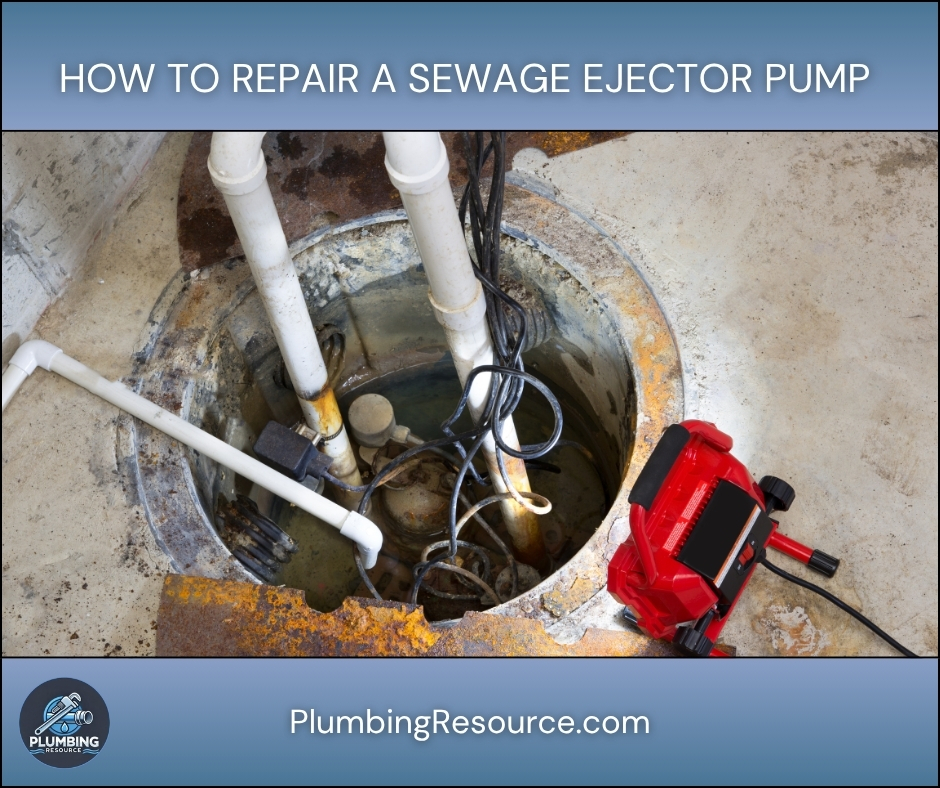
A failing sewage ejector pump can create serious plumbing problems in your home. Therefore, learning how to repair a sewage ejector pump can help you prevent backups, foul odors, flooding, and costly water damage. Many homeowners notice warning signs early, such as strange noises, alarm beeping, slow drains, or sewage smells. However, ignoring those symptoms can lead to complete system failure.
Fortunately, many ejector pump problems are repairable if you diagnose them correctly. In this guide, you will learn how to identify common failures, inspect the system, test components, and repair the pump step by step.
🔍 Understanding the Project
A sewage ejector pump moves wastewater from fixtures located below the main sewer line. For example, basement bathrooms, laundry rooms, and utility sinks often rely on these pumps to discharge sewage uphill into the home’s drainage system.
Over time, several issues can cause pump failure. Common causes include:
- Float switch malfunctions
- Power failures
- Impeller clogs
- Check valve problems
- Pipe blockages
- Worn motors
- Excessive debris buildup
In many cases, warning signs appear before complete failure. You may notice:
- Gurgling drains
- Alarm activation
- Constant cycling
- Slow drainage
- Vibrating pipes
- Sewage odors
- Water remaining inside the basin
If you ignore these symptoms, sewage can back up into the basement. Consequently, flooring, drywall, and nearby belongings may become contaminated. In severe cases, electrical hazards and mold growth may also develop.
Because sewage systems involve wastewater and electricity, careful inspection and repair are extremely important.
🧰 Tools & Materials
- Rubber gloves
- Safety glasses
- Flashlight
- Flathead screwdriver
- Phillips screwdriver
- Adjustable wrench
- Channel-lock pliers
- Pipe wrench
- Bucket
- Rags
- Disinfectant cleaner
- Wet/dry vacuum
- Replacement float switch
- Replacement check valve
- PVC pipe and fittings
- PVC primer and cement
- Pipe clamps
- Utility knife
- Non-contact voltage tester
- Multimeter
- Replacement sewage ejector pump
- Teflon tape
🛠️ Step-By-Step Guide: How To Repair a Sewage Ejector Pump
1️⃣ Shut Off the Power
First, turn off the breaker supplying power to the sewage ejector pump. Then, unplug the pump if it uses a cord connection.
Never work on an energized sewage pump system. Because water and electricity are involved, serious injury can occur if power remains active.
Use a non-contact voltage tester to confirm the circuit is dead before touching the pump.
2️⃣ Inspect the Basin for Overflow or Backup
Next, remove the basin lid carefully and inspect the sewage pit.
Look for:
- High water levels
- Standing sewage
- Excess toilet paper
- Grease buildup
- Foreign objects
- Strong odors
If the basin is completely full, avoid running water fixtures in the home until repairs are complete.
3️⃣ Check the Circuit Breaker and Outlet
Sometimes the issue is electrical rather than mechanical. Therefore, inspect the electrical panel for a tripped breaker.
Then:
- Reset the breaker if needed
- Test the outlet voltage
- Inspect cords for damage
- Check for moisture near the outlet
If the breaker trips repeatedly, the motor may be shorted or jammed.
4️⃣ Test the Float Switch
The float switch is one of the most common failure points. As wastewater rises, the float activates the pump.
However, debris can prevent the float from moving freely.
Lift the float manually using a non-metallic tool. If the pump starts immediately, the float likely needs adjustment or replacement.
Check for:
- Tangled cords
- Stuck float arms
- Grease buildup
- Broken float housings
If the float does not activate the pump, continue diagnosing the electrical system.
5️⃣ Inspect the Pump for Clogs
Many ejector pump failures happen because solids jam the impeller.
After disconnecting power:
- Disconnect the discharge pipe
- Remove the pump from the basin
- Place the pump on a protected surface
- Inspect the intake openings
Common clog materials include:
- Wipes
- Feminine products
- Paper towels
- String
- Hair
- Grease buildup
Carefully remove debris using pliers or a screwdriver.
6️⃣ Clean the Impeller Housing
Next, inspect the impeller area closely.
The impeller spins rapidly to move wastewater through the discharge line. However, debris can wrap around the blades and stop movement.
Rotate the impeller manually:
- If it spins freely, the impeller may still function
- If it binds or sticks, remove additional debris
- If the blades are damaged, replace the pump
Some pumps allow partial disassembly for cleaning. Therefore, consult the manufacturer instructions if needed.
7️⃣ Inspect the Check Valve
The check valve prevents sewage from flowing backward into the basin.
A failed check valve can cause:
- Short cycling
- Water hammer
- Constant pump operation
- Basin refilling
Locate the check valve on the vertical discharge pipe.
Then:
- Inspect the flow direction arrow
- Check for leaks
- Listen for loud slamming noises
- Inspect rubber couplings
If the valve sticks open or closed, replace it immediately.
8️⃣ Check the Discharge Pipe
Sometimes the pump works correctly, but the discharge line is blocked.
Inspect for:
- Frozen sections
- Grease buildup
- Pipe separation
- Sagging pipe
- Solid obstructions
If necessary, disconnect sections of pipe to inspect for clogs.
In some situations, hydro jetting or professional drain cleaning may be required.
9️⃣ Inspect the Vent System
Proper venting is critical for sewage ejector systems.
Without venting:
- Airlocks can form
- Drains may gurgle
- Sewage odors may increase
- Pump efficiency may decrease
Inspect the vent pipe connected to the basin lid.
Look for:
- Loose fittings
- Cracked pipes
- Blockages
- Missing caps
- Roof vent obstructions
Because vent issues can mimic pump failure, always inspect the vent system during troubleshooting.
1️⃣0️⃣ Test the Pump Motor
If the float and wiring appear functional, test the motor directly.
Reconnect power briefly and observe:
- Does the motor hum?
- Does the pump vibrate?
- Does the impeller spin?
- Does water discharge?
A humming motor with no pumping action usually indicates a jammed impeller or seized motor.
A completely silent motor often indicates electrical failure.
1️⃣1️⃣ Replace the Float Switch if Needed
If testing confirms float failure, install a replacement float switch.
Steps include:
- Disconnect the old float
- Match the replacement style
- Secure the cord correctly
- Adjust tether length
- Test operation
Avoid overtightening zip ties around the float cord. Otherwise, the float may not move freely.
1️⃣2️⃣ Replace the Pump if Necessary
Sometimes replacement is more practical than repair.
Replace the pump if:
- The motor is burned out
- The housing is cracked
- Oil leaks from the motor
- The impeller is destroyed
- Internal corrosion is severe
When selecting a replacement:
- Match horsepower
- Match discharge size
- Verify solids handling capability
- Confirm voltage compatibility
Always install a union fitting during replacement. Consequently, future repairs become much easier.
1️⃣3️⃣ Reassemble and Test the System
After repairs:
- Reinstall the pump
- Reconnect the discharge line
- Tighten all fittings
- Secure the basin lid
- Restore power
Then, run water fixtures until the basin fills and cycles normally.
Watch for:
- Leaks
- Vibrations
- Slow discharge
- Backflow
- Alarm activation
Cycle the system several times before considering the repair complete.
⚠️ Common Mistakes
- Forgetting to shut off power
- Ignoring check valve direction
- Using undersized pumps
- Flushing wipes or paper towels
- Leaving the basin lid unsealed
- Failing to test the float switch
- Overlooking vent problems
- Reusing damaged fittings
- Installing incorrect discharge piping
💡 Pro Tips
- Test your ejector pump every few months
- Install a high-water alarm for early warning
- Keep spare float switches available
- Add a union fitting above the check valve
- Use only sewage-rated pumps
- Label the ejector pump breaker clearly
- Avoid flushing anything except toilet paper
🔧 Troubleshooting
Pump Runs but Does Not Remove Water
The impeller may be clogged, or the discharge line may be blocked.
Pump Cycles Constantly
The check valve may be failing, or the float may be stuck.
Alarm Keeps Sounding
The basin may be overfilled, or the pump may not keep up with demand.
Strong Sewage Odor Near the Basin
The lid gasket or vent connection may be leaking.
Pump Hums but Does Not Spin
The motor may be seized, or debris may be jamming the impeller.
👨🏻🔧 When to Call a Professional
Although many homeowners can repair basic ejector pump problems, some situations require a licensed plumber.
Call a professional if:
- Sewage backs up repeatedly
- The discharge line is inaccessible
- Electrical wiring requires replacement
- The basin overflows frequently
- The main sewer line may be clogged
- You suspect structural plumbing issues
- The pump requires full replacement and repiping
A professional can also inspect the entire drainage system for hidden issues.
❓ FAQ
How do I know if my sewage ejector pump is bad?
Common signs include alarms, sewage odors, standing water, loud noises, and slow drainage.
Can I repair a sewage ejector pump without replacing it?
Yes. Many problems involve float switches, clogs, or check valves rather than complete pump failure.
How long does a sewage ejector pump last?
Most sewage ejector pumps last between 7 and 15 years, depending on usage and maintenance.
Why does my sewage ejector pump keep running?
A stuck float, failed check valve, or continuous water flow may cause constant cycling.
What causes sewage ejector pump clogs?
Wipes, grease, feminine products, and paper towels commonly clog sewage ejector pumps.
✅ Conclusion
Learning how to repair a sewage ejector pump can help you prevent serious plumbing damage and expensive emergency repairs. Therefore, inspecting the float switch, check valve, impeller, and discharge line early can save time and money. With proper troubleshooting and maintenance, many ejector pump problems can be repaired before complete system failure occurs.
👋🏼 Before You Go…
If this guide helped you understand how to repair a sewage ejector pump, save this page for future reference. Also, share it with someone dealing with basement plumbing or sewage pump problems. A simple repair today can prevent a major sewage backup tomorrow.