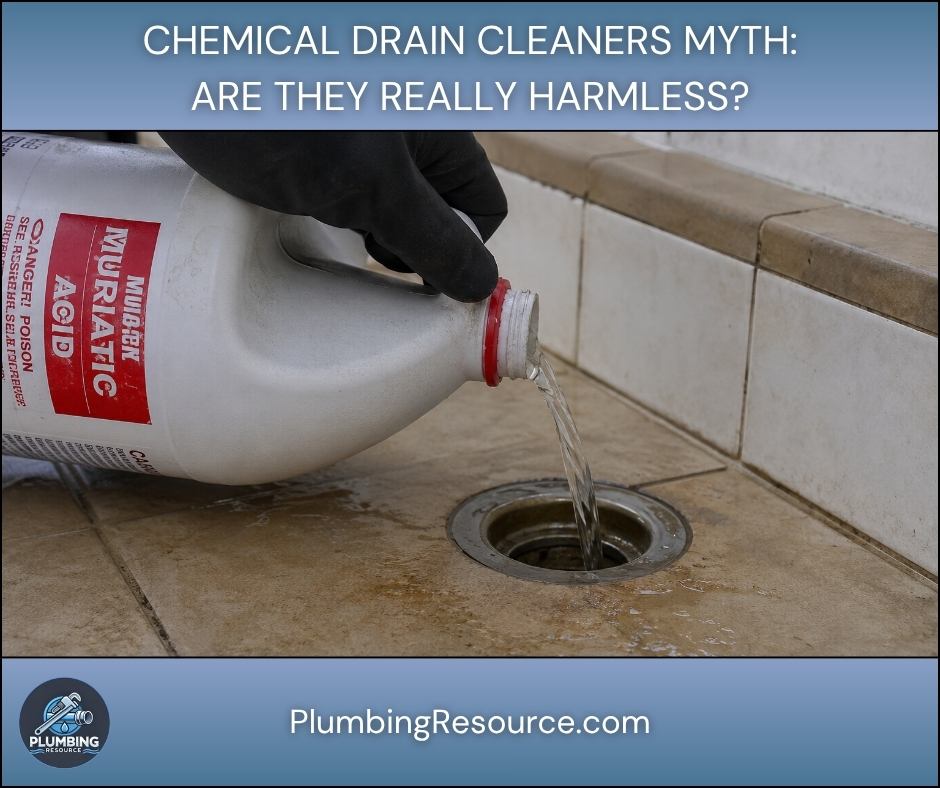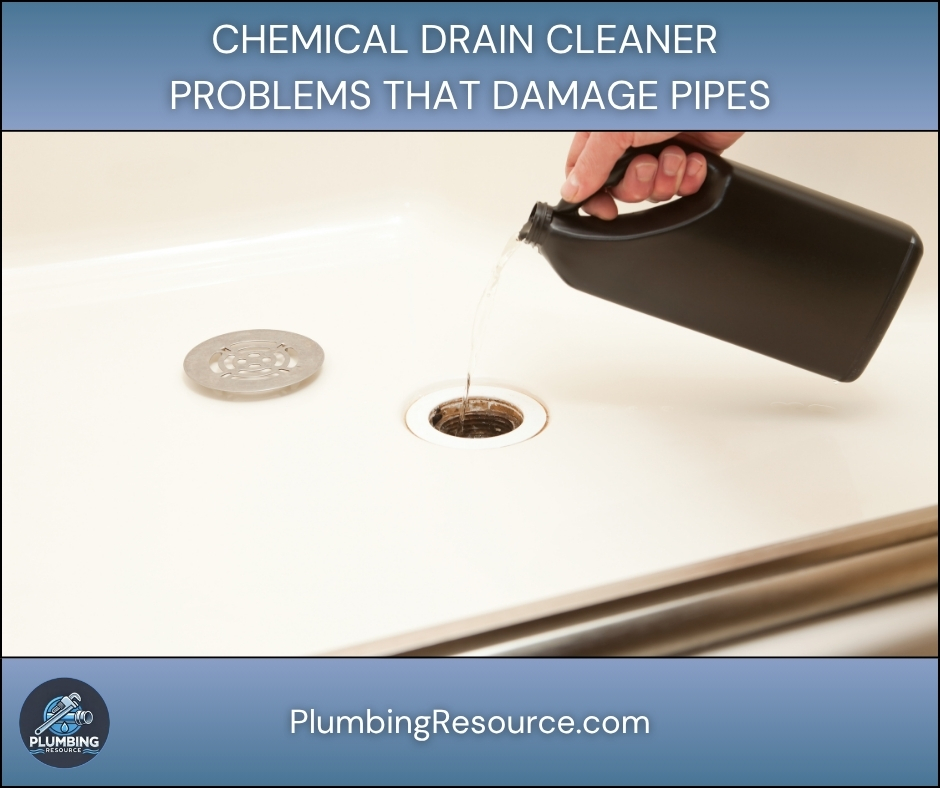
A homeowner notices water draining slowly in the shower after several busy mornings. Therefore, they grab a bottle of chemical drain cleaner hoping for a quick and easy solution.
At first, the drain improves slightly. However, the same clog returns again a short time later. Eventually, the homeowner keeps pouring more chemicals into the drain without realizing the real blockage remains deep inside the plumbing system.
Chemical drain cleaner problems that damage pipes often begin exactly this way. Many homeowners focus on temporary relief instead of finding the actual cause of the clog.
❌ Why Homeowners Make This Mistake
Most homeowners want fast results. Therefore, chemical drain cleaners seem like the easiest option available.
Store shelves are also filled with products promising powerful clog removal. As a result, many people assume these chemicals completely clean the drain line.
Some homeowners believe repeated chemical use helps maintain healthy plumbing. Unfortunately, most drain cleaners only partially break through the clog while leaving buildup behind.
In addition, many homeowners do not realize recurring drain problems often point to deeper sewer or pipe issues.
🔍 What Happens Inside the Plumbing System
Chemical drain cleaner problems that damage pipes usually develop slowly over time. Therefore, serious damage may remain hidden for months or even years.
Most chemical drain cleaners create intense heat during the cleaning process. As a result, grease, soap residue, and hair may soften temporarily. However, leftover debris usually remains attached to the pipe walls.
Meanwhile, harsh chemicals continue sitting inside the drain line. Older metal pipes may begin corroding faster because of repeated exposure. Certain plastic piping and rubber seals may also weaken gradually.
Chemical Drain Cleaner Problems That Damage Pipes Often Hide Deeper Blockages
Some recurring drain issues involve:
- Tree root intrusion
- Heavy grease buildup
- Pipe bellies
- Broken sewer lines
- Sludge accumulation
Chemical drain cleaners cannot solve these mechanical plumbing problems. Instead, they often delay proper drain cleaning and inspection.
⚠️ Early Warning Signs Most People Miss
Many plumbing systems show small warning signs before major damage develops. However, homeowners often ignore them because the drain still works temporarily.
Chemical Drain Cleaner Problems That Damage Pipes Usually Begin With Minor Symptoms
The same drain may keep slowing down repeatedly. In addition, unpleasant sewer odors may begin coming from sinks, tubs, or showers.
Other warning signs include:
- Gurgling drain noises
- Bubbling toilet water
- Water backing up briefly
- Slow drainage after chemical use
- Minor leaks beneath sinks
Pipe discoloration beneath cabinets may also indicate corrosion. Therefore, homeowners should never ignore recurring drain problems.
🛠️ Short-Term Plumbing Problems
Repeated chemical drain cleaner use may create immediate plumbing issues.
Chemical Drain Cleaner Problems That Damage Pipes Can Make Clogs Worse
Partially dissolved debris sometimes shifts deeper into the drain line. As a result, the blockage becomes more difficult to remove later.
Chemical drain cleaners may also:
- Damage drain fittings
- Create strong fumes
- Irritate skin and eyes
- Harm garbage disposal components
- Cause leaking pipe joints
If multiple drain cleaners mix together, dangerous chemical reactions may occur. Therefore, homeowners should never combine different products.
💸 Long-Term Damage This Can Cause
Long-term plumbing damage from repeated chemical exposure can become extremely expensive.
Chemical Drain Cleaner Problems That Damage Pipes May Lead to Major Repairs
Corrosion slowly weakens metal drain lines over time. Eventually, damaged piping may crack or leak behind walls or beneath flooring.
Water damage may then spread into drywall, cabinets, and subflooring. In addition, hidden moisture often contributes to mold growth and structural damage.
Long-term plumbing consequences may include:
- Sewer backups
- Slab leaks
- Pipe replacement
- Mold contamination
- Foundation moisture issues
- Extensive drain repairs
Older homes face greater risk because aging plumbing systems already contain vulnerable areas.
🚫 Common Myths and Bad Advice
Many homeowners receive misleading drain cleaning advice online.
Myth: Chemical Drain Cleaners Completely Remove Clogs
Most products only create a temporary opening through the blockage. Therefore, the clog usually returns later.
Myth: More Product Works Better
Using larger amounts increases chemical exposure inside the pipes. However, it rarely fixes the actual plumbing issue.
Myth: Chemical Drain Cleaners Are Safe for All Pipes
Certain plumbing materials deteriorate faster after repeated chemical exposure.
Myth: Every Slow Drain Needs Chemical Treatment
Many slow drains respond better to mechanical cleaning methods. For example, drain snaking and trap cleaning often work more effectively.
Myth: Boiling Water Improves Chemical Drain Cleaner Performance
Heat may increase splashing and dangerous reactions. Therefore, this combination creates unnecessary plumbing and safety risks.
✅ The Correct Way to Handle the Situation
The safest solution involves identifying the actual clog source instead of masking symptoms repeatedly.
Chemical Drain Cleaner Problems That Damage Pipes Are Usually Preventable
Safer drain cleaning methods include:
- Using a plunger correctly
- Cleaning sink strainers
- Removing visible hair clogs
- Cleaning the P-trap
- Using a hand auger carefully
Recurring clogs should also receive professional inspection because deeper sewer issues may exist.
Professional plumbers may use:
- Sewer cameras
- Hydro jetting equipment
- Mechanical drain machines
- Specialized inspection tools
These methods remove the actual blockage while protecting the plumbing system from chemical damage.
👨🏻🔧 DIY vs When to Call a Licensed Plumber
Some drain issues are manageable without professional help. However, recurring backups often indicate larger plumbing problems.
Safe DIY Plumbing Tasks
Homeowners can safely:
- Remove visible drain debris
- Use plungers properly
- Maintain drain strainers
- Flush drains with hot water carefully
- Clean sink stoppers regularly
When Professional Plumbing Help Is Necessary
A licensed plumber should inspect:
- Multiple clogged drains
- Sewer odors
- Recurring backups
- Water backing into tubs or showers
- Gurgling fixtures
- Leaking drain pipes
Professional equipment helps locate hidden plumbing problems safely and accurately.
🧰 Prevention Tips That Actually Work
Preventive maintenance helps reduce serious plumbing issues significantly.
Chemical Drain Cleaner Problems That Damage Pipes Can Often Be Avoided
Helpful prevention methods include:
- Avoid pouring grease down drains
- Use drain strainers consistently
- Clean sink stoppers monthly
- Address slow drains early
- Avoid flushing wipes or hygiene products
- Schedule drain maintenance when necessary
In addition, homeowners should monitor recurring drain symptoms closely because small problems often become expensive repairs later.
❓ FAQ
Are chemical drain cleaners bad for pipes?
Repeated use may damage pipes, fittings, and seals over time. Older plumbing systems face the greatest risk.
Why do clogs keep returning after using drain cleaner?
Most chemical cleaners only partially remove the blockage. Therefore, debris remains inside the pipe and continues collecting buildup.
What is safer than chemical drain cleaners?
Mechanical cleaning methods are usually safer. For example, plungers and drain snakes often work effectively without damaging pipes.
Can chemical drain cleaner problems damage sewer lines?
Yes. Repeated chemical exposure may contribute to sewer pipe corrosion and long-term deterioration.
When should a homeowner call a licensed plumber?
A plumber should inspect recurring clogs, sewer odors, backups, or leaking drain pipes immediately.
✅ Conclusion
Chemical drain cleaner problems that damage pipes often begin with a homeowner trying to solve a simple drain issue quickly. However, repeated chemical use may weaken plumbing materials, worsen clogs, and hide deeper sewer problems.
Temporary drain improvement does not always mean the blockage is gone. Therefore, homeowners should focus on identifying the actual clog source before expensive damage develops.
Safer drain cleaning methods, routine maintenance, and early plumbing inspections help protect plumbing systems long term. In addition, understanding the risks of repeated chemical exposure can help homeowners avoid major plumbing repairs later.
👋🏼 Before You Go…
If you found this guide helpful, save it before your next drain problem appears. Also, consider sharing it with friends or family members because many homeowners unknowingly damage their plumbing systems with repeated chemical drain cleaner use.