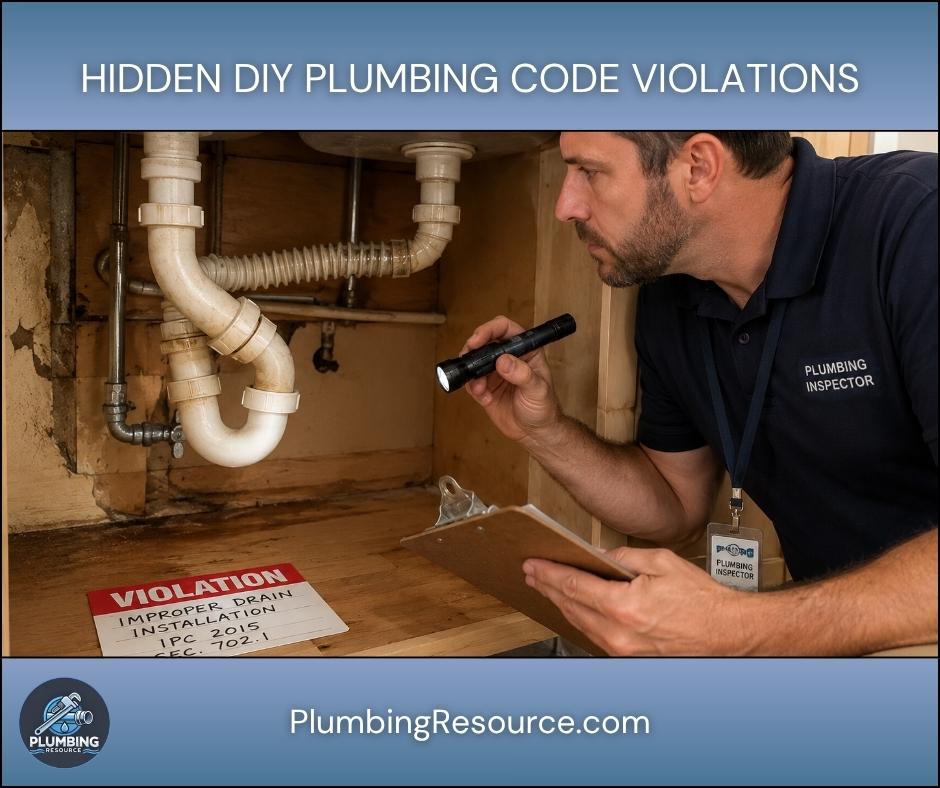
A homeowner decides to replace a bathroom sink drain after watching a quick online video. At first, everything appears fine. However, several weeks later, sewer smells begin filling the bathroom. Soon afterward, the cabinet starts swelling from hidden water damage.
Unfortunately, hidden DIY plumbing code violations often begin this way. Many homeowners complete plumbing work that seems functional, yet serious problems develop behind walls, under floors, and inside drain lines over time.
Although the plumbing may appear to work normally, improper venting, bad drain slope, illegal fittings, and missing safety devices can quietly damage the entire plumbing system.
❌ Why Homeowners Make This Mistake
Many DIY plumbing projects seem simple. In addition, online videos often make plumbing work appear fast and easy.
Homeowners commonly believe that if water drains properly, the installation must be correct. However, plumbing code requirements exist for safety, drainage performance, wastewater control, and long-term reliability.
Some homeowners also assume plumbing code only matters during inspections. Unfortunately, plumbing problems can develop years before anyone notices the hidden damage.
Quick internet fixes often ignore important requirements involving:
- Venting
- Pipe sizing
- Drain slope
- Fixture protection
- Backflow prevention
- Trap placement
- Cleanout accessibility
Because of this, small DIY mistakes can create major plumbing failures later.
🔍 What Happens Inside the Plumbing System
Hidden DIY plumbing code violations can disrupt the entire plumbing system. Although water may still flow, improper installations often create hidden mechanical problems.
For example, improper drain slope allows wastewater to move incorrectly through drain lines. If the slope is too steep, liquids outrun solids. However, if the slope is too flat, buildup develops inside the pipe walls.
Improper venting creates additional issues. Without proper airflow, fixtures can siphon traps dry. As a result, sewer gases may enter the home through sinks, tubs, or floor drains.
Incorrect fittings also create turbulence inside drain lines. Consequently, wastewater flow slows down, blockage risks increase, and debris collects inside the piping system.
In addition, improperly supported pipes can sag over time. Eventually, wastewater collects inside low spots, which creates buildup and recurring stoppages.
⚠️ Early Warning Signs Most People Miss
Many plumbing code problems develop slowly. Therefore, homeowners often ignore the early symptoms.
Common warning signs include:
- Slow drain performance
- Occasional sewer odors
- Gurgling fixtures
- Bubbling toilets
- Frequent drain backups
- Water stains under sinks
- Dripping pipe joints
- Loose toilets
- Fluctuating water pressure
- Unusual pipe noises
Sometimes these symptoms appear minor. However, they often indicate larger hidden plumbing issues developing inside walls or beneath floors.
In many cases, homeowners only discover the damage after expensive repairs become necessary.
🛠️ Short-Term Plumbing Problems
Hidden DIY plumbing code violations can quickly create frustrating plumbing problems.
For example, incorrect trap installation may cause repeated drain clogs. Similarly, improperly vented fixtures may drain slowly or produce foul odors.
Other short-term issues include:
- Leaking fittings
- Overflowing fixtures
- Weak drainage
- Drain line blockages
- Fixture instability
- Water hammer
- Reduced fixture performance
Additionally, improperly installed shut-off valves or supply lines may fail unexpectedly. Consequently, small plumbing leaks can rapidly turn into major water damage events.
💸 Long-Term Damage This Can Cause
Long-term damage from plumbing code violations can become extremely expensive.
Slow leaks hidden behind walls may eventually rot framing, drywall, insulation, and flooring. Furthermore, constant moisture can lead to dangerous mold growth.
Improper sewer venting may also expose homeowners to sewer gases. Over time, these gases create serious indoor air quality concerns.
Other costly problems include:
- Slab leaks
- Foundation movement
- Structural wood rot
- Corroded pipe walls
- Sewer line damage
- Failed inspections during home sales
- Insurance claim complications
In some cases, homeowners must completely remove and rebuild non-compliant plumbing systems.
Therefore, small DIY shortcuts can eventually require thousands of dollars in repairs.
🚫 Common Myths and Bad Advice
Many internet plumbing myths contribute to hidden DIY plumbing code violations.
“If It Doesn’t Leak, It’s Fine”
This is one of the most dangerous plumbing myths. Many plumbing code problems remain hidden for years before visible leaks appear.
“All Plumbing Parts Work the Same”
Different plumbing fittings serve different purposes. For example, some fittings are approved for drainage, while others are not.
“Vents Aren’t Necessary”
Improper venting causes serious drainage and sewer gas problems. Every fixture requires proper vent protection.
“More Pipe Glue Makes Stronger Joints”
Excess glue can actually weaken joints and create pipe restrictions inside drain lines.
“DIY Plumbing Always Saves Money”
Poor installations often create much larger repair bills later.
✅ The Correct Way to Handle the Situation
The safest approach involves understanding plumbing code requirements before starting any project.
Homeowners should always:
- Research local plumbing requirements
- Use approved plumbing materials
- Maintain proper drain slope
- Install correct venting
- Use approved fittings
- Properly support piping
- Install accessible cleanouts
- Pressure test plumbing systems
In addition, homeowners should verify fixture compatibility before installation.
Whenever possible, follow manufacturer specifications carefully. Plumbing codes often work together with manufacturer requirements to protect the plumbing system.
👨🏻🔧 DIY vs When to Call a Licensed Plumber
Some plumbing work can safely be completed by homeowners. However, more complex projects often require professional equipment and code knowledge.
DIY Tasks Homeowners Can Usually Handle
- Replacing faucet aerators
- Installing showerheads
- Replacing toilet flappers
- Cleaning sink traps
- Minor fixture repairs
When to Call a Licensed Plumber
Professional plumbers should handle:
- Sewer line work
- Drain vent modifications
- Water heater installations
- Gas line work
- Whole-home repiping
- Slab leak repairs
- Main water line repairs
- Major drain line replacements
Licensed plumbers understand plumbing code requirements, proper venting, drain sizing, and fixture protection. In addition, they often identify hidden issues homeowners cannot easily see.
🧰 Prevention Tips That Actually Work
These simple habits help prevent hidden DIY plumbing code violations:
- Always check local plumbing requirements first
- Avoid shortcut plumbing methods
- Use proper pipe supports
- Never ignore venting requirements
- Use approved plumbing fittings only
- Test all plumbing repairs thoroughly
- Inspect for leaks after every repair
- Avoid forcing incompatible pipe materials together
- Install proper cleanouts
- Schedule periodic plumbing inspections
Additionally, homeowners should document all plumbing repairs. This helps identify future issues and supports inspection requirements during home sales.
❓ FAQ
Can hidden DIY plumbing code violations cause sewer smells?
Yes. Improper venting or dry traps can allow sewer gases to enter the home through fixtures and drains.
Do plumbing code violations always leak immediately?
No. Many violations remain hidden for years before visible leaks or water damage appear.
Can improper drain slope damage pipes?
Yes. Incorrect slope allows buildup inside drain lines, which increases blockage and corrosion risks.
Will a home inspection find plumbing code violations?
Some violations are visible during inspections. However, hidden plumbing problems behind walls may remain undetected.
Why does plumbing code matter for homeowners?
Plumbing code protects water quality, drainage performance, safety, and long-term plumbing system reliability.
✅ Conclusion
Hidden DIY plumbing code violations often begin as small shortcuts. However, these mistakes can quietly damage drain lines, fixtures, venting systems, and structural materials over time.
Although DIY plumbing may seem simple, proper installation methods matter greatly. Small errors involving venting, pipe slope, fittings, or fixture connections can eventually create expensive plumbing repairs.
Therefore, homeowners should always prioritize safe plumbing practices, proper installation methods, and long-term system reliability. Preventing plumbing problems early is far easier than repairing hidden damage later.
👋🏼 Before You Go…
If you found this guide helpful, save it for future plumbing projects. Also, share it with friends or family members planning DIY plumbing repairs. Hidden plumbing mistakes are far more common than most homeowners realize.