You replace an old faucet because it starts dripping constantly. At first, the new fixture looks perfect and works smoothly. However, a few weeks later, you notice water stains under the cabinet and a musty smell nearby.
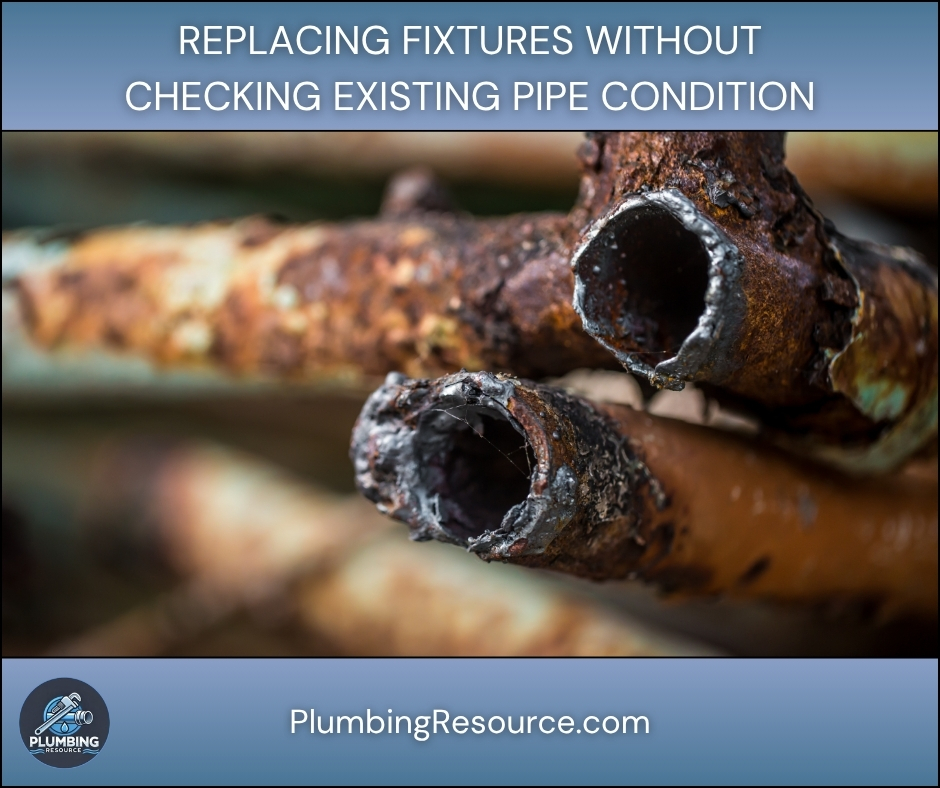
Replacing fixtures without checking existing pipe condition often creates hidden plumbing problems homeowners never expect. Although the new fixture may function correctly, the surrounding pipes could already have corrosion, buildup, weakened joints, or damaged pipe walls.
As a result, the simple fixture replacement can trigger leaks, pressure issues, or wastewater problems throughout the plumbing system.
❌ Why Homeowners Make This Mistake
Many homeowners focus only on the visible fixture. Therefore, they assume replacing the faucet, toilet, shower valve, or sink solves the entire issue.
Unfortunately, the hidden piping behind walls, under cabinets, or inside ceilings often receives little attention. In many homes, aging galvanized pipe, corroded copper, or brittle plastic piping already exists behind the fixture.
In addition, many online tutorials focus only on fixture installation steps. They rarely explain how deteriorated water lines or drain lines can fail during installation.
Some homeowners also believe newer fixtures automatically improve plumbing performance. However, newer fixtures can expose weak piping because they create different pressure patterns and connection stress.
🔍 What Happens Inside the Plumbing System
When plumbers remove old fixtures, existing piping becomes exposed to movement and vibration. Consequently, weakened pipe joints or corroded fittings may crack during removal or installation.
Old shut-off valves frequently fail during fixture replacement as well. In many cases, mineral buildup and corrosion lock internal components into place for years.
Once disturbed, these components may begin leaking immediately.
Older galvanized piping creates additional problems because corrosion narrows the pipe interior. As buildup accumulates, water flow decreases and pressure fluctuations increase.
New fixtures may temporarily improve flow appearance. However, hidden restrictions inside the water line remain active behind the walls.
Drain lines can also create problems. For example, deteriorated drain piping may already contain buildup, hair accumulation, grease deposits, or weakened fittings.
When a new sink, toilet, or fixture increases wastewater flow efficiency, the old drain system may struggle to keep up.
As a result, hidden leaks or sewer gas issues may develop.
⚠️ Early Warning Signs Most People Miss
Several warning signs often appear before major plumbing damage occurs. However, homeowners frequently overlook them because the fixture itself seems new.
Watch for these symptoms:
Hidden Pipe Damage Around New Fixtures
- Small drips beneath cabinets
- Moisture near supply lines
- Water stains around escutcheons
- Soft drywall near fixtures
- Musty odors around sinks or toilets
Pressure Changes After Fixture Replacement
- Reduced water pressure
- Sudden sputtering at fixtures
- Air inside water lines
- Uneven hot and cold water flow
Drain Line Warning Signs
- Slow drainage
- Gurgling sounds
- Sewer odors
- Intermittent backups
- Water pooling beneath cabinets
Although these symptoms may appear minor initially, they often signal larger hidden plumbing system problems.
🛠️ Short-Term Plumbing Problems
Replacing fixtures without checking existing pipe condition can quickly create several immediate plumbing issues.
First, weakened supply lines may begin leaking shortly after installation. Even slight movement during installation can crack corroded fittings.
Next, old angle stops often fail completely when turned off and back on. Consequently, homeowners sometimes lose the ability to isolate water flow to the fixture.
Additionally, deteriorated drain assemblies may begin leaking wastewater under sinks or behind walls.
Short-term plumbing problems may include:
- Cabinet water damage
- Fixture instability
- Drain backups
- Poor fixture performance
- Water pressure fluctuations
- Temporary sewer odors
- Shut-off valve failure
Although these problems may seem manageable initially, they often worsen rapidly.
💸 Long-Term Damage This Can Cause
Long-term plumbing damage becomes far more expensive when hidden pipe deterioration remains untreated.
Slow leaks behind walls can damage framing, insulation, flooring, and drywall. Furthermore, moisture exposure encourages mold growth and wood rot.
Corroded water lines may eventually rupture entirely. Consequently, homeowners can face major flooding and emergency plumbing repairs.
Older drain lines also create serious risks. As wastewater repeatedly leaks from deteriorated piping, structural damage may develop beneath flooring or slab foundations.
Long-term damage may include:
Hidden Structural Damage
- Rotting subfloors
- Ceiling collapse
- Mold contamination
- Damaged cabinetry
- Wall deterioration
Plumbing System Failure
- Burst water lines
- Sewer line backups
- Major drain blockage
- Fixture connection failure
- Pipe joint separation
Increased Repair Costs
Minor fixture replacements can eventually turn into:
- Whole-home repiping
- Drain line replacement
- Mold remediation
- Structural restoration
- Slab leak repairs
Therefore, checking existing pipe condition before fixture replacement saves significant money long term.
🚫 Common Myths and Bad Advice
Several plumbing myths cause homeowners to ignore aging pipe problems.
“If It Isn’t Leaking, The Pipes Are Fine”
This assumption creates major problems. Corrosion and buildup often remain hidden for years before visible leaks appear.
“New Fixtures Fix Water Pressure Problems”
In reality, restricted water lines usually cause pressure issues. Therefore, replacing the fixture alone rarely solves the underlying problem.
“DIY Videos Show Everything You Need”
Many internet tutorials skip pipe inspections entirely. However, licensed plumbers routinely inspect supply lines, drain lines, shut-off valves, and pipe walls during fixture replacement.
“A Small Leak Is Not Serious”
Even small leaks can create severe moisture damage over time. Additionally, slow leaks frequently worsen without warning.
✅ The Correct Way to Handle the Situation
The safest approach involves evaluating the entire plumbing connection before installing new fixtures.
First, inspect visible supply lines carefully. Look for corrosion, discoloration, rust, mineral buildup, or weakened fittings.
Next, inspect shut-off valves and drain connections. If components appear deteriorated, replace them during the fixture installation process.
It is also important to evaluate pipe material and age.
Pipe Materials That Often Need Inspection
- Galvanized steel
- Older copper piping
- Polybutylene piping
- Aging PVC joints
- Corroded cast iron drain lines
In addition, pressure testing may help identify hidden plumbing system weaknesses.
Professional plumbers may also use camera inspections or moisture detection equipment when hidden damage is suspected.
👨🏻🔧 DIY vs When to Call a Licensed Plumber
Some fixture replacements remain suitable for experienced homeowners. However, older plumbing systems often require professional evaluation.
DIY Tasks Homeowners Can Usually Handle
- Replacing supply hoses
- Installing basic faucets
- Replacing showerheads
- Cleaning drain assemblies
- Checking visible moisture
When To Call A Licensed Plumber
Call a licensed plumber if you notice:
- Corroded piping
- Old galvanized water lines
- Recurring leaks
- Sewer odors
- Drain backups
- Water pressure issues
- Pipe movement behind walls
- Rust-colored water
Professional plumbers can safely inspect the plumbing system while identifying hidden problems before catastrophic damage occurs.
🧰 Prevention Tips That Actually Work
Preventive plumbing inspections reduce the risk of fixture-related damage significantly.
Smart Prevention Habits
- Inspect shut-off valves annually
- Monitor cabinet interiors for moisture
- Replace aging supply hoses proactively
- Address slow drains quickly
- Avoid ignoring pressure changes
- Schedule plumbing inspections for older homes
During Fixture Replacement
Always inspect:
- Supply line condition
- Drain line stability
- Pipe corrosion
- Existing water damage
- Shut-off valve function
Additionally, replacing worn components during fixture installation often prevents future repairs.
❓ FAQ
Can replacing a fixture cause pipes to leak?
Yes. Disturbing old or corroded piping during fixture replacement can trigger leaks in weakened pipe joints or supply lines.
Why does water pressure change after replacing fixtures?
Hidden buildup or corrosion inside existing pipes often restricts flow. Therefore, the new fixture may expose underlying plumbing system problems.
Should old shut-off valves be replaced during fixture installation?
Yes. Older shut-off valves commonly fail after being turned off and back on during plumbing work.
Can old drain lines affect new fixtures?
Absolutely. Deteriorated drain lines may leak, clog, or create sewer odors even after installing new fixtures.
How do plumbers check existing pipe condition?
Licensed plumbers inspect visible piping, test pressure, evaluate drain performance, and sometimes use camera inspections or leak detection equipment.
✅ Conclusion
Replacing fixtures without checking existing pipe condition creates risks many homeowners never anticipate. Although the fixture itself may appear modern and reliable, aging supply lines, corroded drain piping, and weakened plumbing connections can still fail behind the scenes.
Fortunately, careful inspections and preventive maintenance help avoid expensive plumbing repairs. In addition, addressing hidden pipe deterioration early protects your home from water damage, mold growth, and plumbing system failure.
Understanding the condition of the surrounding pipes is just as important as choosing the new fixture itself.
👋🏼 Before You Go…
If this article helped you understand the risks behind replacing fixtures without checking existing pipe condition, save this page for future reference. Also, consider sharing it with friends or family members planning plumbing upgrades in older homes.