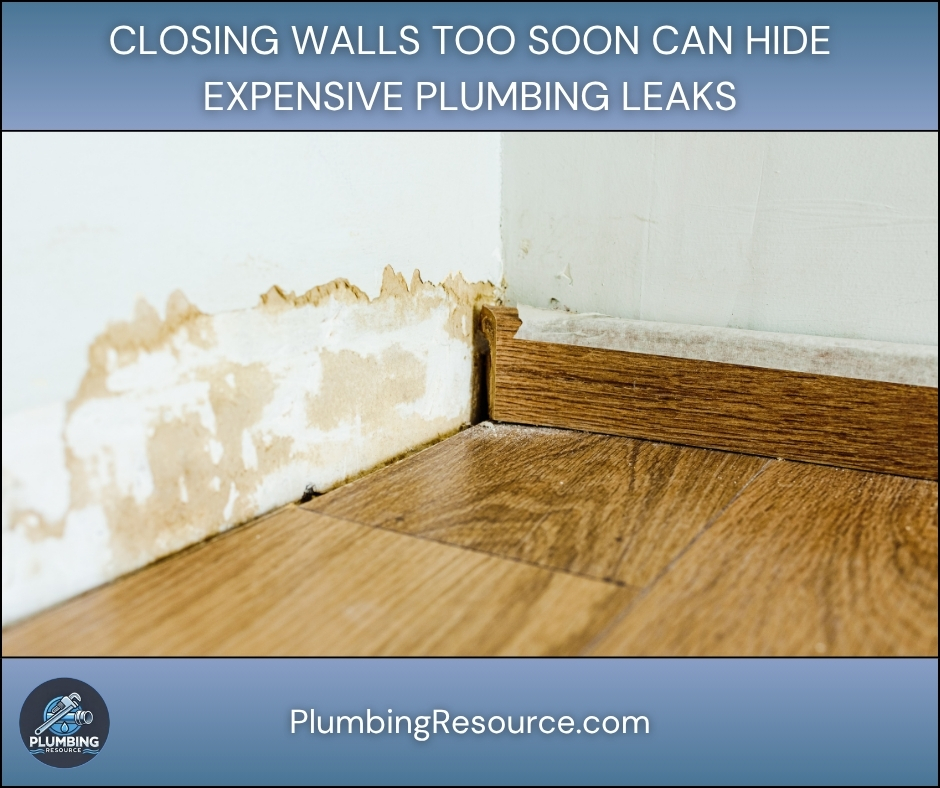
A homeowner finishes remodeling a bathroom and proudly installs the final piece of trim. Everything looks perfect at first. However, several weeks later, the paint near the vanity begins bubbling. Soon afterward, a musty smell fills the room, and the flooring starts warping.
The homeowner eventually discovers a slow plumbing leak hidden behind the newly finished wall. Unfortunately, closing walls too soon can hide expensive plumbing leaks that quietly damage homes for weeks or months before anyone notices.
Although the plumbing system may appear functional initially, hidden leaks often develop slowly behind drywall, cabinets, flooring, and tile.
❌ Why Homeowners Make This Mistake
Many homeowners assume plumbing connections are safe once water flows properly through the fixture. Because no immediate leak appears, they believe the installation is complete.
In addition, remodeling projects often run behind schedule. Therefore, homeowners and contractors sometimes rush to close walls quickly to finish the project faster.
Online tutorials also contribute to the problem. For example, many videos show plumbing installations but skip proper leak testing procedures.
Some people also believe new fittings, drain lines, or water supply pipes will not fail if they were installed recently. However, even new plumbing components can leak if fittings loosen, seals fail, or pipe joints were not prepared correctly.
🔍 What Happens Inside the Plumbing System
Closing walls too soon can hide expensive plumbing leaks because many plumbing failures begin gradually. Small drips inside a wall cavity may continue unnoticed for long periods.
Water supply leaks commonly develop around fittings, shut-off valves, pipe joints, and fixture connections. Meanwhile, drain line leaks may only appear while sinks, tubs, or showers are draining wastewater.
Over time, moisture spreads into drywall, insulation, framing, cabinets, and flooring materials. Because airflow is limited inside enclosed walls, trapped moisture often creates ideal conditions for mold growth.
Hidden plumbing leaks may also weaken pipe supports, damage subflooring, and create long-term structural problems inside the home.
⚠️ Early Warning Signs Most People Miss
Small plumbing leaks usually create subtle warning signs first. However, many homeowners overlook these symptoms until major damage develops.
Common warning signs include:
- Musty odors near walls or cabinets
- Slight paint discoloration
- Bubbling drywall
- Soft flooring near fixtures
- Swollen baseboards
- Damp cabinet bottoms
- Mold spots appearing unexpectedly
- Gurgling drain line sounds
- Increased indoor humidity
- Minor drops in water pressure
In some cases, homeowners may hear faint dripping sounds inside walls. However, they often assume normal plumbing expansion causes the noise.
🛠️ Short-Term Plumbing Problems
Hidden plumbing leaks can quickly create plumbing system problems even before severe structural damage occurs.
Wet Insulation and Drywall
Moisture saturates insulation rapidly. Consequently, drywall begins softening and weakening.
Drain Line Odors
Drain line leaks may release sewer odors inside enclosed cabinets or wall cavities.
Cabinet Damage
Cabinet materials absorb water quickly. Therefore, swelling and warping often appear early.
Fixture Movement
Water damage weakens surrounding support materials. As a result, fixtures may loosen or shift.
Mold Development
Mold can begin growing within days when moisture remains trapped behind finished walls.
💸 Long-Term Damage This Can Cause
Closing walls too soon can hide expensive plumbing leaks that eventually become major repair projects.
Structural Damage
Constant moisture weakens framing lumber, subflooring, and wall materials over time.
Mold Remediation Costs
Hidden mold often spreads farther than homeowners expect. Therefore, remediation costs can become extremely expensive.
Flooring Replacement
Water frequently travels underneath flooring materials before becoming visible. As a result, entire flooring sections may require replacement.
Electrical Hazards
Hidden leaks near wiring, outlets, or electrical fixtures create serious safety concerns.
Sewer Line Contamination
Drain line leaks may expose hidden spaces to wastewater contamination and bacteria.
Repeated Remodeling Expenses
Finished tile, drywall, cabinets, and countertops often require removal to access leaking pipes again.
🚫 Common Myths and Bad Advice
Several common myths cause homeowners to underestimate hidden plumbing leaks.
“If It Doesn’t Leak Right Away, It’s Fine”
Some plumbing leaks develop slowly under pressure or repeated fixture use. Therefore, quick testing is not always reliable.
“New Plumbing Never Fails”
Even brand-new fittings or pipe joints can leak if installation mistakes occur.
“A Small Leak Is Not Serious”
Tiny leaks create continuous moisture exposure. Over time, that moisture silently damages surrounding materials.
“Drain Lines Don’t Need Testing”
Drain line leaks often stay hidden longer because they only leak while fixtures discharge wastewater.
“Drywall Protects the Plumbing”
Finished walls actually trap moisture and conceal plumbing problems.
✅ The Correct Way to Handle the Situation
Proper plumbing testing helps prevent hidden plumbing leaks before walls close permanently.
Pressure Test Water Lines
Water supply piping should remain pressurized long enough to verify stable operation.
Test Fixtures Multiple Times
Run sinks, showers, tubs, and toilets repeatedly before installing drywall or cabinets.
Inspect Every Connection Carefully
Closely inspect fittings, shut-off valves, drain lines, and fixture seals for slow leaks.
Leave Plumbing Exposed Longer
Whenever possible, keep plumbing accessible during the first stages of fixture use.
Check Drain Lines Thoroughly
Drain systems should handle full-flow drainage testing to identify slow seepage.
Verify Plumbing Venting
Proper venting protects fixture drainage performance and helps prevent sewer gas issues.
👨🏻🔧 DIY vs When to Call a Licensed Plumber
Homeowners can safely inspect exposed plumbing for visible drips, moisture, or odors after small repairs. In addition, they can monitor cabinets and walls for early warning signs.
However, licensed plumbers should handle:
- Plumbing pressure testing
- Hidden leak detection
- Sewer line diagnostics
- Drain camera inspections
- Behind-wall plumbing repairs
- Plumbing venting corrections
- Code compliance inspections
Professional plumbers also use specialized leak detection equipment that identifies problems hidden behind walls or under flooring.
🧰 Prevention Tips That Actually Work
These simple habits help reduce hidden plumbing leak risks significantly.
Never Rush Remodeling Projects
Fast remodeling schedules often increase plumbing mistakes and missed inspections.
Test Plumbing Longer
Extended testing periods improve leak detection before walls close.
Use High-Quality Plumbing Materials
Better valves, fittings, and pipe connections reduce future failures.
Monitor Water Pressure
Excessive water pressure stresses pipe joints and fixture connections.
Inspect Cabinets Regularly
Check underneath sinks and around fixtures for moisture or discoloration.
Document Plumbing Locations
Photos of exposed plumbing help locate future problems more easily.
Recheck Plumbing Before Final Closure
Always perform one final inspection before installing drywall or cabinetry.
❓ FAQ
Why is closing walls too soon dangerous for plumbing?
Hidden leaks may go unnoticed behind finished surfaces, leading to mold, water damage, and structural problems.
How long should plumbing be tested before closing walls?
Testing times vary by project. However, extended pressure and operational testing greatly improve leak detection.
Can drain line leaks stay hidden for months?
Yes. Drain line leaks often remain hidden because they only leak during fixture use.
What are the first signs of hidden plumbing leaks?
Musty smells, bubbling paint, warped flooring, mold spots, and damp cabinets are common warning signs.
Should all plumbing repairs be tested before walls are closed?
Yes. Proper testing helps identify hidden plumbing leaks before expensive damage develops.
✅ Conclusion
Closing walls too soon can hide expensive plumbing leaks that silently damage homes long before visible symptoms appear. Although the plumbing system may seem functional initially, small hidden leaks often grow into major repair problems over time.
Proper leak testing, careful drain line inspections, and thorough plumbing evaluations help prevent mold growth, structural damage, and costly remodeling repairs. In addition, taking extra time during installation protects the long-term reliability of the entire plumbing system.
A few additional hours of testing today can prevent thousands of dollars in hidden water damage tomorrow.
👋🏼 Before You Go…
If this article helped you understand the risks of hidden plumbing leaks, save it for future reference and share it with someone planning a remodeling or plumbing project. Proper testing before closing walls can prevent expensive surprises later.