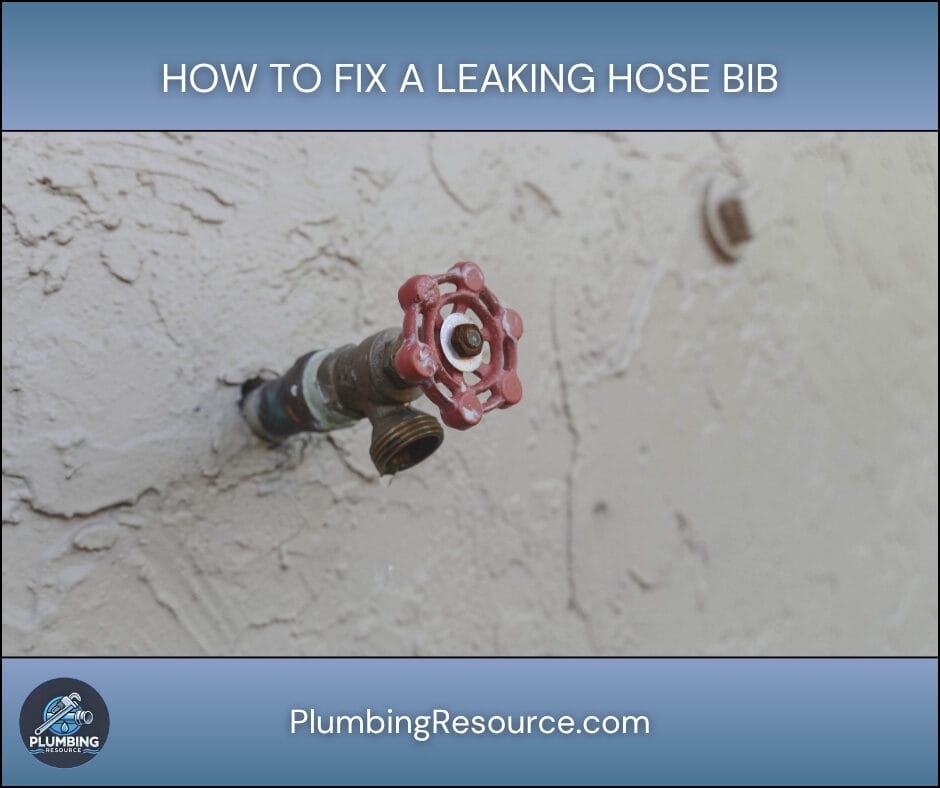
A leaking outdoor faucet can waste water, increase utility bills, and eventually damage siding, foundations, or walls. Therefore, learning how to fix a leaking hose bib can help you prevent larger plumbing problems before they become expensive repairs.
Some hose bib leaks drip constantly from the spout. However, others leak around the handle, spray from the vacuum breaker, or leak inside the wall. In this guide, you will learn how to identify the exact problem and repair it step by step.
Whether you have a standard outdoor faucet or a frost-free sillcock, this guide explains every major repair scenario in clear detail.
🔍 Understanding the Project
Before you begin, it is important to understand why hose bibs leak and what causes the problem.
Most hose bib leaks happen because internal parts wear out over time. For example, rubber washers become brittle, packing material dries out, and valve seats corrode. In colder climates, freezing temperatures can also split the pipe or crack the hose bib body.
Common warning signs include:
- Dripping from the spout after the faucet is turned off
- Water leaking around the handle
- Spraying from the vacuum breaker
- Water stains inside walls
- Reduced water flow outdoors
- Cracks in the hose bib body
Ignoring these signs can create serious issues. For instance, hidden leaks inside walls may cause rot, mold, or structural damage. In addition, constant dripping wastes water every day.
Fortunately, many outdoor faucet leaks can be repaired with basic tools and replacement parts.
🧰 Tools & Materials
- Adjustable wrench
- Channel-lock pliers
- Flathead screwdriver
- Phillips screwdriver
- Replacement hose bib washer
- Packing string or packing material
- PTFE tape
- Replacement vacuum breaker
- Utility knife
- Flashlight
- Bucket
- Towels or rags
- Replacement hose bib (if needed)
- Pipe thread sealant
- Safety glasses
- Work gloves
🛠️ Step-By-Step Guide: How To Fix a Leaking Hose Bib
1️⃣ Identify Where the Hose Bib Is Leaking
First, inspect the hose bib carefully so you can determine the exact leak location.
Check for these common leak points:
- Dripping from the spout
- Leaking around the handle
- Water spraying from the vacuum breaker
- Leaks near the wall
- Cracks in the body
Next, turn the faucet on and off several times while watching closely. This step helps you isolate the problem before disassembly begins.
If water leaks behind the siding or inside the house, stop immediately because the pipe inside the wall may be damaged.
2️⃣ Shut Off the Water Supply
Before starting repairs, turn off the water feeding the hose bib.
Some homes have a dedicated shut-off valve for exterior faucets. However, older homes may require shutting off the main water supply.
After shutting off the water:
- Open the hose bib completely
- Allow remaining water to drain
- Keep a towel or bucket nearby
This step reduces pressure and prevents unexpected water spray during repairs.
3️⃣ Remove the Hose Bib Handle
Next, remove the screw holding the handle in place.
Most hose bib handles use:
- A Phillips screw
- A flathead screw
- A small hex screw
Carefully pull the handle straight off after removing the fastener.
If corrosion prevents removal, gently wiggle the handle while pulling outward. In some cases, penetrating oil may help loosen stubborn parts.
4️⃣ Tighten the Packing Nut
If water leaks around the handle while the faucet is on, the packing nut may simply be loose.
The packing nut sits directly behind the handle area.
Using an adjustable wrench:
- Turn the packing nut clockwise slightly
- Tighten only about 1/8 to 1/4 turn
- Avoid overtightening
Then, restore water temporarily and test the faucet again.
Often, this small adjustment stops handle leaks immediately.
5️⃣ Replace the Packing Material
If tightening the packing nut does not solve the problem, replace the packing material.
First, remove the packing nut completely. Then, inspect the stem area underneath.
Old packing may look:
- Brittle
- Cracked
- Dry
- Flattened
Remove the old material carefully using a small screwdriver or pick.
Next, wrap new packing string around the stem clockwise. Keep the wraps neat and snug.
Finally:
- Reinstall the packing nut
- Tighten gently
- Test the faucet again
This repair commonly fixes leaks around the handle.
6️⃣ Remove the Stem Assembly
If the hose bib drips from the spout after being turned off, the internal washer likely needs replacement.
To access the washer:
- Turn the faucet fully open
- Locate the stem assembly nut
- Use a wrench to loosen the stem assembly
- Pull the entire stem straight out
In some cases, mineral buildup may make removal difficult. Therefore, work slowly to avoid damaging threads.
Once removed, inspect the end of the stem carefully.
7️⃣ Replace the Hose Bib Washer
At the end of the stem, you will usually find a rubber washer secured by a screw.
Over time, this washer becomes:
- Hardened
- Cracked
- Flattened
- Torn
Remove the retaining screw carefully because older screws may strip easily.
Next:
- Remove the old washer
- Install the new matching washer
- Tighten the screw securely
Make sure the new washer sits flat and centered.
This repair solves most dripping hose bib problems.
8️⃣ Inspect the Valve Seat
While the stem is removed, inspect the valve seat inside the faucet body.
The valve seat is where the washer presses to stop water flow.
Use a flashlight to check for:
- Corrosion
- Deep grooves
- Mineral buildup
- Pitting
If the valve seat is badly damaged, a new washer may not seal completely.
Some hose bibs allow seat replacement. However, many older units require full hose bib replacement instead.
9️⃣ Reassemble the Hose Bib
After replacing damaged parts:
- Insert the stem assembly back into the faucet
- Tighten the stem nut securely
- Reinstall the packing nut
- Reattach the handle
Next, turn the faucet closed before restoring water pressure.
Work carefully during reassembly because cross-threading can damage the faucet body.
1️⃣0️⃣ Restore Water and Test the Repair
Slowly turn the water supply back on.
Then, test the hose bib thoroughly by:
- Turning it on fully
- Turning it off completely
- Checking around the handle
- Inspecting the spout
- Watching for leaks near the wall
Allow the faucet to sit for several minutes after shutting it off.
If dripping continues, the valve seat or faucet body may be damaged beyond repair.
1️⃣1️⃣ Replace the Vacuum Breaker if Needed
Many modern hose bibs include a vacuum breaker on top.
This device prevents contaminated water from flowing backward into the home’s plumbing system.
If water sprays or leaks from the vacuum breaker:
- Remove the old vacuum breaker
- Clean the threads
- Install a matching replacement
- Tighten carefully
In some cases, built-in vacuum breakers cannot be replaced individually. Therefore, the entire hose bib may require replacement.
1️⃣2️⃣ Replace the Entire Hose Bib if Necessary
Sometimes repairing the faucet is not enough.
Replace the entire hose bib if you find:
- Cracks in the body
- Severe corrosion
- Freeze damage
- Persistent leaking
- Damaged threads
To replace the hose bib:
- Disconnect the old unit
- Clean the pipe threads
- Apply PTFE tape
- Install the new faucet
- Tighten securely
- Restore water and test
If the connection is soldered or located inside the wall, professional help may be necessary.
⚠️ Common Mistakes
- Overtightening the packing nut
- Using the wrong washer size
- Forgetting to shut off the water
- Cross-threading the stem assembly
- Leaving a hose connected during freezing weather
- Ignoring leaks inside the wall
- Using excessive force on old fittings
- Skipping valve seat inspection
💡 Pro Tips
- Take the old washer to the store for exact matching.
- Apply penetrating oil to stubborn parts before removal.
- Replace old screws if they show corrosion.
- Disconnect hoses before winter arrives.
- Install frost-free hose bibs in colder climates.
- Keep spare washers and packing material on hand.
- Test the repair several times before finishing.
🔧 Troubleshooting
The Hose Bib Still Drips After Replacing the Washer
The valve seat may be damaged or corroded. Therefore, replacing the entire hose bib may be necessary.
Water Leaks Around the Handle
The packing nut may still be loose, or the packing material may need additional wraps.
The Handle Is Hard to Turn
The packing nut may be overtightened. Loosen it slightly and test again.
Water Leaks Inside the Wall
Freeze damage may have cracked the pipe or frost-free sillcock. Shut off the water immediately and inspect the wall cavity.
The Stem Will Not Come Out
Mineral buildup or corrosion may be holding the stem in place. Apply penetrating oil and work slowly to avoid breaking the assembly.
👨🏻🔧 When to Call a Professional
Although many homeowners can repair a leaking hose bib, some situations require professional plumbing service.
Call a plumber if:
- Water leaks inside the wall
- Pipes are frozen or cracked
- The hose bib is soldered to copper pipe
- You cannot remove corroded parts
- The wall or siding shows water damage
- The faucet body has split from freezing
- You need to replace hidden piping
Professional repairs help prevent larger structural or plumbing problems later.
❓ FAQ
How do I fix a leaking hose bib from the spout?
Most spout leaks happen because the rubber washer inside the stem has worn out. Replacing the washer usually solves the problem.
Why does my outdoor faucet leak around the handle?
This problem often occurs because the packing nut is loose or the packing material has failed.
Can I repair a frost-free hose bib?
Yes. However, freeze damage inside the wall may require full replacement of the frost-free sillcock.
Why does my hose bib leak only when turned on?
This usually indicates a packing or stem seal problem rather than a washer issue.
Should I replace or repair a leaking hose bib?
Minor leaks often require simple repairs. However, cracked or severely corroded hose bibs should usually be replaced.
✅ Conclusion
Learning how to fix a leaking hose bib can save water, prevent property damage, and extend the life of your outdoor plumbing.
Fortunately, most repairs involve simple parts like washers or packing material. However, identifying the exact leak location is the key to making the correct repair.
By following these step-by-step instructions, you can diagnose the problem confidently and restore your hose bib to proper working condition.
👋🏼 Before You Go…
If this guide helped you, save it for future repairs and share it with someone dealing with a leaking outdoor faucet. A small drip today can become a major plumbing problem later.