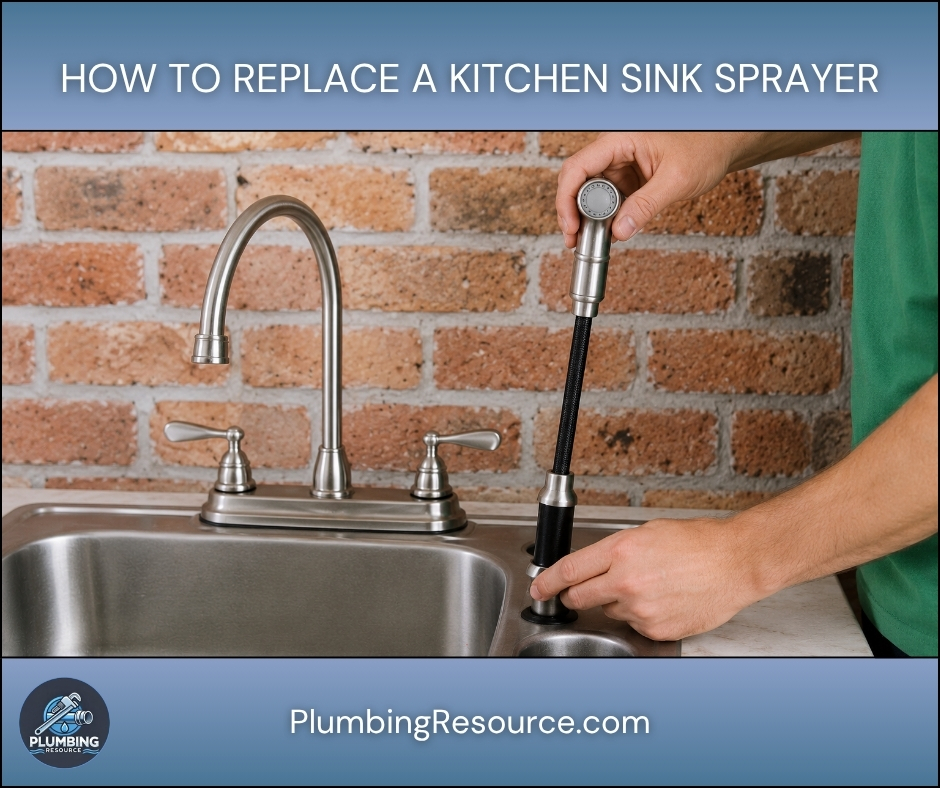
If your kitchen sprayer leaks, sticks, or sprays unevenly, it may be time to learn how to replace a kitchen sink sprayer. Fortunately, this project is simple for most homeowners and usually takes less than an hour. In addition, replacing a worn sprayer can improve water flow and prevent water damage under the sink.
🔍 Understanding the Project
A kitchen sink sprayer helps direct water exactly where you need it for rinsing dishes, cleaning the sink, and washing produce. However, the sprayer and hose experience constant movement, which eventually causes wear.
Common signs that replacement is needed include:
- Water leaking from the sprayer head
- Cracks in the hose
- Weak or uneven spray patterns
- The sprayer sticking in the on position
- Water dripping under the sink
Replacing the sprayer may also improve the appearance of your kitchen. Furthermore, many newer models provide better durability and more comfortable operation.
Compatibility matters before you begin. Some sprayers use universal connections, while others require brand-specific parts. Therefore, checking your faucet model can save time and frustration.
🧰 Tools & Materials
- New kitchen sink sprayer kit
- Adjustable wrench
- Basin wrench (if needed)
- Bucket or small container
- Towels or rags
- Flashlight
- Plumber’s tape (if recommended by the manufacturer)
- Safety glasses
🛠️ Step-By-Step Guide: How To Replace a Kitchen Sink Sprayer
1️⃣ Turn Off the Water Supply
Shut off both the hot and cold water valves under the sink. Then, squeeze the sprayer trigger to relieve any remaining pressure.
2️⃣ Clear Out the Cabinet
Remove stored items from beneath the sink. This gives you room to work and helps prevent damage to your belongings.
3️⃣ Place a Bucket Under the Faucet
A small amount of water may drain from the hose. Therefore, position a bucket or towel under the connections.
4️⃣ Disconnect the Old Sprayer Hose
Locate where the sprayer hose connects to the faucet body. Depending on the design, you may need to unscrew a threaded fitting or release a quick-connect clip.
5️⃣ Remove the Old Sprayer Head
Pull the hose up through the sink opening and remove the old sprayer and hose assembly.
6️⃣ Compare the New Parts
Lay the old and new sprayers side by side. Also, confirm that the hose length and connectors match.
7️⃣ Feed the New Hose Through the Sink
Insert the new hose through the sink opening from above. Make sure the hose moves freely without twisting.
8️⃣ Connect the New Hose
Attach the hose to the faucet according to the manufacturer’s instructions. Then, tighten the connection securely without over-tightening.
9️⃣ Install the New Sprayer Head
Attach the sprayer head to the hose if it is not already assembled. Check that all fittings are snug.
1️⃣0️⃣ Turn the Water Back On
Slowly open the shut-off valves under the sink. This helps prevent sudden pressure surges.
1️⃣1️⃣ Test the Sprayer
Run both hot and cold water through the faucet. Next, activate the sprayer several times to confirm smooth operation.
1️⃣2️⃣ Check for Leaks
Inspect every connection above and below the sink. If you notice moisture, tighten the fitting slightly and test again.
⚠️ Common Mistakes
- Buying a sprayer that does not fit the faucet
- Forgetting to shut off the water supply
- Twisting the hose during installation
- Over-tightening plastic fittings
- Ignoring small leaks after installation
- Losing quick-connect clips during removal
💡 Pro Tips
- Take a picture before disconnecting the old hose.
- Clean the sink opening before installing the new sprayer.
- Replace the hose and sprayer together for the best results.
- Keep the manufacturer’s instructions nearby during installation.
- Test the sprayer several times before storing your tools.
🔧 Troubleshooting
The sprayer has low pressure.
Check for kinks in the hose and confirm that the connection is fully seated.
The hose leaks underneath the sink.
Inspect the fitting for cross-threading or a damaged washer.
The sprayer stays on continuously.
The internal diverter valve inside the faucet may need service.
The hose catches on items under the sink.
Remove obstructions and verify that the hose weight moves freely.
👨🏻🔧 When to Call a Professional
You should contact a plumber if:
- The shut-off valves do not work
- The faucet body is leaking
- The sprayer connection is inaccessible
- The faucet requires specialty replacement parts
- You discover water damage under the sink
A professional can also inspect the faucet for additional wear that may require replacement.
❓ FAQ
How do I know if I need to replace a kitchen sink sprayer?
Leaks, cracks, weak spray patterns, and sticking triggers usually indicate that replacement is needed.
Can I replace a kitchen sink sprayer without replacing the faucet?
Yes. Most kitchen sink sprayers can be replaced independently if compatible parts are available.
Is kitchen faucet sprayer replacement difficult?
No. Most homeowners can complete the project with basic tools and moderate DIY skills.
How long does it take to replace a kitchen sink sprayer?
Most replacements take between 30 and 60 minutes.
Are kitchen sink sprayers universal?
Many are, but some faucets require brand-specific sprayer kits. Therefore, always verify compatibility.
✅ Conclusion
Learning how to replace a kitchen sink sprayer can save money and restore full function to your faucet. By using the right parts and following each step carefully, you can complete this project with confidence. In addition, routine inspection of the sprayer and hose can help prevent future leaks.
👋🏼 Before You Go…
If this guide helped you, save it for future reference and share it with friends or family tackling plumbing projects. A simple repair today can help prevent a bigger plumbing problem tomorrow.