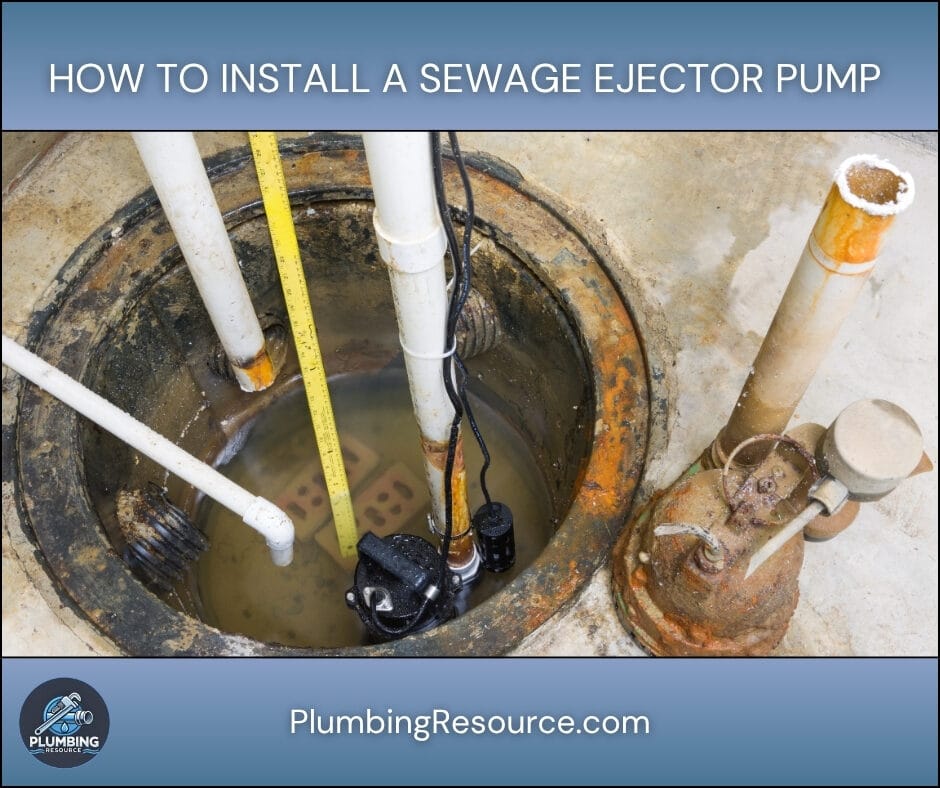
Learning how to install a sewage ejector pump is essential when adding plumbing fixtures below the main sewer line. A sewage ejector pump moves wastewater and sewage upward so it can reach the home’s main drain system. Therefore, this system makes basement bathrooms, laundry rooms, and utility sinks possible in lower-level spaces.
Although the project is complex, proper planning makes the installation much smoother. In addition, understanding the plumbing, venting, and electrical requirements helps prevent leaks, odors, backups, and pump failure later.
🔍 Understanding the Project
A sewage ejector pump system collects wastewater inside a sealed basin beneath the floor. Then, once the water reaches a certain level, the pump activates and pushes the waste upward into the home’s sewer or septic line.
Proper installation matters because the system handles raw sewage and pressurized discharge lines. Therefore, mistakes can create serious sanitation issues, sewer gas leaks, flooding, or repeated clogs.
Before you begin, consider these important factors:
- Fixture locations
- Main sewer line height
- Venting requirements
- Pump horsepower
- Basin size
- Electrical access
- Local plumbing code requirements
Common installation challenges include:
- Cutting and removing concrete
- Maintaining proper drain slope
- Vent routing limitations
- Tight basement access
- Connecting into existing sewer piping
- Electrical circuit requirements
Because every basement layout differs, careful planning is critical before starting the project.
🧰 Tools & Materials
- Sewage ejector pump
- Sewage ejector basin
- Gas-tight basin lid
- PVC or ABS pipe
- PVC or ABS fittings
- Check valve
- Ball valve
- Pipe hangers
- PVC or ABS Pipe primer
- PVC or ABS Pipe cement
- Rubber couplings
- Gravel
- Concrete mix
- Tape measure
- Level
- Shovel
- Concrete saw
- Jackhammer
- Hammer drill
- Pipe cutter
- Utility knife
- Adjustable wrench
- Screwdrivers
- Wet/dry vacuum
- Safety glasses
- Gloves
- Hearing protection
- GFCI receptacle
- High-water alarm
🛠️ Step-By-Step Guide: How To Install a Sewage Ejector Pump
1️⃣ Plan the Sewage Ejector Pump Location
Choose a location close to the basement fixtures. This reduces long drain runs and helps maintain proper pipe slope.
In addition, make sure the area allows access for future maintenance. Avoid tight corners where removing the pump later would be difficult.
The basin should also sit below all fixtures being served so gravity can move wastewater into the pit.
2️⃣ Determine the Pump Size
Choose the correct pump based on fixture load and discharge height.
Most residential systems use:
- 1/2 HP pumps for standard basement bathrooms
- 3/4 HP pumps for larger systems
- 2-inch discharge piping
However, larger homes or longer discharge runs may require a more powerful pump.
Always verify the manufacturer’s performance chart before purchasing the pump.
3️⃣ Mark and Cut the Basement Floor
Mark the basin outline on the concrete floor.
Next, use a concrete saw or grinder with a diamond blade to cut along the marked lines. After cutting the slab, use a jackhammer to break apart the concrete.
Remove all debris and expose the soil beneath the slab.
Because this process creates heavy dust, wear proper safety equipment during demolition.
4️⃣ Excavate the Basin Pit
Dig the hole deep enough for the basin and gravel base.
Most sewage ejector basins require several inches of gravel underneath for stability and drainage. Therefore, verify the required depth before digging.
Check the basin height frequently during excavation to avoid digging too deep.
The basin should sit level and flush with the finished floor height.
5️⃣ Install the Gravel Base
Pour gravel into the bottom of the excavation.
Then, compact and level the gravel base before placing the basin.
A stable base prevents the basin from shifting or settling later. In addition, it helps support the basin against groundwater pressure.
6️⃣ Set the Sewage Ejector Basin
Lower the basin carefully into the hole.
Use a level to confirm the basin sits evenly from all directions. If the basin tilts, the float switch may not operate correctly later.
Backfill around the basin with gravel while checking alignment repeatedly.
7️⃣ Install the Drain Lines
Run drain piping from the toilet, shower, sink, or laundry fixtures into the basin inlet openings.
Most installations use:
- 3-inch pipe for toilets
- 2-inch pipe for sinks and showers
Maintain proper slope throughout the drain system. Typically, horizontal drain lines require 1/4 inch of fall per foot.
Use long sweep fittings whenever possible because they improve flow and reduce clog risks.
8️⃣ Install the Sewage Ejector Pump
Place the pump inside the basin.
Do not lower the pump by the power cord. Instead, use the pump handle.
Position the pump so the float switch moves freely without hitting the basin walls or piping.
Next, attach the discharge pipe to the pump outlet according to manufacturer instructions.
9️⃣ Install the Check Valve
Install a sewage-rated check valve above the basin lid.
The check valve prevents wastewater from flowing back into the basin after the pump shuts off. Therefore, proper orientation is critical.
Always follow the flow arrow on the valve body.
Without a check valve, the pump may short cycle or overflow the basin.
1️⃣0️⃣ Install the Shutoff Valve
Install a ball valve above the check valve.
This shutoff valve allows future servicing without draining the entire discharge line.
Make sure the valve remains accessible after the installation is complete.
1️⃣1️⃣ Run the Discharge Line
Run the discharge pipe upward from the basin toward the main sewer line.
Secure the piping with hangers to reduce vibration and movement during pump operation.
Then, tie the discharge line into the building drain using approved fittings.
Because this section handles pressurized sewage discharge, strong connections are extremely important.
1️⃣2️⃣ Install the Vent Pipe
Install the vent pipe from the basin to the home’s vent system.
A proper vent allows air movement during pump operation. In addition, it prevents sewer gases from entering the basement.
Most systems require a full-sized vent connection through the roof or into an approved vent stack.
Avoid using unapproved mechanical vents unless local code allows them.
1️⃣3️⃣ Connect the Electrical Supply
Most sewage ejector pumps require a dedicated electrical circuit.
Install a GFCI-protected receptacle near the basin according to local code requirements.
Then, plug in the pump and high-water alarm.
If you are unfamiliar with electrical work, hire a licensed electrician for this step.
1️⃣4️⃣ Seal the Basin Lid
Install the gas-tight lid onto the basin.
Ensure all pipe penetrations and cord openings seal tightly.
A properly sealed lid prevents sewer gas odors and improves system safety.
Tighten the lid hardware evenly to avoid damaging the gasket.
1️⃣5️⃣ Test the Sewage Ejector Pump System
Fill the basin with water to test operation.
Watch the float activate the pump. Then, inspect all piping and fittings for leaks.
Flush toilets and run sinks to verify proper drainage.
Finally, test the high-water alarm to ensure it works correctly.
⚠️ Common Mistakes
- Installing the wrong pump size
- Forgetting the check valve
- Using improper drain slope
- Poor venting installation
- Failing to seal the basin lid
- Using sharp 90-degree fittings
- Skipping a dedicated electrical circuit
- Installing inaccessible shutoff valves
- Allowing the float switch to contact piping
- Using undersized discharge piping
💡 Pro Tips
- Install a high-water alarm for added protection.
- Use unions near the pump for easier future removal.
- Label the dedicated breaker in the electrical panel.
- Insulate discharge piping if noise is a concern.
- Test the system several times before closing walls.
- Keep extra lid gaskets available for future maintenance.
🔧 Troubleshooting
Pump Runs But Does Not Remove Water
Check for:
- Clogged discharge piping
- Stuck check valve
- Impeller blockage
- Air lock issues
Pump Will Not Turn On
Inspect:
- Circuit breaker
- GFCI receptacle
- Float switch movement
- Electrical connections
Sewage Odors Around the Basin
This often indicates:
- Loose lid seals
- Missing gaskets
- Improper venting
- Cracked piping
Pump Short Cycles
Short cycling usually happens because:
- The float switch is misadjusted
- The check valve failed
- The basin is undersized
👨🏻🔧 When to Call a Professional
You should contact a licensed plumber if:
- You must tie into the main sewer line
- You are unsure about venting requirements
- The basement floods frequently
- The installation requires major concrete removal
- Local code requires licensed installation
- You notice recurring backups or sewage odors
You should also hire a licensed electrician for new circuit installations if you lack electrical experience.
❓ FAQ
How deep should a sewage ejector basin be?
Most residential basins range from 24 to 36 inches deep. However, the exact depth depends on fixture elevations and local code requirements.
Can you install a sewage ejector pump without a vent?
No. A sewage ejector pump requires proper venting to operate correctly and prevent sewer gas buildup.
What size pipe is used to install a sewage ejector pump?
Most systems use 2-inch discharge piping and 3-inch drain piping for toilets.
How long does a sewage ejector pump last?
Most sewage ejector pumps last 7 to 15 years depending on usage, maintenance, and installation quality.
Can a sewage ejector pump handle toilet waste?
Yes. Sewage ejector pumps are specifically designed to handle solids and toilet waste from below-grade fixtures.
✅ Conclusion
Understanding how to install a sewage ejector pump helps you create a reliable basement plumbing system that handles wastewater efficiently. Although the project requires careful planning, proper installation prevents backups, odors, and future repairs.
By following each step carefully, you can build a system that operates smoothly for many years.
👋🏼 Before You Go…
If this guide helped you understand how to install a sewage ejector pump, save this page for future reference and share it with someone planning a basement plumbing project.