You notice a tiny drip under the kitchen sink. However, it only leaks occasionally, so it does not seem urgent. You place a towel underneath the pipe and plan to deal with it later.
Weeks pass. Then, the cabinet begins to smell musty. Next, the wood underneath the sink starts swelling. Eventually, the slow drip turns into hidden water damage that spreads inside the cabinet and surrounding wall.
Ignored slow leak problems often begin this way. Although the leak seems harmless at first, the long-term damage inside the plumbing system can become extremely expensive.
❌ Why Homeowners Make This Mistake
Many homeowners ignore small plumbing leaks because the water appears minimal. In addition, slow drips rarely create immediate flooding or major disruption.
People often assume:
- A small drip cannot cause serious damage
- The leak can wait until later
- Tightening a fitting will permanently solve the issue
- Minor leaks are normal in older homes
Unfortunately, plumbing systems do not improve with time. Instead, small leaks usually worsen as water pressure, corrosion, vibration, and pipe movement continue affecting the damaged area.
Internet advice can also make the problem worse. For example, some homeowners rely on temporary sealants or tape instead of fixing the actual plumbing failure.
🔍 What Happens Inside the Plumbing System
Ignored slow leak problems create hidden moisture inside walls, cabinets, ceilings, floors, and crawl spaces. Because the leak develops slowly, the damage often spreads unnoticed.
Even a tiny drip can continuously saturate surrounding materials. As a result, drywall, wood framing, flooring, insulation, and cabinetry begin absorbing moisture.
Inside the plumbing system, several issues may develop:
- Pipe corrosion
- Loose fittings
- Worn valve seals
- Cracked drain lines
- Damaged supply lines
- Failed fixture connections
In addition, constant moisture accelerates mold growth and wood deterioration. Over time, metal components may rust while pipe walls weaken.
Wastewater leaks can become even more dangerous. If a drain line slowly leaks inside a wall or under flooring, bacteria and sewer odors may spread throughout the home.
⚠️ Early Warning Signs Most People Miss
Ignored slow leak problems usually produce subtle warning signs first. However, many homeowners overlook these indicators until major damage appears.
Common warning signs include:
- Musty odors near fixtures
- Bubbling paint or soft drywall
- Swollen cabinets
- Warped flooring
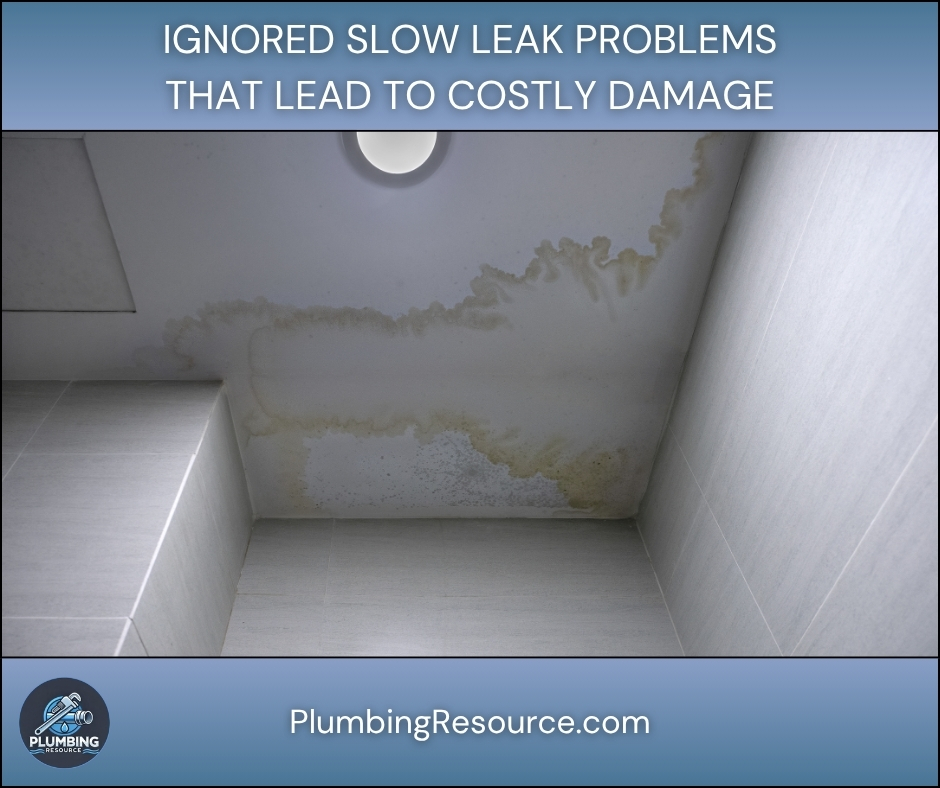
- Water stains on ceilings
- Increased water bills
- Mold around plumbing fixtures
- Dripping sounds inside walls
- Rust on shutoff valves or supply lines
In some cases, homeowners notice reduced water pressure because the leak gradually worsens inside the plumbing system.
🛠️ Short-Term Plumbing Problems
At first, slow leaks may only create minor inconveniences. Nevertheless, these small issues often signal larger plumbing failures developing behind the scenes.
Short-term problems include:
- Water stains
- Cabinet damage
- Mold spots
- Fixture corrosion
- Higher utility bills
- Damp flooring
- Minor drain line odors
Additionally, constant moisture can damage nearby plumbing components. Shutoff valves, angle stops, escutcheons, and fixture connections may deteriorate faster in damp environments.
Small leaks can also attract pests because insects and rodents seek out moisture sources.
💸 Long-Term Damage This Can Cause
Ignored slow leak problems can eventually create extensive structural and plumbing damage. Because the leak remains active for months or years, the repair costs increase dramatically.
Long-term damage may include:
- Rotted wood framing
- Mold infestations
- Ceiling collapse
- Subfloor deterioration
- Foundation moisture problems
- Damaged insulation
- Electrical hazards
- Sewer contamination
- Extensive pipe corrosion
Hidden leaks inside walls can also weaken structural supports. Consequently, repairs may involve demolition, mold remediation, flooring replacement, drywall work, and plumbing reconstruction.
If the leak affects wastewater piping, health risks become much more serious. Harmful bacteria and contaminated moisture can spread throughout the affected area.
Insurance claims may also become complicated. In many cases, prolonged neglect reduces coverage eligibility because the damage developed over time instead of from a sudden plumbing failure.
🚫 Common Myths and Bad Advice
Several plumbing myths encourage homeowners to ignore leaks longer than they should.
“It’s only a few drops.”
Even small drips waste significant amounts of water over time. In addition, continuous moisture slowly destroys surrounding materials.
“I can just tighten it later.”
Temporary tightening may reduce the leak briefly. However, worn seals, cracked fittings, or corroded pipe threads usually continue deteriorating.
“A bucket underneath solves the problem.”
A bucket only catches visible water. Meanwhile, hidden moisture may still spread behind walls, under flooring, or around fixtures.
“Leak tape permanently fixes plumbing leaks.”
Leak tape is temporary. Proper plumbing repairs usually require replacing damaged components or rebuilding failed connections.
✅ The Correct Way to Handle the Situation
The best approach is addressing leaks immediately, even if the drip appears minor.
Proper solutions may include:
- Replacing worn supply lines
- Installing new shutoff valves
- Rebuilding fixture connections
- Replacing corroded fittings
- Repairing damaged drain lines
- Replacing failed pipe sections
In addition, homeowners should routinely inspect:
- Under-sink plumbing
- Water heater connections
- Toilet supply lines
- Washing machine hoses
- Refrigerator water lines
- Shower valves
- Exposed drain piping
Moisture meters and leak detection equipment may also help locate hidden plumbing leaks before major damage develops.
👨🏻🔧 DIY vs When to Call a Licensed Plumber
Some small plumbing issues are manageable for homeowners. However, many leak problems require professional diagnosis and repair.
DIY Situations
Homeowners can often:
- Tighten loose supply connections
- Replace basic faucet washers
- Monitor visible drips
- Replace simple supply hoses
Call a Licensed Plumber When:
- The leak is inside walls
- Mold is present
- Drain lines are leaking
- Water pressure problems exist
- Pipe corrosion is visible
- Structural damage appears
- Water stains spread
- Sewer odors develop
Licensed plumbers use specialized equipment such as leak detection tools, moisture meters, inspection cameras, and pressure testing equipment to identify hidden plumbing failures accurately.
🧰 Prevention Tips That Actually Work
Preventing ignored slow leak problems requires consistent plumbing awareness and routine inspections.
Helpful prevention habits include:
- Check under sinks monthly
- Inspect supply lines regularly
- Replace aging shutoff valves
- Monitor water bills for sudden increases
- Address drips immediately
- Inspect around water heaters
- Watch for ceiling stains
- Replace old washing machine hoses
- Maintain proper drain line function
Additionally, annual plumbing inspections can identify hidden issues before expensive damage occurs.
Homeowners should also avoid delaying repairs simply because the leak seems small. Small plumbing failures rarely stay small for long.
❓ FAQ
Can a small plumbing leak really cause major damage?
Yes. Ignored slow leak problems can create severe water damage, mold growth, wood rot, and pipe corrosion over time.
How much water can a slow drip waste?
Even a slow drip can waste hundreds or thousands of gallons annually. In addition, hidden leaks increase utility bills steadily.
Are slow drain line leaks dangerous?
Yes. Wastewater leaks may spread bacteria, sewer gases, and moisture inside walls, flooring, and cabinets.
What are the first warning signs of hidden leak damage?
Musty odors, warped cabinets, bubbling paint, water stains, and mold growth are common early warning signs.
When should I call a plumber for a leak?
You should call a licensed plumber whenever the leak is hidden, worsening, causing stains, producing odors, or affecting the plumbing system.
✅ Conclusion
Ignored slow leak problems often begin with a tiny drip that seems harmless. However, small plumbing leaks can quietly destroy cabinets, walls, flooring, and structural materials over time.
The longer the leak continues, the more expensive the repairs usually become. Therefore, early detection and prompt repairs are critical for protecting your plumbing system and your home.
Paying attention to warning signs, inspecting plumbing fixtures regularly, and addressing leaks immediately can prevent serious long-term damage.
👋🏼 Before You Go…
If you found this helpful, save this page for future reference and share it with someone who may be ignoring a plumbing leak in their home.