You notice a small water stain under the kitchen sink. At first, it seems harmless. However, the stain slowly grows larger each week.
Eventually, the cabinet begins to smell musty. Then, you discover the real problem hiding behind the wall.
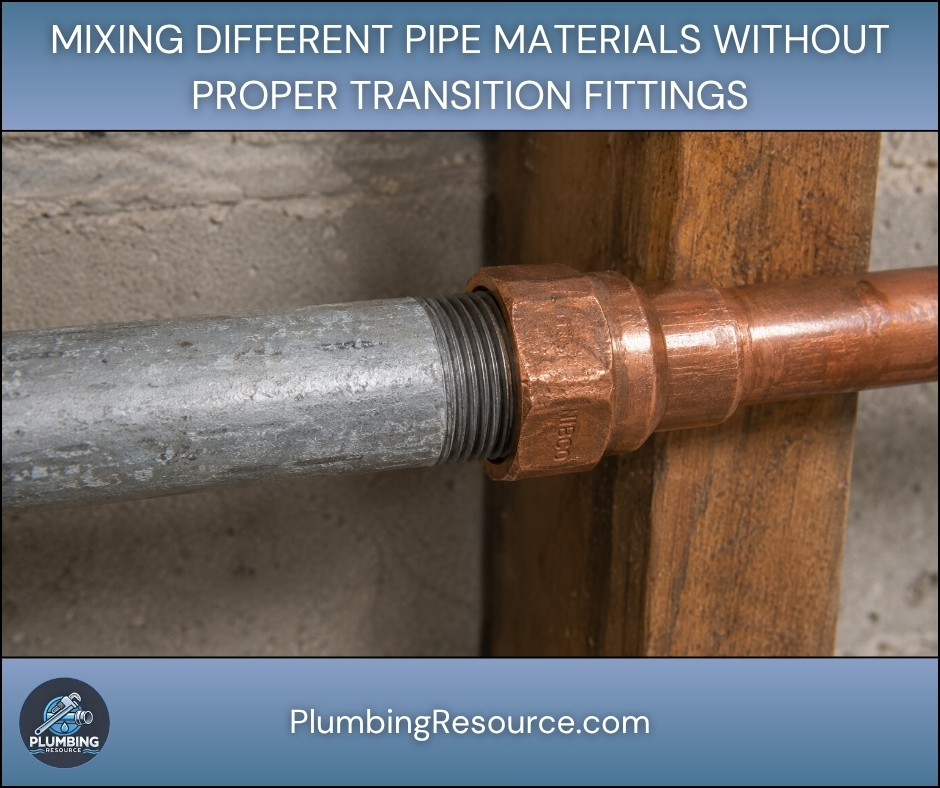
Many homeowners experience this issue after mixing different pipe materials without proper transition fittings. Although the plumbing may work initially, hidden damage can slowly develop inside the plumbing system.
Unfortunately, these problems often remain unnoticed until expensive repairs become necessary.
❌ Why Homeowners Make This Mistake
Many homeowners assume all plumbing pipes connect the same way. Therefore, they often combine materials without understanding compatibility issues.
For example, someone may connect copper pipe directly to galvanized steel pipe during a repair. Others may attach PVC pipe to metal piping using the wrong fittings.
This mistake seems harmless because the plumbing usually works immediately after installation. In addition, many internet videos oversimplify pipe connections and ignore long-term consequences.
Some homeowners also believe a tight connection automatically means a safe connection. However, plumbing systems involve pressure, temperature changes, corrosion risks, and material expansion.
Without proper transition fittings, those factors can create serious plumbing problems over time.
🔍 What Happens Inside the Plumbing System
When different pipe materials connect improperly, several hidden problems can develop inside the plumbing system.
One major issue is galvanic corrosion. This happens when two different metals touch while water flows through them.
For example, copper connected directly to galvanized steel can trigger electrochemical reactions. As a result, one metal begins corroding faster.
Although corrosion develops slowly, it gradually weakens pipe walls and fittings.
In addition, different materials expand and contract differently. Copper, PEX, PVC, and galvanized steel all respond to temperature changes differently.
Because of this movement, stress develops at connection points. Eventually, fittings loosen, seals fail, or cracks form.
Improper fittings can also restrict water flow. Therefore, pressure fluctuations may increase throughout the plumbing system.
Over time, wastewater drainage problems, buildup, and hidden leaks may develop behind walls or under floors.
⚠️ Early Warning Signs Most People Miss
The early warning signs are usually subtle. Therefore, many homeowners ignore them until significant damage occurs.
Watch for these common symptoms:
- Small leaks around fittings
- Green or white corrosion buildup
- Rust-colored water
- Reduced water pressure
- Moisture around pipe joints
- Slow drips under sinks
- Musty odors near plumbing fixtures
- Water stains on drywall or cabinets
In some cases, homeowners may also hear ticking or popping sounds as pipes expand and contract.
Although these symptoms seem minor initially, they often indicate worsening plumbing problems inside the system.
🛠️ Short-Term Plumbing Problems
Mixing different pipe materials without proper transition fittings can create immediate plumbing issues.
First, small leaks may begin around threaded fittings or pipe joints. Then, moisture can spread into cabinets, flooring, or drywall.
In addition, corrosion buildup may start restricting water flow through the pipe.
Some homeowners also experience inconsistent water pressure. For example, fixtures may sputter or lose pressure unexpectedly.
Drain line connections can also fail when incompatible materials shift under stress. Consequently, wastewater leaks may develop around fittings or pipe penetrations.
Even minor leaks can eventually create mold growth and unpleasant odors.
💸 Long-Term Damage This Can Cause
Long-term damage from improper pipe transitions can become extremely expensive.
Corrosion may eventually eat through pipe walls completely. As a result, major water leaks can occur behind walls or beneath concrete slabs.
In addition, continuous moisture exposure can damage:
- Drywall
- Flooring
- Cabinets
- Wood framing
- Insulation
If wastewater leaks develop, bacteria and sewage contamination may create serious health concerns.
Over time, hidden leaks can also weaken structural materials inside the home.
In severe cases, entire sections of the plumbing system may require replacement. Therefore, a small fitting mistake can eventually turn into a major plumbing renovation.
🚫 Common Myths and Bad Advice
Many homeowners receive misleading advice about mixing plumbing materials.
“If It Fits, It Works”
This is one of the most dangerous plumbing myths. Although pipes may physically connect, compatibility problems can still develop internally.
“A Little Corrosion Is Normal”
Minor discoloration is often ignored. However, corrosion usually indicates ongoing damage inside the pipe connection.
“Any Thread Sealant Fixes the Problem”
Thread tape and pipe dope cannot prevent galvanic corrosion between incompatible metals.
“DIY Adapters Work Fine Forever”
Temporary adapters may hold briefly. However, improper fittings often fail under long-term pressure and temperature changes.
“Plastic Pipe Prevents All Corrosion”
PVC and PEX reduce certain corrosion risks. However, improper transitions can still leak or fail mechanically.
✅ The Correct Way to Handle the Situation
The safest solution involves using approved transition fittings specifically designed for mixed pipe materials.
For example:
- Dielectric unions help separate copper and galvanized steel
- Proper threaded adapters protect metal-to-plastic transitions
- Shielded couplings support drain line material changes
- Manufacturer-approved fittings ensure compatibility
In addition, homeowners should always verify pipe material requirements before making repairs.
Proper support and alignment also matter. Therefore, pipes should never remain under tension or twisting force.
Whenever possible, matching pipe materials throughout the plumbing system helps reduce long-term risks.
👨🏻🔧 DIY vs When to Call a Licensed Plumber
Some simple pipe transitions may be manageable for experienced homeowners. For example, replacing a threaded adapter under a sink can sometimes be straightforward.
However, larger plumbing modifications require professional knowledge and equipment.
You should contact a licensed plumber when:
- Copper connects to galvanized steel
- Hidden leaks exist behind walls
- Water pressure problems appear
- Corrosion is visible
- Drain line materials are changing
- Plumbing code compliance is uncertain
- Specialized transition fittings are required
Licensed plumbers understand local plumbing code requirements and proper fitting compatibility.
In addition, professionals can inspect the entire plumbing system for hidden damage.
🧰 Prevention Tips That Actually Work
Preventing these plumbing problems is much easier than repairing them later.
Follow these practical prevention tips:
- Always use approved transition fittings
- Avoid direct metal-to-metal connections
- Inspect visible pipe joints regularly
- Replace heavily corroded fittings quickly
- Use manufacturer-approved plumbing materials
- Support pipes properly to reduce movement
- Monitor water pressure changes
- Schedule periodic plumbing inspections
In addition, homeowners should research pipe compatibility before starting DIY plumbing projects.
Small preventative steps can significantly extend the life of the plumbing system.
❓ FAQ
Can mixing different pipe materials cause leaks?
Yes. Mixing different pipe materials without proper transition fittings can create leaks from corrosion, expansion stress, and failed seals.
What is galvanic corrosion in pipes?
Galvanic corrosion happens when different metals contact each other in the presence of water. Consequently, one metal begins deteriorating faster.
Are dielectric unions necessary?
Yes. Dielectric unions help prevent galvanic corrosion between copper and galvanized steel piping.
Can improper pipe transitions reduce water pressure?
Yes. Corrosion buildup and poor fittings can restrict water flow and reduce pressure at plumbing fixtures.
Is it safe to connect PVC directly to metal pipe?
Only with the correct transition fittings. Otherwise, leaks and connection failures may develop over time.
✅ Conclusion
Mixing different pipe materials without proper transition fittings may seem harmless initially. However, hidden plumbing damage can slowly develop inside the system.
Corrosion, leaks, pressure problems, and structural damage often begin long before homeowners notice visible symptoms.
Fortunately, proper transition fittings and compatible plumbing materials can prevent most of these issues.
Understanding how plumbing systems react to different materials helps homeowners avoid costly repairs and long-term damage.
A properly installed plumbing system lasts longer, performs better, and protects the home from unnecessary water damage.
👋🏼 Before You Go…
If you found this article helpful, save it for future reference and share it with other homeowners. Many plumbing problems begin with small mistakes that people never realize are dangerous until expensive repairs appear.