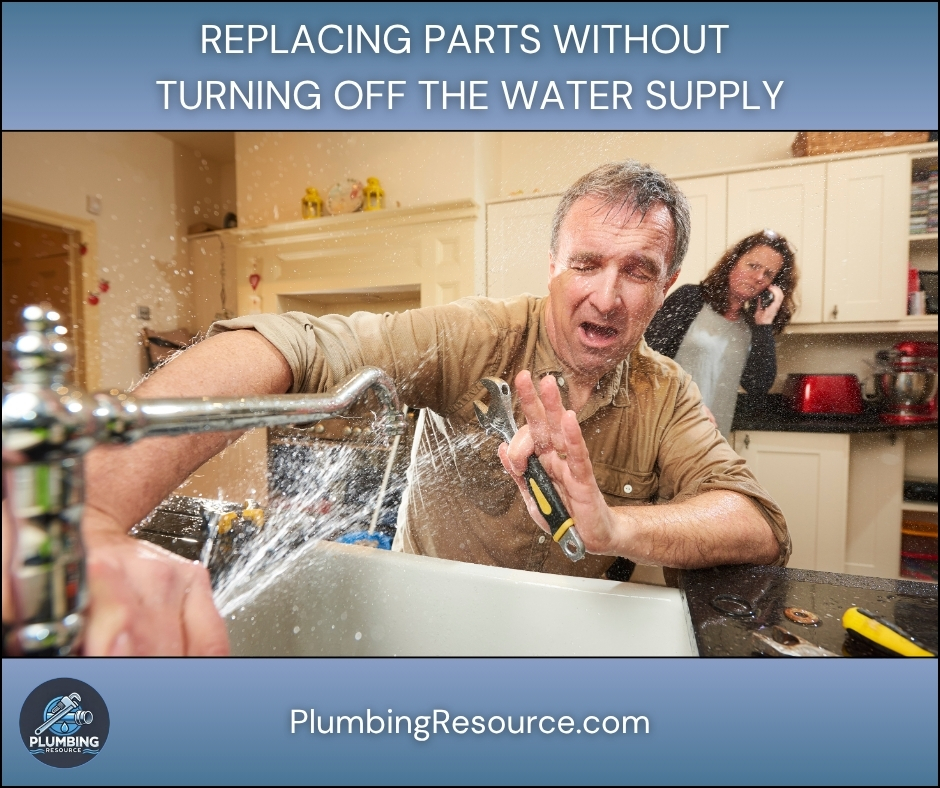
You notice a dripping faucet under the kitchen sink. Therefore, you decide to replace the shut-off valve or supply line quickly before heading to work. At first, the repair seems simple. However, the moment the fitting loosens, pressurized water sprays everywhere inside the cabinet.
Many homeowners experience this exact situation. In many cases, replacing parts without turning off the water supply creates panic, flooding, damaged cabinets, and expensive plumbing repairs within minutes.
Unfortunately, the damage often spreads faster than homeowners expect. As a result, flooring, drywall, insulation, and nearby fixtures can also become affected.
❌ Why Homeowners Make This Mistake
Many homeowners assume small plumbing repairs are harmless. Therefore, they believe they can quickly swap out a faucet supply line, angle stop, or cartridge without shutting off the main water supply.
In addition, online videos sometimes oversimplify plumbing repairs. Because of this, homeowners underestimate how much pressure exists inside a plumbing system.
Some people also believe the fixture itself will stop most of the water flow. However, pressurized water inside supply piping can release instantly once fittings loosen.
Another common misconception involves old shut-off valves. Homeowners may avoid touching them because they fear the valve will fail. Instead, they attempt repairs with live water pressure still inside the line.
🔍 What Happens Inside the Plumbing System
Inside the plumbing system, water remains under constant pressure. Therefore, every supply line, fixture connection, and valve contains stored force that immediately releases when opened.
When homeowners loosen fittings without isolating the water supply, pressurized water rapidly escapes through the opening. In many cases, the water flow becomes difficult to control because nearby valves may also fail.
Furthermore, older shut-off valves may contain worn washers, corrosion, mineral buildup, or damaged seals. As a result, they may not fully stop the water flow even when turned off.
Replacing parts without turning off the water supply can also introduce air into the lines. Consequently, water hammer, vibration, and sudden pressure surges may occur throughout the plumbing system.
Additionally, excessive movement during rushed repairs may crack brittle pipe walls or damage nearby fittings. Over time, these weakened connections may eventually develop hidden leaks.
⚠️ Early Warning Signs Most People Miss
Several warning signs often appear before major plumbing problems develop.
Replacing Parts Without Turning Off the Water Supply Creates Valve Problems
Small drips around shut-off valves usually indicate worn seals or internal deterioration. However, many homeowners ignore these minor leaks.
In addition, stiff valve handles often suggest mineral buildup or corrosion inside the valve body. Consequently, the valve may fail during an emergency.
Hidden Plumbing Pressure Issues
Banging noises inside the drain line or water piping may signal unstable pressure conditions. Likewise, fluctuating water flow at fixtures may indicate failing valves or loose internal components.
Another warning sign involves discoloration around cabinets or walls near plumbing fixtures. Therefore, even small leaks should never be ignored.
🛠️ Short-Term Plumbing Problems
Replacing parts without turning off the water supply often creates immediate plumbing issues.
For example, cabinets may quickly fill with water during a failed repair attempt. Consequently, wood materials begin swelling almost immediately.
In addition, flooring near the fixture may absorb water and start warping. Therefore, homeowners may face costly restoration work within hours.
Short-term plumbing problems may also include:
- Burst supply lines
- Failed compression fittings
- Flooded bathrooms
- Water-soaked drywall
- Fixture damage
- Sudden pressure loss
- Valve failure
Furthermore, rushing during live plumbing repairs increases the risk of cross-threaded fittings and cracked components.
💸 Long-Term Damage This Can Cause
Long-term damage from replacing parts without turning off the water supply can become extremely expensive.
Water trapped behind walls often creates hidden mold growth. As a result, indoor air quality problems may develop over time.
In addition, moisture exposure weakens drywall, flooring, framing, and insulation. Therefore, structural repairs may eventually become necessary.
Hidden plumbing leaks may also damage electrical wiring near wet areas. Consequently, homeowners may face both plumbing and electrical hazards.
Long-term plumbing damage may include:
- Mold growth
- Rotting wood
- Damaged subflooring
- Corroded fittings
- Sewer gas intrusion
- Damaged cabinetry
- Fixture deterioration
- Increased water bills
Furthermore, repeated emergency repairs place additional stress on the entire plumbing system.
🚫 Common Myths and Bad Advice
Several plumbing myths continue causing expensive homeowner mistakes.
“It’s Just a Small Leak”
Many homeowners believe small repairs carry little risk. However, even minor supply lines can release large amounts of water rapidly.
“The Fixture Valve Is Enough”
Some people trust fixture shut-off valves completely. Unfortunately, many older valves fail internally and cannot fully stop water flow.
“Quick Repairs Save Time”
Quick repairs often create larger plumbing emergencies. Therefore, rushing usually increases overall repair costs.
“Online DIY Videos Make It Easy”
Some online tutorials skip important safety steps. As a result, homeowners may attempt repairs without understanding plumbing pressure or valve conditions.
✅ The Correct Way to Handle the Situation
The safest approach always involves shutting off the water supply before beginning plumbing repairs.
First, locate the nearest fixture shut-off valve. Then, test the valve carefully to confirm it fully stops the water flow.
If the fixture valve fails, shut off the home’s main water supply valve instead. Afterward, open nearby fixtures to relieve remaining pressure inside the piping.
In addition, keep towels, buckets, and basic emergency tools nearby before disconnecting plumbing components.
Best practices include:
- Testing shut-off valves regularly
- Inspecting fittings for corrosion
- Replacing old valves proactively
- Relieving system pressure first
- Using proper plumbing tools
- Avoiding rushed repairs
Furthermore, homeowners should always verify leak-free operation before restoring full water pressure.
👨🏻🔧 DIY vs When to Call a Licensed Plumber
Some plumbing repairs remain safe for homeowners. For example, replacing faucet supply lines or fixture cartridges may be manageable after properly shutting off the water supply.
However, certain repairs require professional equipment and experience.
Call a Licensed Plumber When:
- Shut-off valves fail
- Pipes are corroded
- Water pressure is unstable
- Leaks occur inside walls
- Soldering becomes necessary
- Main water lines require repairs
- Water damage already exists
In addition, plumbing code requirements may apply during valve replacements or fixture modifications.
A licensed plumber can also identify hidden plumbing system issues before they become larger problems.
🧰 Prevention Tips That Actually Work
Preventing plumbing emergencies starts with proper preparation.
Replacing Parts Without Turning Off the Water Supply Can Be Prevented
Homeowners should test shut-off valves at least twice yearly. Therefore, valves remain functional during emergencies.
In addition, replacing aging supply lines before failure reduces flooding risks significantly.
Helpful prevention habits include:
- Learn the main water shut-off location
- Label important shut-off valves
- Replace corroded fittings early
- Avoid overtightening connections
- Inspect cabinets for hidden leaks
- Monitor water pressure regularly
- Keep emergency plumbing tools available
Furthermore, annual plumbing inspections help identify weak points inside the plumbing system before failures occur.
❓ FAQ
Can replacing plumbing parts without shutting off water cause flooding?
Yes. Pressurized water can release immediately once fittings loosen. Therefore, flooding may occur within seconds.
Why do shut-off valves sometimes fail?
Older valves often develop corrosion, mineral buildup, or worn seals. As a result, they may not fully stop water flow.
Is it safe to repair plumbing under pressure?
In most cases, no. Plumbing repairs should only occur after properly isolating the water supply and relieving pressure.
What should I do if a shut-off valve leaks?
Turn off the main water supply immediately. Then, contact a licensed plumber if the valve cannot safely stop the water flow.
Can hidden leaks develop after rushed plumbing repairs?
Yes. Improperly tightened fittings and damaged connections may slowly leak behind walls or cabinets over time.
✅ Conclusion
Replacing parts without turning off the water supply may seem like a quick shortcut. However, this mistake often leads to expensive water damage, hidden leaks, and emergency plumbing repairs.
Fortunately, most of these problems are completely preventable. By shutting off the water properly, relieving pressure, and using safe repair practices, homeowners can protect their plumbing system and avoid unnecessary damage.
In addition, understanding how water pressure affects fixtures, valves, and pipe walls helps homeowners make safer repair decisions in the future.
👋🏼 Before You Go…
If you found this helpful, save this page for future plumbing repairs and share it with other homeowners. You may help someone avoid a costly plumbing disaster before it starts.