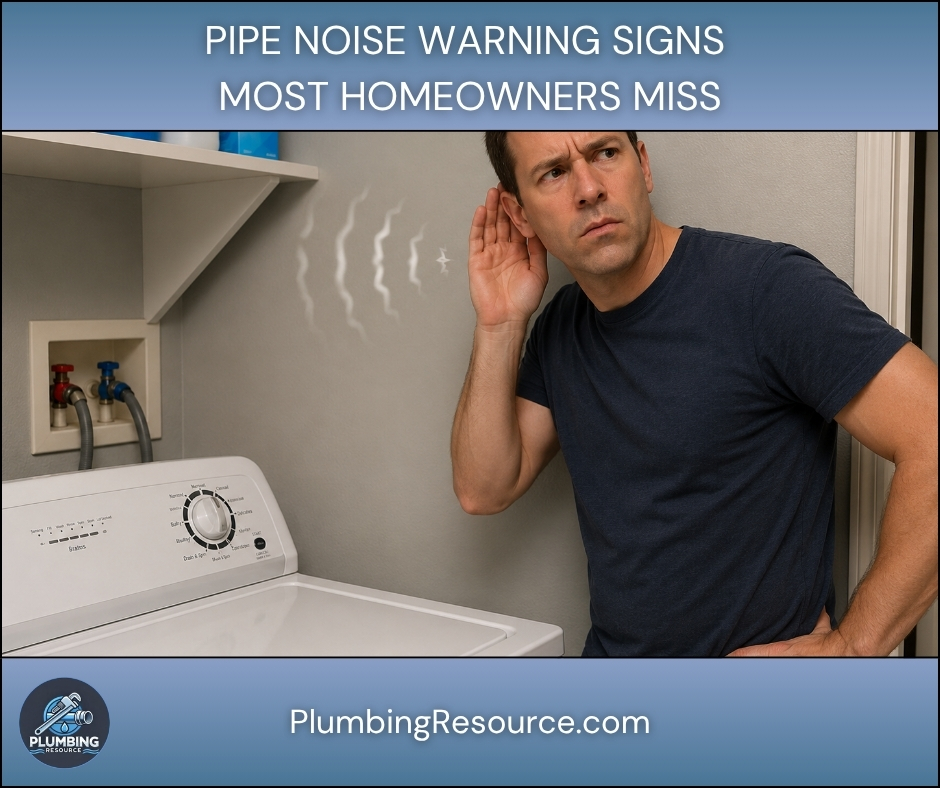
You hear a loud bang when the washing machine shuts off. Then, a few days later, you notice rattling pipes under the sink. Many homeowners ignore these sounds because the plumbing still works normally. However, pipe noise warning signs most homeowners miss can signal serious hidden problems inside the plumbing system.
At first, the noises may seem harmless. In many homes, people assume older plumbing simply makes sounds over time. Unfortunately, noisy pipes often point to pressure issues, loose fittings, water hammer conditions, or hidden pipe damage developing behind walls.
❌ Why Homeowners Make This Mistake
Most homeowners focus on stopping the noise instead of identifying the real issue. Therefore, they often overlook early plumbing warning signs.
Some people assume:
- Pipe noises are normal
- Older homes always make sounds
- Small rattles are harmless
- The issue will eventually disappear
- Temporary fixes solve the problem
In addition, internet advice often promotes quick solutions that only mask symptoms. For example, homeowners may wrap insulation around pipes or lower water usage temporarily. However, the real plumbing issue usually remains unresolved.
Because pipes stay hidden behind walls and ceilings, damage can continue quietly for months.
🔍 What Happens Inside the Plumbing System
Pipe noise warning signs most homeowners miss usually involve pressure changes, pipe movement, restricted flow, or unstable fittings. Therefore, the noises often indicate mechanical stress inside the plumbing system.
Common causes include:
- Water hammer
- Excessive water pressure
- Loose pipe supports
- Failing shutoff valves
- Worn pressure-reducing valves
- Pipe corrosion
- Drain line blockages
- Thermal expansion
- Venting problems
When water flow suddenly stops, pressure shock travels through the pipes. As a result, the pipe walls may slam against framing or fittings. Over time, repeated movement weakens joints, valves, and connections.
In addition, clogged drain lines or blocked venting systems may create gurgling sounds. These noises often signal developing wastewater flow problems inside the plumbing system.
⚠️ Early Warning Signs Most People Miss
Many noisy plumbing problems develop slowly. Therefore, homeowners may not realize the issue is worsening.
Watch for these warning signs:
- Banging pipes inside walls
- Rattling under sinks
- Vibrating supply lines
- Gurgling drains
- Whistling faucets
- Sudden pressure changes
- Repeated ticking sounds
- Toilet refill noises
- Pipe movement during appliance use
In addition, small leaks sometimes develop near vibrating fittings. If pipe noises become louder or more frequent, the plumbing issue is usually becoming more severe.
Some homeowners only hear the sounds during heavy water usage. For example, dishwashers, washing machines, or fast-closing valves often trigger water hammer conditions.
🛠️ Short-Term Plumbing Problems
At first, noisy pipes may only create irritation. However, short-term plumbing damage can appear quickly.
Common early problems include:
- Loose fittings
- Minor leaks
- Fixture instability
- Pipe vibration
- Valve wear
- Reduced water flow
- Appliance connection strain
In addition, repeated pressure shock places extra stress on supply lines and shutoff valves. Therefore, weak plumbing connections may eventually begin leaking behind walls or cabinets.
Some drain-related noises may also indicate developing sewer line restrictions.
💸 Long-Term Damage This Can Cause
Pipe noise warning signs most homeowners miss can eventually lead to expensive plumbing repairs. Therefore, recurring plumbing noises should never be ignored.
Long-term damage may include:
- Burst pipes
- Slab leaks
- Water damage inside walls
- Mold growth
- Ceiling damage
- Structural wood rot
- Pipe joint separation
- Sewer line issues
- Fixture failure
High water pressure can also shorten the lifespan of faucets, washing machine hoses, water heaters, and valves. In addition, repeated water hammer conditions gradually weaken solder joints and threaded fittings.
If wastewater systems become affected, contamination and sewer odor problems may develop as well.
🚫 Common Myths and Bad Advice
“Noisy Pipes Are Normal”
Some plumbing systems naturally make minor sounds. However, loud or worsening pipe noises often indicate underlying plumbing issues.
“Just Tighten a Pipe Strap”
Loose straps may contribute to noise. However, they rarely solve the root cause entirely.
“Water Hammer Is Harmless”
Water hammer creates pressure shock inside pipes. Over time, repeated shock damages fittings and pipe walls.
“Drain Gurgling Is Nothing Serious”
Gurgling often signals venting restrictions or partial drain line blockages.
“If There’s No Leak, There’s No Problem”
Many plumbing issues remain hidden long before visible water damage appears.
✅ The Correct Way to Handle the Situation
The best solution starts with identifying the exact source of the noise. Therefore, homeowners should investigate the plumbing system carefully instead of hiding symptoms.
Proper repairs may include:
- Installing water hammer arrestors
- Securing loose piping
- Lowering excessive water pressure
- Replacing failing valves
- Repairing PRVs
- Correcting venting problems
- Clearing drain line buildup
- Replacing worn fittings
In addition, plumbers may perform pressure testing or camera inspections to identify hidden damage inside walls or underground sewer lines.
If thermal expansion contributes to the noise, an expansion tank may also help protect the plumbing system.
👨🏻🔧 DIY vs When to Call a Licensed Plumber
Some plumbing noises are safe for homeowners to investigate. However, larger problems require professional equipment and experience.
DIY Tasks Homeowners Can Handle
- Checking visible pipe supports
- Listening for fixture-specific noises
- Monitoring pressure changes
- Inspecting for visible leaks
- Observing when noises occur
When to Call a Licensed Plumber
- Loud banging pipes
- Persistent water hammer
- Hidden wall noises
- Sewer odors
- Drain gurgling
- Sudden pressure loss
- Water stains
- Repeated pipe vibration
- Suspected hidden leaks
Licensed plumbers can evaluate pressure conditions, inspect drain lines, and locate hidden plumbing damage safely.
🧰 Prevention Tips That Actually Work
Preventing noisy plumbing problems requires early attention and regular maintenance.
Helpful prevention methods include:
- Maintain proper water pressure
- Install water hammer arrestors
- Secure exposed piping
- Replace aging shutoff valves
- Address small leaks immediately
- Inspect fixtures regularly
- Monitor drain performance
- Schedule plumbing inspections
In addition, homeowners should pay attention to sudden plumbing changes. New noises often indicate new problems developing inside the plumbing system.
Routine inspections can prevent expensive repairs later.
❓ FAQ
What causes loud banging pipes?
Loud banging pipes usually result from water hammer, excessive pressure, or loose piping inside the plumbing system.
Are pipe noise warning signs dangerous?
Yes. Pipe noise warning signs most homeowners miss can indicate hidden leaks, pressure problems, or failing plumbing components.
Why do my drains gurgle?
Gurgling drains often signal venting problems or partial blockages inside the drain line.
Can high water pressure damage pipes?
Yes. Excessive pressure stresses pipe walls, valves, fixtures, and appliance connections over time.
Should I ignore occasional pipe noises?
No. Even occasional noises may indicate developing plumbing problems that worsen gradually.
✅ Conclusion
Pipe noise warning signs most homeowners miss often point to hidden plumbing problems developing behind walls, under floors, or inside drain lines. Although the sounds may seem minor initially, they can eventually lead to leaks, water damage, sewer issues, and expensive repairs.
Therefore, homeowners should never focus only on silencing noisy pipes. Instead, identifying and fixing the underlying plumbing issue early can protect the entire plumbing system from long-term damage.
Paying attention to plumbing warning signs today may prevent major repair costs tomorrow.
👋🏼 Before You Go…
If this article helped you understand noisy plumbing warning signs, save it for later and share it with other homeowners. Many plumbing problems start with small sounds that people ignore until serious damage appears.