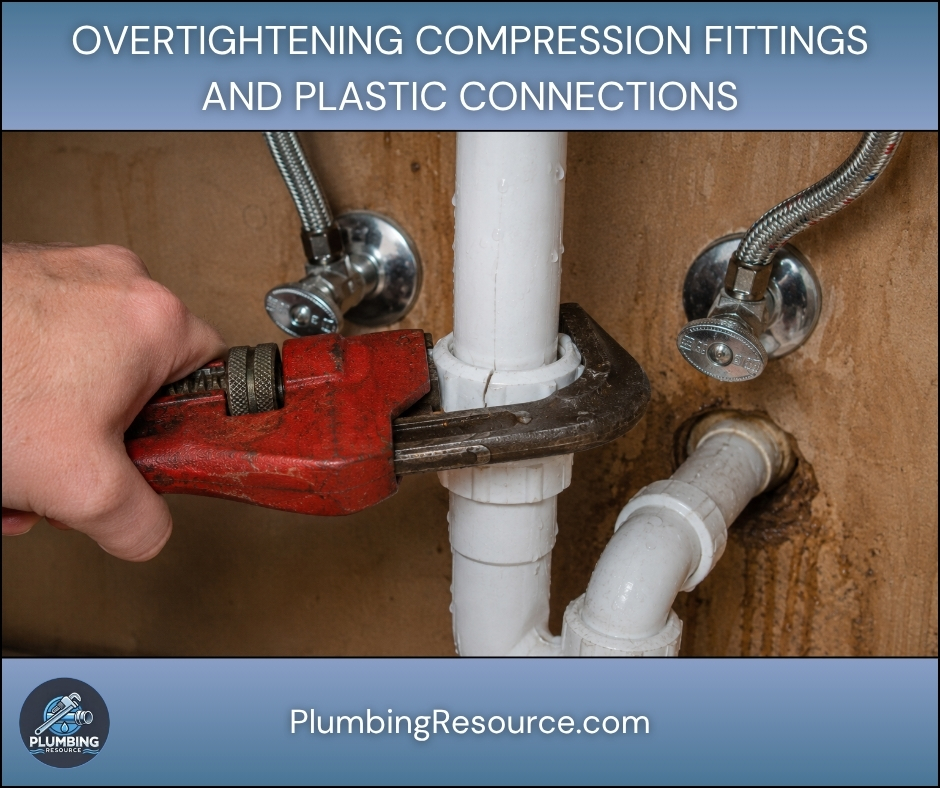
A homeowner notices a small drip under the bathroom sink after replacing an angle stop valve. Therefore, they grab a wrench and tighten the compression fitting harder. At first, the leak slows down. However, a few days later, the cabinet floor becomes soaked.
Many homeowners accidentally create hidden plumbing problems this way. Overtightening compression fittings and plastic connections often damages the very parts meant to stop leaks.
❌ Why Homeowners Make This Mistake
Most homeowners believe tighter connections create better seals. In addition, many online tutorials oversimplify plumbing repairs and encourage excessive tightening.
Plastic fittings and compression connections often appear weak compared to metal hardware. Because of this, homeowners assume they must apply extra force to prevent water leaks.
Unfortunately, plumbing fittings are designed to seal at specific pressure levels. Once overtightened, the fitting, gasket, ferrule, or pipe walls may crack or deform.
🔍 What Happens Inside the Plumbing System
Overtightening compression fittings and plastic connections creates stress inside the plumbing system. As a result, fittings can warp, split, or lose their sealing ability.
Compression fittings work by squeezing a ferrule around a pipe. However, excessive tightening crushes the ferrule unevenly. This can damage copper tubing, plastic supply lines, or fixture connections.
Plastic plumbing connections are even more vulnerable. Because plastic expands and contracts with temperature changes, overtightened threads often crack over time.
In many cases, homeowners cannot immediately see the damage. Small fractures may slowly worsen behind walls, beneath sinks, or around fixtures.
⚠️ Early Warning Signs Most People Miss
Small warning signs usually appear before major plumbing failure occurs. However, many homeowners overlook them.
Common early symptoms include:
- Minor dripping around fittings
- Water stains beneath sinks
- White mineral buildup around threaded connections
- Musty odors near cabinets
- Slight movement in supply lines
- Hairline cracks in plastic fittings
- Intermittent pressure loss
In addition, wastewater leaks near drain line fittings may create hidden moisture inside walls. Therefore, mold growth and wood damage can develop slowly.
🛠️ Short-Term Plumbing Problems
Overtightening compression fittings and plastic connections can quickly create frustrating plumbing issues.
Short-term problems often include:
Leaking Fixture Connections
Excessive pressure may deform washers or seals. As a result, faucets, toilets, and shut-off valves may leak immediately.
Cracked Plastic Threads
Plastic threaded fittings can split during installation. However, some cracks remain hidden until water pressure increases.
Damaged Supply Lines
Braided supply lines and plastic tubing may weaken under excessive stress. Therefore, sudden leaks become more likely.
Misaligned Plumbing Connections
Overtightening can twist pipes out of alignment. Consequently, additional strain develops throughout the plumbing system.
💸 Long-Term Damage This Can Cause
Long-term plumbing damage can become extremely expensive if leaks remain hidden.
Structural Water Damage
Slow leaks may damage flooring, cabinets, drywall, and framing. In addition, moisture trapped behind walls often spreads unnoticed.
Mold and Mildew Growth
Persistent moisture creates ideal conditions for mold growth. Therefore, indoor air quality may suffer over time.
Corrosion Around Metal Fittings
Water leaks accelerate corrosion around nearby plumbing components. Consequently, additional pipe failures may develop.
Sewer and Drainage Problems
Leaking wastewater connections may weaken surrounding materials. In severe cases, drain line instability or blockage problems can develop.
Expensive Emergency Repairs
A small overtightened fitting can eventually burst unexpectedly. As a result, homeowners may face emergency water extraction and plumbing repairs.
🚫 Common Myths and Bad Advice
Many plumbing myths contribute to overtightening compression fittings and plastic connections.
“Tighter Is Always Better”
This is one of the most damaging plumbing misconceptions. Most fittings only require snug tightening plus a slight additional turn.
“Plastic Fittings Are Weak”
Plastic plumbing components are designed to withstand pressure correctly. However, overtightening often destroys them prematurely.
“Leaks Mean You Must Tighten More”
Leaks may actually indicate cracked fittings, damaged ferrules, or cross-threaded connections. Therefore, adding more force often worsens the issue.
“Pipe Thread Tape Fixes Everything”
Thread seal tape helps threaded connections seal properly. However, it cannot repair cracked fittings or distorted sealing surfaces.
✅ The Correct Way to Handle the Situation
Proper installation techniques help prevent fitting damage and hidden plumbing leaks.
Follow Manufacturer Tightening Guidelines
Every fitting type has recommended tightening limits. Therefore, always follow installation instructions carefully.
Hand Tighten First
Start threaded fittings by hand to prevent cross-threading. Then, use tools carefully for final tightening.
Avoid Excessive Force
Compression fittings usually need only slight wrench tightening after hand tightening. Overtightening creates more problems than loose fittings.
Inspect Components Carefully
Before installation, inspect ferrules, washers, gaskets, and threaded fittings for damage or defects.
Replace Cracked Plastic Parts Immediately
Never reuse damaged plastic fittings. Even tiny fractures can eventually fail under water pressure.
👨🏻🔧 DIY vs When to Call a Licensed Plumber
Some plumbing repairs are manageable for homeowners. However, others require professional experience and equipment.
DIY Situations
Homeowners can usually:
- Replace accessible supply lines
- Install simple fixture connections
- Tighten fittings carefully
- Inspect visible plumbing leaks
Call a Licensed Plumber When:
- Plastic fittings crack inside walls
- Water damage is already visible
- Multiple fittings continue leaking
- Copper pipe becomes deformed
- Drain line or sewer line leaks develop
- Mold or structural damage appears
Licensed plumbers understand proper torque, venting requirements, fixture installation methods, and plumbing code compliance.
🧰 Prevention Tips That Actually Work
Simple habits can help homeowners avoid costly plumbing connection damage.
Use Two Wrenches
One wrench should stabilize the fitting body while the other tightens the nut. Therefore, twisting stress stays minimized.
Tighten Slowly
Apply gradual pressure instead of sudden force. This helps prevent cracked fittings and damaged pipe walls.
Inspect Connections After Installation
After turning water back on, monitor fittings carefully for several minutes.
Avoid Cheap Plastic Components
Low-quality fittings often fail more easily. Therefore, durable plumbing materials usually provide better long-term performance.
Recheck Connections Later
Some fittings settle slightly after installation. Consequently, a minor adjustment may be needed later without overtightening.
❓ FAQ
Can overtightening compression fittings cause leaks?
Yes. Overtightening compression fittings can deform ferrules, crack fittings, and damage sealing surfaces, which often creates leaks.
Why do plastic plumbing connections crack?
Plastic connections crack because excessive force stresses the threads and fitting body. Over time, temperature changes worsen the damage.
How tight should compression fittings be?
Most compression fittings should be hand tightened first, then tightened slightly with a wrench according to manufacturer instructions.
Are metal fittings safer than plastic fittings?
Metal fittings are generally stronger. However, both metal and plastic fittings fail when overtightened.
Can small plumbing leaks become serious?
Yes. Even small leaks may eventually cause water damage, mold growth, corrosion, and structural problems.
✅ Conclusion
Overtightening compression fittings and plastic connections may seem harmless at first. However, hidden plumbing damage often develops slowly behind walls, under fixtures, and inside cabinets.
Small leaks can quickly become expensive repairs if homeowners ignore the warning signs. Therefore, proper installation methods and careful tightening practices are extremely important.
Understanding how plumbing connections seal properly helps homeowners avoid cracked fittings, hidden water damage, and unnecessary plumbing failures.
👋🏼 Before You Go…
If you found this article helpful, save it for future plumbing projects and share it with someone who enjoys DIY home repairs. A simple mistake with a plumbing connection can eventually lead to major water damage, so awareness and prevention matter.