You notice a small drip under the sink. Therefore, you tighten the fitting slightly and assume the problem is solved. However, the leak keeps returning every few weeks.
Eventually, the cabinet begins swelling from water exposure. In addition, you start noticing musty odors and water stains nearby. What seemed like a harmless shortcut often turns into one of the most common wrong size pipe problems homeowners face.
Many homeowners use a pipe or fitting “because it almost fits.” Unfortunately, plumbing systems do not tolerate improper sizing for very long.
❌ Why Homeowners Make This Mistake
Many pipe sizes look nearly identical. Therefore, homeowners often assume the difference does not matter.
For example, someone may force a 1-1/4-inch fitting onto a slightly different pipe type. In other cases, homeowners mix incompatible materials or thread types. Because the connection feels tight at first, they assume the installation is correct.
Hardware stores also sell many adapters and reducers. Consequently, people believe almost any combination can work together safely.
Internet videos sometimes encourage quick plumbing shortcuts. However, these shortcuts often ignore long-term plumbing system performance.
🔍 What Happens Inside the Plumbing System
Wrong size pipe problems usually begin with poor sealing. Therefore, water slowly escapes through tiny gaps around the connection.
In drain lines, incorrect sizing disrupts wastewater flow. As a result, buildup forms more quickly inside the pipe walls. Over time, this restriction creates recurring blockages and slow drainage.
Water supply lines experience different issues. For example, undersized piping can reduce water pressure at fixtures throughout the home. In contrast, oversized sections may reduce proper flow velocity and contribute to stagnant water.
Improper pipe sizing also affects venting performance. Consequently, drains may gurgle or lose trap seals because air movement inside the plumbing system becomes unstable.
Threaded fittings create additional risks. If the threads are mismatched or forced together, the connection may crack internally. Unfortunately, homeowners often cannot see this hidden damage immediately.
⚠️ Early Warning Signs Most People Miss
Many wrong size pipe problems begin with subtle symptoms. However, these warning signs usually worsen over time.
Common early signs include:
Wrong Size Pipe Problems Around Fixtures
- Small drips under sinks
- Water stains near fittings
- Intermittent sewer odors
- Loose pipe connections
- Condensation near joints
Drainage Symptoms That Often Appear
- Slow draining fixtures
- Gurgling drains
- Frequent clogs
- Bubbling toilets
- Wastewater backups
Water Supply Symptoms
- Low water pressure
- Pipe vibration
- Whistling noises
- Uneven fixture flow
- Temperature fluctuations
Because these symptoms develop gradually, many homeowners ignore them until major plumbing damage occurs.
🛠️ Short-Term Plumbing Problems
At first, the damage may seem minor. However, small plumbing issues can escalate quickly.
Improperly sized fittings often create constant tension on the pipe. Therefore, joints begin loosening during normal expansion and contraction cycles.
Drain systems may start trapping debris more easily. Consequently, kitchen sinks and bathroom fixtures clog more frequently.
Water leaks also create immediate repair concerns. For example, even a slow drip can damage cabinets, drywall, flooring, and insulation.
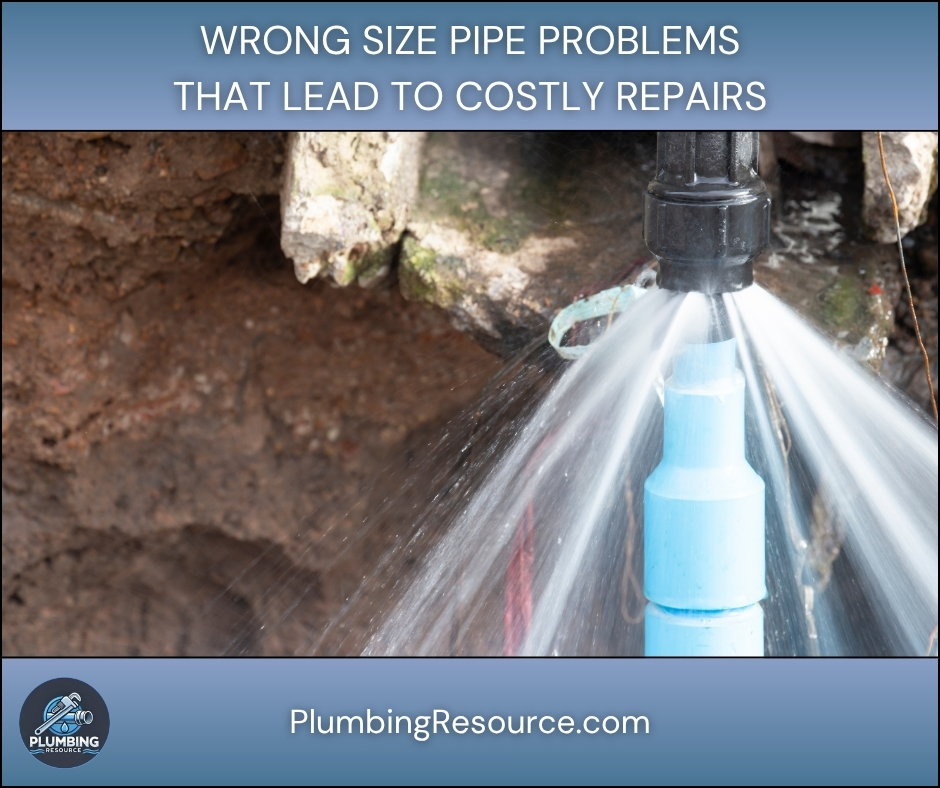
In addition, poorly matched fittings may suddenly separate under pressure. This failure can release large amounts of water into the home without warning.
💸 Long-Term Damage This Can Cause
Long-term wrong size pipe problems become extremely expensive. Therefore, ignoring the issue usually increases repair costs significantly.
Hidden leaks can rot framing, subfloors, and cabinets. In addition, mold growth may develop behind walls or beneath flooring.
Improper drain sizing may contribute to sewer line blockages. Consequently, wastewater backups can occur inside tubs, showers, and toilets.
Water supply issues can also shorten fixture lifespan. For example, pressure imbalance stresses valves, faucets, and appliance connections.
In severe cases, incorrect pipe sizing creates chronic plumbing system instability. As a result, homeowners may eventually need partial repiping work.
Structural water damage becomes another major concern. Because leaks often remain hidden, moisture can spread for months before discovery.
🚫 Common Myths and Bad Advice
Many plumbing myths contribute to wrong size pipe problems.
“If It Tightens, It Fits”
This is one of the most dangerous plumbing assumptions. However, forced fittings often damage threads or sealing surfaces internally.
“A Little Leak Is Normal”
No plumbing connection should continuously drip. Therefore, even small leaks indicate a problem requiring correction.
“Pipe Tape Fixes Everything”
Thread seal tape helps proper fittings seal correctly. However, it cannot compensate for incorrect pipe size or mismatched threads.
“Adapters Solve Every Problem”
Adapters work only when used properly. In contrast, stacking multiple adapters together often weakens the connection.
“Drain Pipes Can Be Any Size”
Drain lines require proper sizing for venting and wastewater flow. Otherwise, recurring blockage problems often develop.
✅ The Correct Way to Handle the Situation
Proper pipe sizing starts with accurate identification. Therefore, homeowners should verify pipe diameter, material type, and thread style before purchasing fittings.
Always use compatible plumbing materials designed for the application. For example, copper, PEX, PVC, galvanized steel, and ABS all require specific connection methods.
When working on drain lines, maintain correct pipe slope and sizing requirements. Consequently, wastewater can flow efficiently through the system.
Use manufacturer-approved fittings whenever possible. In addition, avoid forcing connections that feel unusually tight or misaligned.
If uncertain, take the original fitting to a plumbing supplier for matching. This simple step often prevents costly installation errors.
👨🏻🔧 DIY vs When to Call a Licensed Plumber
Some minor plumbing tasks are manageable for homeowners. However, larger pipe sizing issues often require professional evaluation.
DIY Tasks Homeowners Can Usually Handle
- Replacing accessible fittings
- Matching identical parts
- Measuring exposed pipe diameter
- Replacing simple trap assemblies
- Tightening loose connections carefully
When to Call a Licensed Plumber
Contact a licensed plumber if:
- Pipes inside walls require modification
- Drainage problems affect multiple fixtures
- Sewer odors continue developing
- Water pressure changes suddenly
- Pipe materials are incompatible
- Structural water damage exists
- Plumbing code requirements apply
Licensed plumbers use specialized tools to verify pipe sizing accurately. In addition, they can inspect hidden plumbing system damage homeowners may overlook.
🧰 Prevention Tips That Actually Work
Preventing wrong size pipe problems requires careful planning and patience.
Measure Everything Carefully
Always measure pipe diameter correctly before purchasing fittings. In addition, verify whether the pipe uses inside or outside diameter measurements.
Avoid “Almost Fits” Connections
If a fitting feels incorrect, stop immediately. Therefore, never force pipe threads or compression fittings together.
Use Compatible Materials
Different pipe materials expand and seal differently. Consequently, improper combinations often fail prematurely.
Inspect Existing Plumbing First
Older homes may contain mixed plumbing materials. Therefore, inspect the surrounding piping before making modifications.
Test Repairs Thoroughly
After completing repairs, run water for several minutes. In addition, inspect every connection carefully for leaks or movement.
Learn Basic Plumbing Sizing
Understanding common pipe sizes helps prevent mistakes. For example, many homeowners confuse nominal pipe size with actual dimensions.
❓ FAQ
Can wrong size pipe problems cause leaks?
Yes. Incorrect pipe sizing often prevents proper sealing. Consequently, even small mismatches can create slow leaks over time.
Why do some fittings seem to fit even when they are wrong?
Many pipe sizes appear visually similar. However, thread pitch, diameter, and material differences still prevent proper sealing.
Can wrong size drain pipes cause clogs?
Absolutely. Improper drain sizing disrupts wastewater flow and increases buildup inside the pipe walls.
Are pipe adapters always safe to use?
Adapters are safe only when properly selected and installed. However, excessive adapters often weaken plumbing connections.
Can incorrect pipe size affect water pressure?
Yes. Undersized water lines commonly reduce fixture pressure and flow throughout the plumbing system.
Should homeowners mix different plumbing materials?
Only when approved transition fittings are used correctly. Otherwise, corrosion, leaks, or fitting failure may occur.
✅ Conclusion
Wrong size pipe problems often begin with small shortcuts that seem harmless at first. However, improper fittings and incorrect pipe sizing can eventually create leaks, drainage problems, water damage, and expensive plumbing repairs.
Many homeowners assume “close enough” is acceptable in plumbing work. Unfortunately, plumbing systems require precise sizing and proper connections to function safely.
Taking the time to verify pipe size, fitting compatibility, and material type helps prevent costly long-term damage. In addition, recognizing early warning signs can stop small plumbing problems before they become major repairs.
👋🏼 Before You Go…
If this article helped you understand wrong size pipe problems, save this page for future reference. Also, consider sharing it with other homeowners who may unknowingly be making the same plumbing mistake.