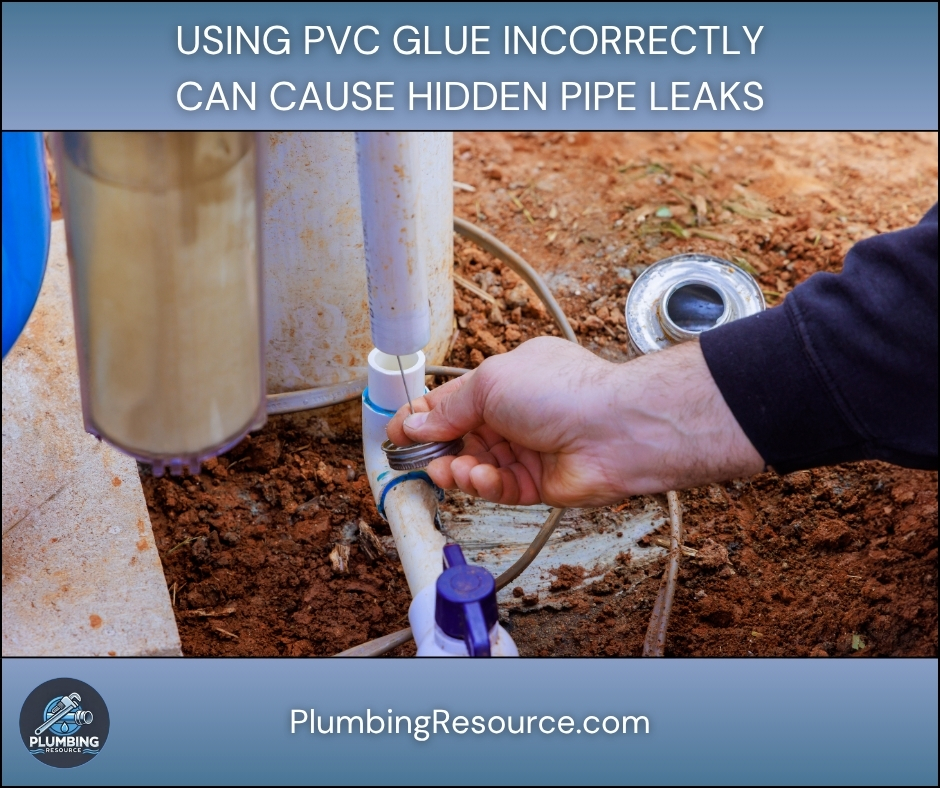
A homeowner replaces a section of PVC drain pipe under a bathroom sink. At first, everything seems fine. However, a few weeks later, the cabinet floor begins to swell and a musty odor fills the room.
Using PVC glue incorrectly can cause hidden pipe leaks that stay unnoticed for long periods. Although the pipe may appear secure from the outside, the connection inside the fitting may already be failing.
Because PVC piping is common in modern homes, many homeowners assume the installation process is simple. Unfortunately, rushed repairs and improper glue application can quietly damage the plumbing system over time.
❌ Why Homeowners Make This Mistake
Many people believe PVC glue works instantly. Therefore, they often run water through the pipes before the connection fully cures.
Additionally, homeowners frequently underestimate the importance of proper preparation. Some skip primer, while others fail to clean the pipe surface before applying cement.
Online tutorials also contribute to the problem. Although many videos make PVC installation look easy, they often leave out critical details about cure time and proper fitting alignment.
Some homeowners even use old PVC cement that has partially dried out. As a result, the bond inside the pipe fitting becomes weak and unreliable.
🔍 What Happens Inside the Plumbing System
Using PVC glue incorrectly can cause hidden pipe leaks because PVC cement creates a chemical weld between the pipe and fitting.
Unlike ordinary glue, PVC cement softens the pipe walls and fuses the materials together. However, improper installation prevents that bond from forming correctly.
If the pipe surface contains moisture, dirt, or grease, the cement may not adhere properly. Likewise, uneven glue application can create weak areas inside the connection.
Sometimes the pipe shifts slightly while curing. Consequently, tiny gaps or stress fractures may develop around the joint.
Over time, water slowly escapes through these weak points. In drain systems, wastewater can leak behind walls, under cabinets, or beneath flooring materials.
Additionally, improperly glued fittings may partially separate under pressure changes inside the plumbing system.
⚠️ Early Warning Signs Most People Miss
Many PVC leaks begin very slowly. Therefore, homeowners often overlook the warning signs until major damage appears.
Watch for these common indicators:
- Musty smells near plumbing fixtures
- Soft or swollen cabinetry
- Water stains on drywall
- Damp flooring near sinks or tubs
- Mold growth around baseboards
- Bubbling paint or peeling texture
- Slow drain line performance
- Dripping sounds inside walls
Additionally, some leaks only appear during heavy fixture use. Because of this, the issue may seem inconsistent at first.
🛠️ Short-Term Plumbing Problems
Improper PVC glue application can quickly create plumbing problems throughout the home.
First, small leaks may form around pipe fittings and drain connections. Although the leak may appear minor, moisture can spread rapidly into hidden spaces.
Next, weak pipe joints may loosen during normal plumbing use. Consequently, homeowners may experience sudden water leaks under sinks or behind walls.
Poorly cured joints can also fail when exposed to water pressure changes. For example, dishwasher discharge or washing machine drainage may stress weak fittings.
In addition, excess PVC cement can create buildup inside the pipe walls. Therefore, wastewater flow may slow down over time.
💸 Long-Term Damage This Can Cause
Using PVC glue incorrectly can cause hidden pipe leaks that eventually lead to expensive structural repairs.
Constant moisture exposure can rot framing lumber, damage insulation, and weaken subfloors. Additionally, mold may spread behind walls and inside cabinetry.
Slow wastewater leaks can also contaminate surrounding materials. Consequently, homeowners may face extensive cleanup and remediation costs.
Long-term plumbing damage may include:
- Mold remediation expenses
- Subfloor replacement
- Cabinet damage
- Structural wood rot
- Sewer odors inside the home
- Pipe separation failures
- Damaged drywall and insulation
- Foundation moisture problems
Because these leaks remain hidden, the total repair cost often becomes severe before discovery.
🚫 Common Myths and Bad Advice
“PVC Glue Dries Instantly”
Many homeowners believe the connection becomes safe immediately. However, proper cure time is critical for a strong bond.
“Primer Is Not Necessary”
Some people skip primer to save time. Unfortunately, this can weaken the solvent weld and shorten pipe life.
“More Glue Creates a Better Seal”
Excess cement can actually damage the fitting connection and create internal restrictions inside the drain line.
“If It Doesn’t Leak Right Away, It’s Fine”
Many PVC failures develop slowly. Therefore, hidden pipe leaks may not appear for weeks or months.
“Any PVC Cement Works the Same”
Different plumbing systems require specific cement products. For example, pressure piping may require different materials than drain systems.
✅ The Correct Way to Handle the Situation
Proper PVC installation starts with careful pipe preparation.
First, cut the pipe evenly and remove burrs from the edges. Then, dry-fit the connection to verify proper alignment.
Next, clean the pipe and fitting thoroughly. Dirt or moisture can interfere with the chemical bonding process.
Apply primer evenly if required by local plumbing code. Afterward, apply an even coat of fresh PVC cement to both surfaces.
Insert the pipe fully into the fitting while twisting slightly. Then, hold the connection firmly to prevent movement during bonding.
Most importantly, allow proper cure time before using the plumbing system. Cure time depends on:
- Pipe size
- Temperature
- Humidity
- Water pressure
- Cement type
Additionally, always follow the manufacturer’s instructions carefully.
👨🏻🔧 DIY vs When to Call a Licensed Plumber
Some small PVC repairs are manageable for homeowners. However, larger plumbing projects often require professional experience.
Safe DIY projects may include:
- Replacing exposed sink drain piping
- Installing simple condensate lines
- Replacing accessible trap assemblies
Call a licensed plumber when:
- Pipes are hidden inside walls
- Sewer lines are involved
- Water damage is already visible
- Mold growth is present
- Pipe alignment issues exist
- Repeated leaks continue appearing
- Pressure piping requires repair
Professional plumbers also pressure test the plumbing system to verify proper sealing and operation.
🧰 Prevention Tips That Actually Work
These practical habits help prevent failed PVC joints and hidden leaks:
- Always use fresh PVC cement
- Follow cure times carefully
- Keep pipe surfaces clean and dry
- Use the proper primer and cement
- Avoid rushing plumbing repairs
- Support piping properly
- Test joints before closing walls
- Avoid excessive glue application
- Inspect exposed fittings regularly
- Replace damaged fittings immediately
Additionally, homeowners should avoid performing rushed plumbing repairs late at night or during emergency situations whenever possible.
❓ FAQ
Can using PVC glue incorrectly cause leaks months later?
Yes. Weak PVC joints may temporarily hold before eventually separating or developing cracks under pressure.
How long should PVC glue cure before running water?
Cure time varies based on pipe size, temperature, humidity, and pressure conditions. Therefore, always follow manufacturer guidelines.
What happens if PVC glue is applied unevenly?
Uneven cement application can create weak bonding areas that eventually allow water or wastewater leakage.
Can hidden PVC leaks cause mold growth?
Yes. Slow leaks behind walls or under flooring often create ideal conditions for mold development.
Is primer required for all PVC plumbing repairs?
Many plumbing codes require primer because it improves bonding strength and connection durability.
✅ Conclusion
Using PVC glue incorrectly can cause hidden pipe leaks that slowly damage your home from the inside out. Although PVC repairs may seem simple, improper preparation and rushed cure times can create serious plumbing problems later.
Fortunately, careful installation practices greatly reduce the risk of failure. Additionally, recognizing early warning signs can help homeowners avoid expensive water damage repairs.
A properly installed PVC joint should remain durable for many years. Therefore, taking extra time during plumbing repairs is always worth the effort.
👋🏼 Before You Go…
If you found this article helpful, save it for future plumbing projects and share it with someone who handles DIY plumbing repairs. Small PVC installation mistakes can lead to major hidden water damage, so proper technique truly matters.