A homeowner installs a brand-new bathroom faucet during a weekend remodel. Everything appears perfect at first. However, several weeks later, a musty smell develops beneath the sink cabinet. Eventually, the cabinet floor begins swelling, and water stains appear along the baseboard.
This situation is extremely common. Fixture installation mistakes that cause hidden water damage often start with small installation errors that homeowners never notice. Although the fixture may appear functional, hidden leaks can slowly damage cabinets, walls, flooring, and the plumbing system itself.
❌ Why Homeowners Make This Mistake
Many homeowners assume plumbing fixtures are simple to install. Therefore, they skip important installation instructions and rely only on appearance during the final check.
Unfortunately, modern plumbing fixtures contain seals, gaskets, cartridges, mounting hardware, and drainage components that must install correctly. Even small mistakes can allow water to escape slowly over time.
Homeowners commonly believe:
- Tightening fittings harder prevents leaks
- All faucets install the same way
- Minor dripping is harmless
- Caulking fixes every issue
- Online videos replace manufacturer instructions
In addition, many people reuse old supply lines, drain assemblies, or shut-off valves during fixture replacement projects. Consequently, hidden plumbing problems often develop shortly afterward.
🔍 What Happens Inside the Plumbing System
Fixture installation mistakes that cause hidden water damage usually begin in concealed areas behind cabinets, walls, or fixtures.
For example, an improperly aligned sink drain may allow wastewater to leak slowly into the vanity cabinet. Similarly, a loose faucet connection can create small pressure leaks each time the fixture operates.
Inside the plumbing system, these problems often affect:
- Supply lines
- Drain lines
- Fixture seals
- Pipe threads
- Wastewater connections
- Shut-off valves
- Pipe walls
- Mounting surfaces
Over time, repeated moisture exposure weakens surrounding materials. Therefore, wood begins swelling, metal components corrode, and mold growth accelerates.
Incorrect fixture installation can also create pressure imbalances or poor drainage performance. As a result, water may back up into areas homeowners cannot easily see.
⚠️ Early Warning Signs Most People Miss
Hidden plumbing leaks often develop gradually. Because of this, homeowners may overlook the early warning signs.
Common warning signs include:
Musty Odors Near Fixtures
Persistent moisture frequently causes mildew or mold odors beneath sinks or near plumbing fixtures.
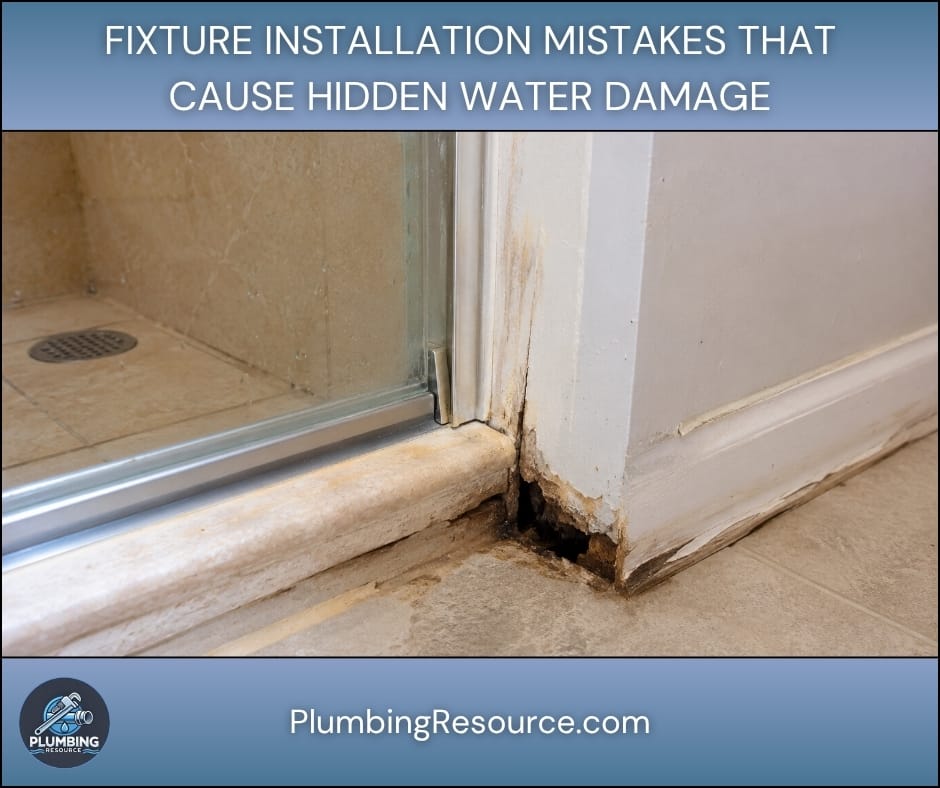
Soft or Swollen Cabinets
Water damage often causes vanity cabinets and surrounding materials to swell or soften.
Loose Fixtures
Improperly secured faucets or fixtures may begin wobbling over time.
Water Stains or Discoloration
Yellow stains around fixtures, walls, or ceilings can indicate hidden leaks.
Slow Drainage
Improper drain assembly installation may restrict wastewater flow inside the drain line.
Increased Water Bills
Even small fixture leaks can waste significant amounts of water over several months.
Unfortunately, many homeowners ignore these symptoms until larger plumbing repairs become necessary.
🛠️ Short-Term Plumbing Problems
Fixture installation mistakes create several immediate plumbing issues.
Small Fixture Leaks
Loose fittings, damaged gaskets, or improperly sealed connections often create slow water leaks.
Drain Line Leaks
Incorrect drain assembly alignment may allow wastewater leakage beneath sinks or tubs.
Fixture Movement
Poor mounting support can stress water supply lines and weaken plumbing connections.
Corrosion Around Fittings
Persistent moisture exposure accelerates corrosion around shut-off valves and threaded fittings.
Reduced Fixture Performance
Incorrect installation sometimes affects water flow, pressure balance, or drainage speed.
Initially, these issues may seem minor. However, they often indicate larger hidden plumbing damage developing behind the scenes.
💸 Long-Term Damage This Can Cause
Fixture installation mistakes that cause hidden water damage can become extremely expensive over time.
Structural Water Damage
Repeated moisture exposure can damage subfloors, framing, drywall, and cabinetry.
Mold and Mildew Growth
Hidden plumbing leaks create ideal conditions for mold development. Consequently, indoor air quality problems may develop.
Plumbing System Corrosion
Continuous leaks gradually damage pipe walls, fittings, and shut-off valves.
Sewer and Wastewater Problems
Improper fixture drainage may contribute to buildup, blockage formation, or wastewater backups.
Expensive Renovation Repairs
Long-term water damage may require:
- Cabinet replacement
- Drywall repairs
- Flooring replacement
- Mold remediation
- Drain line repairs
- Fixture replacement
In severe situations, hidden water damage can spread far beyond the original fixture location.
🚫 Common Myths and Bad Advice
Many homeowners unknowingly follow poor plumbing advice online.
“If It Doesn’t Leak Immediately, It’s Fine”
Some leaks take weeks or months to appear. Therefore, successful short-term testing does not guarantee proper installation.
“More Caulk Solves Everything”
Caulk may temporarily hide leaks while water continues damaging surrounding materials underneath.
“All Fixture Parts Are Universal”
Different fixtures use different mounting systems, seals, and drainage designs.
“DIY Videos Replace Manufacturer Instructions”
Online tutorials often ignore plumbing code requirements and manufacturer-specific installation procedures.
“Hand Tight Is Always Enough”
Some plumbing connections require precise tightening specifications to seal correctly.
✅ The Correct Way to Handle the Situation
Proper fixture installation requires careful attention to manufacturer instructions and plumbing system compatibility.
Homeowners should always:
- Read installation specifications completely
- Replace aging supply lines
- Inspect shut-off valves
- Verify drain alignment
- Use proper sealing materials
- Test fixtures thoroughly
- Check for leaks under pressure
- Inspect surrounding areas after installation
In addition, fixtures should never require excessive force during assembly. Proper alignment is critical for preventing hidden water damage.
Professional plumbers also verify drainage performance, venting conditions, and water pressure during installation.
👨🏻🔧 DIY vs When to Call a Licensed Plumber
Some basic fixture replacements are manageable for experienced homeowners. However, more complicated installations may require professional equipment and plumbing knowledge.
Safe DIY Tasks
Homeowners can often safely perform:
- Faucet replacements
- Showerhead installation
- Supply line replacement
- Minor fixture adjustments
When to Call a Licensed Plumber
Professional plumbing service is recommended when:
- Walls must be opened
- Shower valves require replacement
- Drain lines need modification
- Leaks continue after installation
- Water pressure issues exist
- Corrosion is present
- Plumbing code requirements apply
Licensed plumbers also perform pressure testing and leak inspections that help identify hidden plumbing system issues early.
🧰 Prevention Tips That Actually Work
Preventing hidden fixture leaks starts with proper installation habits.
Helpful prevention methods include:
- Follow manufacturer installation instructions carefully
- Avoid overtightening fittings
- Replace old shut-off valves during fixture upgrades
- Use proper plumbing sealants
- Inspect fixtures periodically for moisture
- Test all drain assemblies thoroughly
- Monitor cabinets and surrounding walls for staining
- Address small leaks immediately
- Schedule periodic plumbing inspections
In addition, homeowners should avoid rushing plumbing projects. Careful installation prevents expensive water damage later.
❓ FAQ
Can fixture installation mistakes cause hidden leaks?
Yes. Improper installation often creates slow leaks behind walls, beneath cabinets, or around fixtures.
What fixtures commonly cause hidden water damage?
Faucets, shower valves, toilets, sink drains, and tub fixtures commonly develop hidden leaks when installed incorrectly.
How long can hidden plumbing leaks go unnoticed?
Some plumbing leaks remain hidden for months or even years before visible damage appears.
Can small fixture leaks lead to mold growth?
Yes. Persistent moisture exposure creates ideal conditions for mold and mildew development.
Should homeowners always follow manufacturer fixture instructions?
Absolutely. Manufacturer specifications help prevent plumbing failures, water damage, and fixture performance issues.
✅ Conclusion
Fixture installation mistakes that cause hidden water damage often begin with small errors that seem harmless initially. However, slow leaks inside cabinets, walls, and drain assemblies can create serious plumbing and structural problems over time.
Therefore, homeowners should always follow manufacturer specifications carefully, inspect plumbing fixtures regularly, and address small leaks before larger damage develops. Proper installation protects both the plumbing system and the home itself.
👋🏼 Before You Go…
If you found this guide helpful, save it for future plumbing projects and share it with other homeowners. Understanding how hidden plumbing damage develops can help prevent expensive repairs later.