A homeowner notices a foul sewer smell under the bathroom sink. At first, the odor comes and goes. However, over time, the sink begins draining slowly, and strange gurgling noises develop inside the drain line.
Eventually, water starts leaking beneath the cabinet. After removing a few items under the sink, the homeowner discovers the P-trap was installed backwards years earlier.
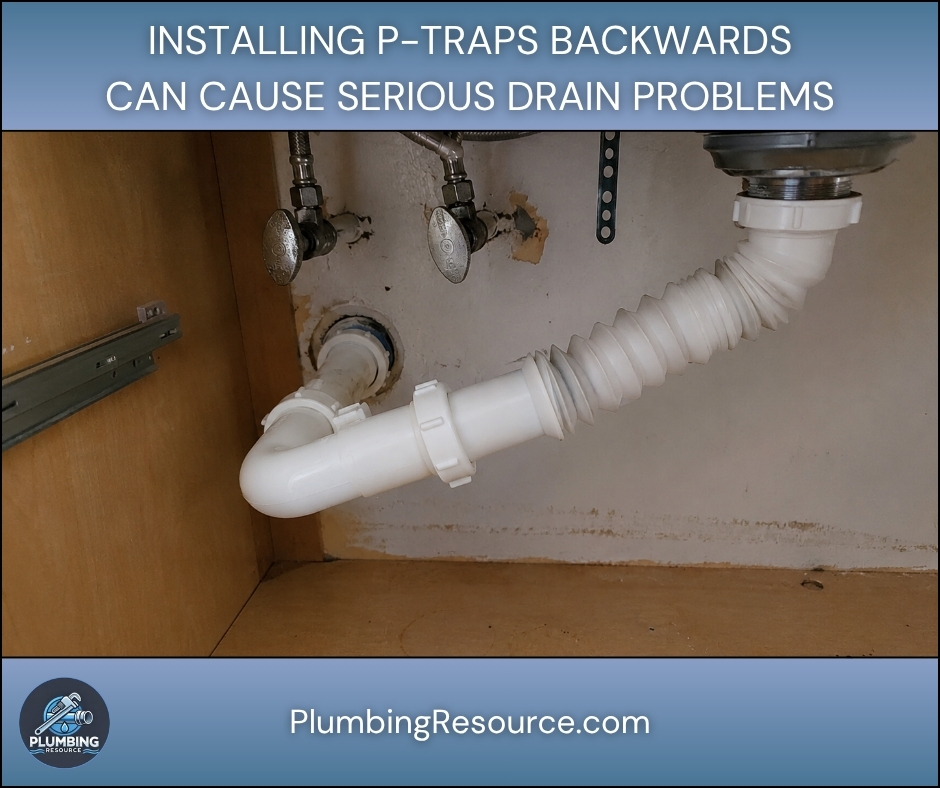
Installing P-traps backwards can cause serious drain problems because the trap cannot hold or direct wastewater properly. As a result, the plumbing system slowly develops drainage issues, sewer gas odors, buildup, and hidden damage.
❌ Why Homeowners Make This Mistake
Many homeowners assume all P-traps are symmetrical. Therefore, they believe the direction of installation does not matter.
Additionally, some DIY videos oversimplify drain assembly. As a result, people often focus only on stopping leaks instead of maintaining proper drain flow and venting performance.
In some cases, homeowners also reuse old trap components that do not fit correctly. Consequently, they force the trap into awkward positions or incorrect angles just to make the connections line up.
Unfortunately, this mistake often looks fine at first. However, the hidden problems usually develop slowly inside the plumbing system.
🔍 What Happens Inside the Plumbing System
A properly installed P-trap creates a water seal that blocks sewer gases from entering the home. Additionally, it helps wastewater flow smoothly into the drain line.
However, installing P-traps backwards changes how water moves through the trap.
The short side and long side of the trap are designed for specific flow directions. When reversed, the drain flow becomes restricted. Consequently, wastewater slows down and debris begins collecting along the pipe walls.
Over time, buildup forms inside the trap. Then, grease, soap residue, hair, and debris create partial blockages that worsen drainage performance.
In addition, improper trap angles can affect venting performance. As a result, air movement inside the plumbing system becomes unstable. This often leads to gurgling drains and sewer gas odors.
If the trap arm angle is incorrect, standing wastewater may also remain trapped in sections of pipe. Therefore, corrosion, odors, and bacterial growth can increase inside the drain system.
⚠️ Early Warning Signs Most People Miss
Installing P-traps backwards can cause serious drain problems long before a major plumbing failure appears.
Homeowners often miss these early symptoms because they seem minor at first.
Common warning signs include:
- Slow-draining sinks
- Sewer odors under fixtures
- Gurgling drain sounds
- Water backing up briefly
- Frequent clogs
- Dripping slip-joint connections
- Black buildup inside the trap
- Moisture under bathroom cabinets
Additionally, some homeowners notice foul odors during hot weather. This happens because sewer gases become stronger as temperatures rise.
🛠️ Short-Term Plumbing Problems
At first, the problems may appear small. However, they usually continue worsening.
A backwards P-trap often causes repeated clogs because debris cannot move efficiently through the trap bend. Consequently, homeowners may constantly use plungers or chemical drain cleaners.
In addition, incorrect trap alignment places stress on slip-joint connections. Therefore, leaks can develop around washers and threaded fittings.
Some fixtures may also drain inconsistently. For example, the sink may drain normally one day and slowly the next.
Furthermore, improper trap installation can allow sewer gases to bypass the water seal under certain conditions.
💸 Long-Term Damage This Can Cause
Installing P-traps backwards can cause serious drain problems that eventually become expensive repairs.
Over time, recurring moisture under cabinets can damage wood, drywall, and flooring. Additionally, hidden leaks often create mold growth inside enclosed spaces.
Persistent sewer gas exposure may also create indoor air quality concerns. Although occasional odors seem harmless, long-term exposure can become unpleasant and unhealthy.
Repeated blockages can also place additional pressure on the drain line. Consequently, older pipe walls may weaken faster due to corrosion and buildup.
In severe cases, improper trap installation contributes to wastewater backups inside the home. This can lead to major cleanup costs and plumbing repairs.
Additionally, ongoing drainage problems may hide larger venting issues within the plumbing system.
🚫 Common Myths and Bad Advice
“If It Doesn’t Leak, It’s Installed Correctly”
This is one of the biggest plumbing myths. A drain assembly may remain watertight while still functioning improperly.
“P-Traps Work Either Direction”
This is false. P-traps are engineered for specific flow direction and venting performance.
“Chemical Drain Cleaners Will Fix the Problem”
Chemical cleaners may temporarily improve flow. However, they often damage pipe walls and seals over time.
“Flexible Accordion Drains Are Just as Good”
Many flexible drain kits collect debris quickly because their ridged interior traps buildup. Additionally, some installations violate plumbing code requirements.
“A Slight Backward Angle Doesn’t Matter”
Even small angle issues can affect drainage and trap performance. Therefore, proper slope and alignment are critical.
✅ The Correct Way to Handle the Situation
The best solution is correcting the trap installation completely.
First, the curved trap bend must face the correct direction. Then, the trap arm should slope properly toward the drain line.
Additionally, all components should align naturally without forcing connections together.
Proper P-trap installation should include:
- Correct trap orientation
- Proper trap arm slope
- Tight but not overtightened slip joints
- Secure vented drain connection
- Correct pipe sizing
- Smooth wastewater flow
Whenever possible, use quality trap assemblies instead of reusing damaged parts.
In addition, avoid creating sharp offsets or unnecessary bends beneath fixtures.
👨🏻🔧 DIY vs When to Call a Licensed Plumber
Homeowners can often replace simple sink P-traps safely if the installation is straightforward.
However, several situations require professional plumbing experience.
Call a licensed plumber if:
- Sewer odors continue after trap replacement
- Drainage problems affect multiple fixtures
- The drain line inside the wall is misaligned
- Pipe corrosion is visible
- Water damage already exists
- Venting issues are suspected
- Plumbing code corrections are needed
Additionally, licensed plumbers can inspect the entire drainage system for hidden issues that homeowners may overlook.
Professional equipment may also be necessary for diagnosing deeper drain line blockages or venting failures.
🧰 Prevention Tips That Actually Work
Preventing improper trap problems starts with correct installation habits.
Follow these practical tips:
- Always verify trap direction before tightening fittings
- Maintain proper drain slope
- Avoid flexible accordion drain kits
- Replace cracked washers immediately
- Inspect under-sink plumbing yearly
- Avoid overtightening plastic fittings
- Keep drain lines free of grease buildup
- Use proper fixture tailpiece alignment
- Correct leaks immediately
- Have recurring drain issues inspected professionally
Additionally, homeowners should periodically check for moisture or odors beneath sinks.
Early detection often prevents expensive structural damage later.
❓ FAQ
Can installing a P-trap backwards cause sewer gas smells?
Yes. Installing P-traps backwards can interfere with the water seal that blocks sewer gases from entering the home.
Why does my sink drain slowly after replacing the P-trap?
Improper P-trap installation, incorrect slope, or poor alignment may restrict wastewater flow inside the drain line.
Can a backwards P-trap cause leaks?
Yes. Incorrect trap positioning often stresses slip-joint connections, which can eventually lead to leaks.
Are flexible drain kits bad for plumbing systems?
Many flexible accordion drains collect debris quickly because their ridged interior traps buildup and restricts wastewater flow.
When should a plumber inspect a P-trap problem?
You should call a licensed plumber if odors, recurring clogs, leaks, or drainage problems continue after replacing the trap.
✅ Conclusion
Installing P-traps backwards can cause serious drain problems that many homeowners never expect. Although the mistake may seem minor initially, the hidden consequences often grow worse over time.
Slow drainage, sewer odors, leaks, and wastewater buildup can all develop inside the plumbing system. Therefore, proper trap installation is critical for maintaining healthy drain performance.
Fortunately, early corrections and proper plumbing habits can prevent expensive repairs later. Additionally, regular inspections help catch small issues before they become major plumbing problems.
👋🏼 Before You Go…
If this article helped you understand how improper P-trap installation affects your plumbing system, save this page for later and share it with someone who may be dealing with drain problems or sewer odors.