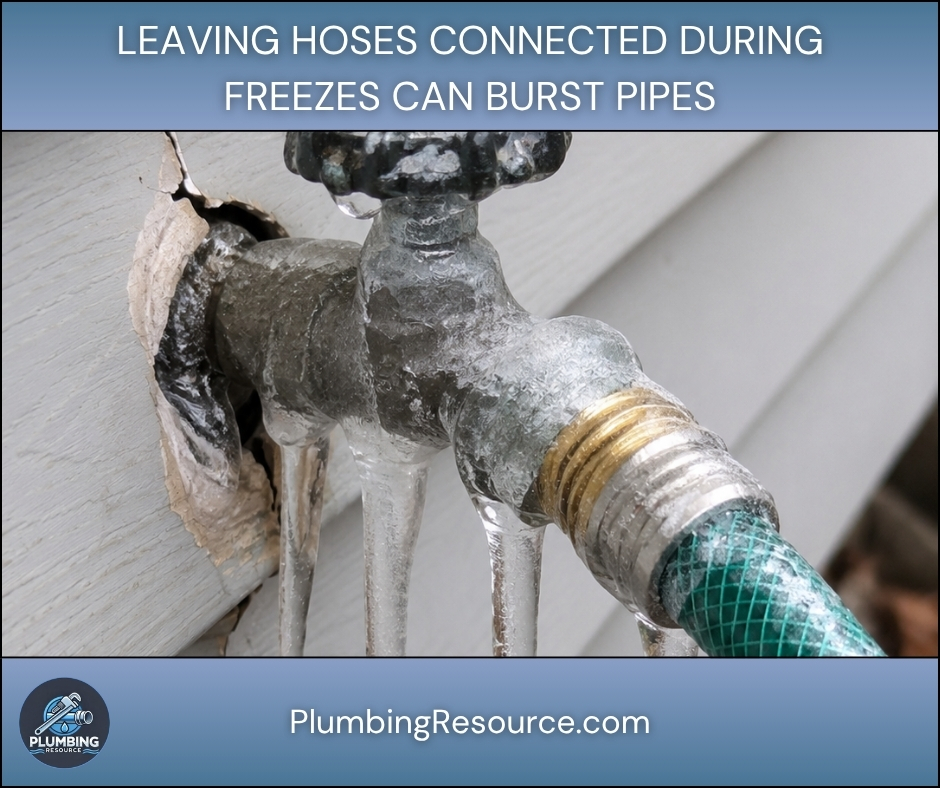
A homeowner leaves a garden hose connected overnight because the weather forecast only predicts a light freeze. The next morning, everything appears normal outside. However, a few days later, water begins leaking through the drywall near the exterior wall.
This problem happens more often than many homeowners realize. Leaving hoses connected during freezes can burst pipes because trapped water inside the hose bib and supply line expands as it freezes.
Unfortunately, the damage usually stays hidden until temperatures rise again. By then, water may already be soaking insulation, framing, and flooring materials inside the home.
❌ Why Homeowners Make This Mistake
Many homeowners assume outdoor faucets can handle freezing weather automatically. In addition, some people believe a connected hose will not affect the plumbing system.
Unfortunately, both assumptions are dangerous.
When a hose stays attached, water cannot properly drain from the outdoor faucet. Therefore, trapped water remains inside the hose bib and nearby water supply pipe.
Some homeowners also delay disconnecting hoses because daytime temperatures stay above freezing. However, overnight temperatures can still freeze standing water inside the plumbing system.
Internet advice sometimes adds confusion. For example, many people believe covering the faucet alone completely prevents freeze damage. While insulated covers help, they do not eliminate the risk if water remains trapped inside the hose connection.
🔍 What Happens Inside the Plumbing System
Water expands significantly when it freezes. As a result, pressure builds rapidly inside the outdoor faucet and connected pipe walls.
Normally, a disconnected hose allows water to drain more effectively from the fixture. However, a connected hose traps water inside the hose bib assembly.
As ice expands, pressure moves backward into the plumbing system. Consequently, copper pipe, PEX connections, galvanized pipe, and fittings may crack under the force.
In many cases, the actual burst pipe occurs inside the wall rather than at the visible outdoor faucet. This situation becomes especially dangerous because homeowners may not notice the damage immediately.
Once temperatures rise, pressurized water flows through the damaged section. Then, hidden leaks begin soaking drywall, insulation, wood framing, and flooring materials.
Over time, this moisture can also contribute to mold growth and structural deterioration.
⚠️ Early Warning Signs Most People Miss
Leaving hoses connected during freezes can burst pipes long before major flooding occurs.
Watch for these early warning signs:
- Dripping from the outdoor faucet
- Reduced water pressure
- Water stains near exterior walls
- Bubbling paint or soft drywall
- Musty odors indoors
- Frost around the hose bib
- Cracks near the faucet connection
- Unexplained increases in water usage
- Damp flooring near exterior walls
Sometimes, homeowners only discover the problem after the pipe fully ruptures. Therefore, quick inspection after freezing weather is extremely important.
🛠️ Short-Term Plumbing Problems
The initial plumbing problems may seem minor. However, they often worsen quickly.
Leaking Outdoor Faucets
Freeze expansion can damage washers, seals, and threaded fittings inside the hose bib.
Reduced Water Flow
Ice buildup inside the water supply line can partially block flow to nearby fixtures.
Small Hidden Leaks
Minor pipe fractures may begin leaking slowly behind walls and ceilings.
Fixture Damage
Frozen water can also damage vacuum breakers, shutoff valves, and hose connections attached to the faucet.
💸 Long-Term Damage This Can Cause
Long-term freeze damage can become extremely expensive to repair.
Burst Pipes Inside Walls
The most serious issue involves hidden burst pipes. Once water pressure returns, damaged pipes may leak continuously inside wall cavities.
Structural Water Damage
Moisture exposure can weaken framing, insulation, drywall, and subfloor materials. Over time, structural repairs may become necessary.
Mold and Mildew Growth
Dark and damp areas inside walls create ideal conditions for mold growth. Consequently, indoor air quality problems may develop.
Corrosion and Plumbing System Wear
Repeated freeze expansion can weaken fittings, valves, and pipe walls throughout the plumbing system.
Expensive Emergency Repairs
Emergency plumbing repairs, drywall replacement, and water remediation costs can rise quickly after freeze damage spreads.
🚫 Common Myths and Bad Advice
Several myths continue causing winter plumbing damage every year.
“A Small Freeze Cannot Burst Pipes”
Even a brief overnight freeze can damage vulnerable water lines.
“Frost-Free Faucets Never Freeze”
Frost-free hose bibs reduce risk. However, they can still freeze if hoses remain connected.
“Dripping Faucets Fully Prevent Freeze Damage”
Dripping indoor fixtures may reduce pressure buildup slightly. Nevertheless, trapped water inside connected hoses can still freeze.
“Outdoor Faucet Covers Solve Everything”
Insulated covers help protect fixtures. However, they work best when hoses are fully disconnected first.
“Only Older Homes Have This Problem”
Newer homes can also experience freeze damage, especially if exterior plumbing lacks proper insulation.
✅ The Correct Way to Handle the Situation
Preventing burst pipes during freezing weather is relatively simple.
Disconnect Garden Hoses
Always remove hoses before freezing temperatures arrive. This step allows the hose bib to drain properly.
Drain Outdoor Faucets
After disconnecting the hose, open the faucet fully and let remaining water drain out.
Install Frost-Free Hose Bibs
Modern frost-free faucets place the shutoff valve deeper inside the insulated wall area.
Use Proper Insulation
Exterior plumbing pipes should have adequate insulation in vulnerable areas.
Shut Off Outdoor Water Supplies
Some homes include dedicated shutoff valves for outdoor faucets. During severe freezes, shutting off these lines provides extra protection.
👨🏻🔧 DIY vs When to Call a Licensed Plumber
Some freeze prevention steps are safe for homeowners. However, major plumbing damage requires professional repair.
DIY Tasks Homeowners Can Handle
- Disconnecting hoses
- Installing faucet covers
- Draining hose bibs
- Monitoring for leaks
- Inspecting visible fixtures
When to Call a Licensed Plumber
Contact a licensed plumber if you notice:
- Burst pipes
- Water leaking inside walls
- Major pressure loss
- Frozen water lines
- Water stains or mold
- Cracked hose bibs
- Damaged plumbing fittings
Professional plumbers may use pressure testing, leak detection tools, and thermal imaging equipment to locate hidden damage.
🧰 Prevention Tips That Actually Work
These simple habits can greatly reduce freeze-related plumbing problems.
Disconnect Hoses Before Winter
Do not wait until a freeze warning arrives. Instead, disconnect hoses early in the season.
Inspect Hose Bibs Regularly
Check outdoor faucets for corrosion, cracks, and leaking connections.
Protect Vulnerable Plumbing
Use insulation and faucet covers to protect exposed fixtures during cold weather.
Seal Exterior Air Leaks
Cold air entering wall cavities increases freeze risk around plumbing pipes.
Monitor Weather Forecasts Closely
Rapid temperature drops create some of the highest risks for burst pipes.
Test Exterior Shutoff Valves
Outdoor shutoff valves should operate properly before winter weather begins.
❓ FAQ
Can leaving a hose connected really burst pipes?
Yes. Leaving hoses connected during freezes can burst pipes because trapped water expands as it freezes inside the hose bib and supply line.
Why do pipes burst after temperatures rise again?
The pipe usually cracks during freezing weather. However, leaking often starts after ice thaws and water pressure returns.
Are frost-free outdoor faucets completely safe?
No. Frost-free faucets still require hoses to be disconnected before freezing weather.
What temperature can freeze outdoor plumbing pipes?
Pipes can begin freezing when temperatures stay below 32°F, especially during extended cold periods.
How do I know if a pipe burst inside my wall?
Watch for water stains, bubbling paint, musty odors, warped drywall, or unexplained moisture near exterior walls.
✅ Conclusion
Leaving hoses connected during freezes can burst pipes and create expensive plumbing damage inside walls, ceilings, and flooring. Unfortunately, many homeowners do not notice the problem until water damage has already spread throughout the home.
Fortunately, prevention is simple and highly effective. Disconnecting hoses, draining outdoor faucets, and protecting vulnerable plumbing components can greatly reduce freeze-related risks.
Small winter plumbing habits today can prevent major repairs later.
👋🏼 Before You Go…
If you found this guide helpful, save it for future winter preparation. Also, share it with friends and family members who may not realize how easily frozen outdoor hoses can damage a plumbing system.