A bathroom sink starts draining slowly, so you grab a drain snake and try clearing the clog yourself. At first, the drain appears to work better. However, several weeks later, you notice foul odors, recurring backups, or water stains near a wall.
Many homeowners never realize that drain snake mistakes that damage pipes can create hidden plumbing problems inside the drainage system. Although drain snakes can remove blockages, improper use can quietly damage pipe walls, fittings, and drain connections.
Unfortunately, what starts as a simple clog can eventually turn into expensive plumbing repairs.
❌ Why Homeowners Make This Mistake
Many homeowners believe drain snakes are harmless tools. Because small hand augers are sold in hardware stores, people often assume they are completely safe for every plumbing system.
Additionally, online videos sometimes oversimplify drain cleaning. As a result, homeowners may force cables aggressively through drain lines without understanding the condition of the pipes.
Older plumbing systems create even greater risks. For example, aging cast iron pipes, brittle ABS piping, weakened PVC joints, and corroded galvanized drain lines are far more vulnerable to damage.
Some homeowners also believe stronger force removes tougher clogs faster. Unfortunately, excessive force often creates drain snake mistakes that damage pipes and worsen plumbing problems.
🔍 What Happens Inside the Plumbing System
Drain Snake Mistakes That Damage Pipes Internally
Drain snakes use rotating metal cables to break through blockages. However, improper technique can cause the cable to scrape aggressively against the inside of the drain line.
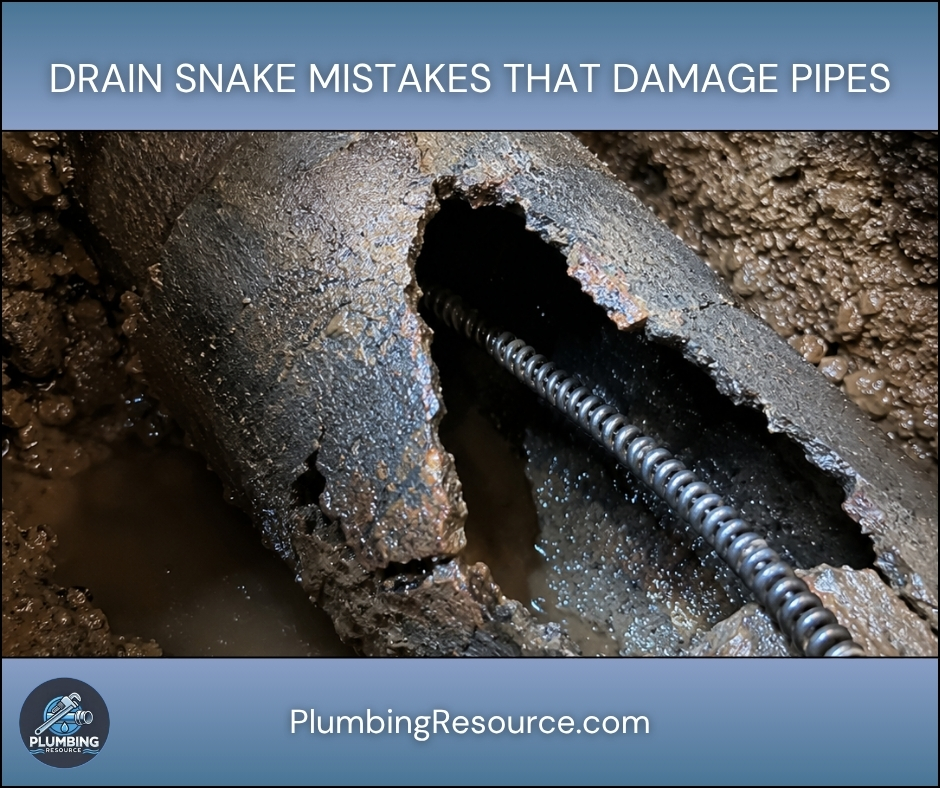
Inside older cast iron pipes, the cable may remove weakened material and worsen corrosion. Over time, rough pipe walls collect more buildup, grease, debris, and wastewater residue.
Additionally, aggressive snaking may loosen hidden fittings behind walls or under floors. In severe cases, the cable may puncture weakened drain pipes entirely.
Drain Snake Mistakes That Damage Pipes Near Fittings
Drain lines contain bends, traps, vent connections, and fittings. Therefore, forcing a cable through tight turns can create excessive stress inside the plumbing system.
When a cable binds suddenly, it may whip violently against the pipe walls. Plastic fittings and older joints are especially vulnerable to cracking during this process.
Power drain snakes create even greater risks. If used improperly, they can damage fixtures, loosen pipe connections, or crack drain lines hidden behind walls.
⚠️ Early Warning Signs Most People Miss
Small Signs of Drain Snake Pipe Damage
Many symptoms develop gradually. Because of this, homeowners often overlook the warning signs until serious damage occurs.
Common early indicators include:
- Slow drains returning shortly after cleaning
- Gurgling sounds inside fixtures
- Recurring drain backups
- Sewer odors near sinks or tubs
- Water stains near walls or cabinets
- Black residue around drain openings
- Minor leaks under fixtures
Additionally, repeated clogs may indicate roughened pipe walls caused by drain snake damage.
Plumbing Problems That Quietly Get Worse
Sometimes the drain works temporarily after snaking. However, small cracks or loosened joints may continue leaking wastewater slowly behind walls or beneath floors.
As moisture spreads, mold growth and structural damage can develop silently over time.
🛠️ Short-Term Plumbing Problems
Drain snake mistakes that damage pipes can create immediate plumbing issues throughout the home.
Short-term problems may include:
- Scratched pipe interiors
- Broken fixture traps
- Loosened drain fittings
- Damaged cleanout caps
- Slow wastewater flow
- Recurring drain clogs
- Leaking drain connections
Additionally, drain snakes sometimes become stuck inside the pipe. When this happens, removing the cable often requires professional plumbing equipment.
Power augers can also damage porcelain fixtures. Toilets and sinks may crack if the cable strikes the fixture repeatedly during operation.
💸 Long-Term Damage This Can Cause
Drain Snake Mistakes That Damage Pipes Long Term
Long-term plumbing damage can become extremely expensive. Although the original clog may seem minor, damaged drain lines often worsen gradually over time.
Possible long-term consequences include:
- Slab leaks
- Sewer line failure
- Mold growth
- Structural wood rot
- Water damage behind walls
- Foundation moisture problems
- Collapsed drain lines
- Major sewer backups
Additionally, damaged pipe walls collect buildup more easily. Grease, soap residue, wastewater solids, and debris cling to rough surfaces inside the plumbing system.
As a result, homeowners often experience recurring clogs and worsening drainage problems.
Sewer Line Damage Can Escalate Quickly
If older sewer lines become damaged during aggressive snaking, outside soil may eventually shift into weakened sections of pipe.
Tree roots may also penetrate damaged drain lines more easily. Once roots enter the pipe, severe blockages and sewage backups often follow.
🚫 Common Myths and Bad Advice
“If the Drain Clears, Everything Is Fine”
Many homeowners assume successful drainage means no damage occurred. Unfortunately, drain snake mistakes that damage pipes may remain hidden for months.
A pipe can still function while cracks or weakened fittings continue worsening slowly.
“Bigger Drain Snakes Work Better”
Larger cables are not always safer. In fact, oversized drain snakes often create more stress inside smaller drain lines.
Using the wrong cable size increases the risk of damaging fittings and pipe walls.
“More Force Removes Tougher Clogs”
Aggressive force frequently worsens plumbing problems. If the cable stops moving, forcing it may crack fittings or damage the drain line.
Professional plumbers usually inspect difficult blockages carefully instead of forcing equipment blindly through the plumbing system.
“Chemical Cleaners and Snakes Work Better Together”
Chemical drain cleaners may weaken pipe materials before snaking occurs. Additionally, chemical residue can splash back during drain cleaning and create safety hazards.
✅ The Correct Way to Handle the Situation
Safer Ways to Avoid Drain Snake Mistakes That Damage Pipes
Homeowners should begin with safer drain maintenance methods before using drain snakes aggressively.
Helpful approaches include:
- Using sink strainers consistently
- Removing visible debris manually
- Flushing drains properly when appropriate
- Avoiding grease disposal into drains
- Using enzyme-based drain maintenance products
Additionally, understanding the pipe material inside the home is extremely important. Older plumbing systems often require specialized care.
Professional Drain Cleaning Methods
Licensed plumbers often use sewer cameras before aggressive drain cleaning. This allows them to identify collapsed pipes, corrosion, root intrusion, offsets, or broken fittings safely.
Hydro jetting may also provide safer drain cleaning in certain situations. However, the pipe condition should always be evaluated first.
👨🏻🔧 DIY vs When to Call a Licensed Plumber
DIY Drain Cleaning Situations
Homeowners can usually handle:
- Minor hair clogs near drain openings
- Basic sink trap cleaning
- Removing visible debris
- Simple preventive drain maintenance
Small hand augers may work safely for minor clogs when used gently and correctly.
When Professional Plumbing Equipment Is Needed
Call a licensed plumber if you notice:
- Repeated drain backups
- Sewer odors
- Multiple clogged fixtures
- Water stains
- Gurgling drains
- Slow drainage throughout the home
- Resistance deep inside the line
Professional plumbers use sewer cameras, locating equipment, commercial cable machines, and inspection tools to reduce the risk of damage.
Additionally, plumbing code concerns may apply if damaged drain lines require replacement.
🧰 Prevention Tips That Actually Work
Prevent Drain Snake Mistakes That Damage Pipes
Simple maintenance habits can protect the plumbing system long term.
Helpful prevention methods include:
- Avoid flushing wipes or paper towels
- Keep grease out of kitchen drains
- Address slow drains early
- Avoid excessive force with drain tools
- Schedule routine plumbing inspections
- Learn the pipe material in your home
- Use drain strainers regularly
Additionally, older homes benefit greatly from periodic sewer camera inspections.
Routine Maintenance Protects Drain Lines
Preventive maintenance reduces emergency plumbing repairs significantly. Therefore, proper drain habits often save homeowners thousands of dollars over time.
❓ FAQ
Can a drain snake really damage pipes?
Yes. Improper drain snake use can scratch, crack, loosen, or puncture drain pipes, especially in older plumbing systems.
What pipes are most vulnerable to drain snake damage?
Older cast iron, corroded galvanized pipes, brittle ABS piping, and weakened PVC drain lines are especially vulnerable.
How do I know if a drain snake damaged my pipes?
Common signs include recurring clogs, sewer odors, leaks, gurgling drains, and water stains near walls or floors.
Are power drain snakes dangerous for homeowners?
They can be. Power drain snakes may damage pipes or fixtures if used incorrectly or with excessive force.
Is hydro jetting safer than snaking?
Sometimes. However, plumbers should inspect the pipe condition first because damaged drain lines may not handle hydro jetting safely.
✅ Conclusion
Drain snake mistakes that damage pipes are more common than many homeowners realize. Although drain snakes can clear clogs temporarily, improper use may quietly damage the plumbing system over time.
Fortunately, understanding the risks can help prevent expensive repairs. Safe drain habits, proper maintenance, and early inspections protect drain lines from long-term damage.
Additionally, knowing when to stop DIY drain cleaning and call a licensed plumber can prevent major plumbing failures later.
👋🏼 Before You Go…
If this article helped you understand drain snake mistakes that damage pipes, save it for future reference and share it with someone dealing with recurring drain problems. Small plumbing mistakes today can become expensive repairs tomorrow.