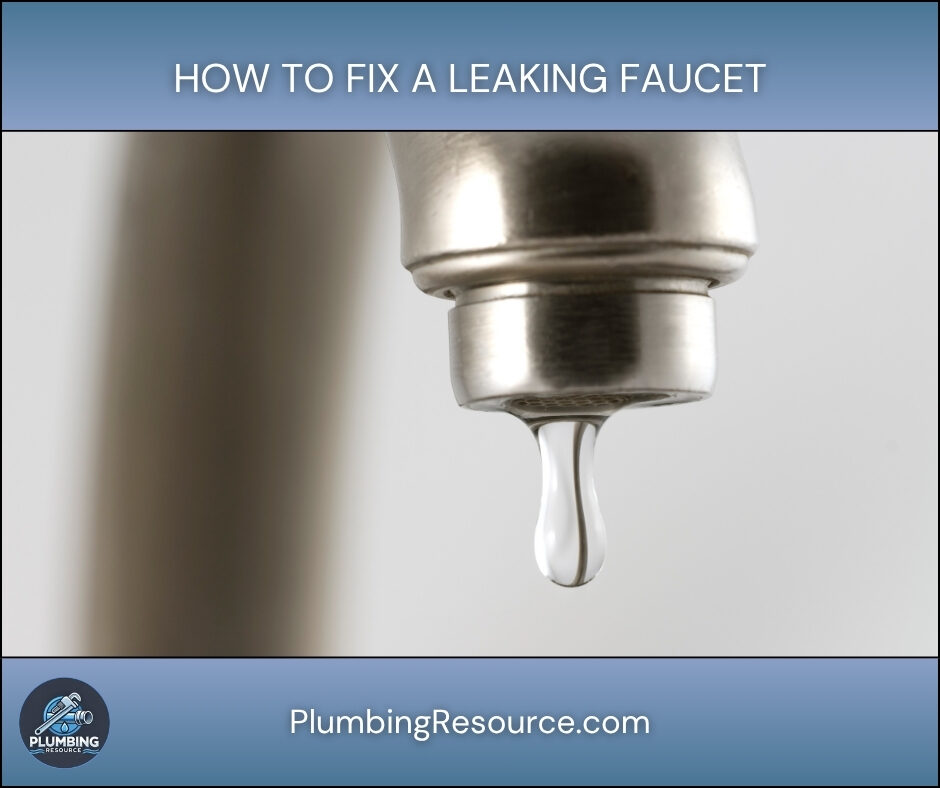
If you want to learn how to fix a leaking faucet, you’re dealing with one of the most common plumbing problems in any home. A dripping faucet may seem minor; however, it can waste water, increase your utility bill, and eventually damage faucet components over time. Fortunately, once you understand the repair process, fixing the issue becomes much easier and can usually be completed with basic tools.
🔍 Understanding the Project
A leaking faucet typically happens because internal components wear down over time. For example, washers, cartridges, O-rings, and valve seats can slowly deteriorate from regular use. In addition, mineral buildup and corrosion may damage the faucet’s internal sealing surfaces.
Common warning signs include:
- Constant dripping from the spout
- Water leaking around the handle
- Moisture under the sink
- Squeaking or stiff faucet handles
If you ignore the problem, the leak can worsen over time. As a result, you may experience higher water bills, water damage, or premature faucet failure. Therefore, learning how to fix a leaking faucet early can help prevent more expensive repairs later.
🧰 Tools & Materials
Before starting, gather the proper tools. This way, the repair process will be smoother and more efficient.
You’ll need:
- Adjustable wrench
- Screwdrivers (Phillips and flathead)
- Allen/hex keys
- Replacement parts (cartridge, washer, or O-rings)
- Plumber’s grease
- Clean rags or towels
- Small container for parts
Having everything ready ahead of time helps you stay focused and avoid delays.
🛠️ Step-by-Step Guide: How To Fix a Leaking Faucet
1️⃣ 🔍 Identify the Source of the Leak
To begin, determine exactly where the faucet leak is coming from. Otherwise, you may replace the wrong component.
- Spout dripping: Usually a worn washer or cartridge
- Handle leaking: Often caused by damaged O-rings
- Leak under the sink: Typically a loose or worn connection
Once you identify the problem, the repair becomes much more straightforward.
2️⃣ 🚫 Shut Off the Water Supply
Next, turn off the water before disassembling anything. Otherwise, water can spray out unexpectedly.
Follow these steps:
- Locate the shutoff valves under the sink
- Turn them clockwise until fully closed
- Then, open the faucet to release pressure
This ensures a safe and controlled working environment.
3️⃣ 🛠️ Repair the Faucet Based on Type
Now that you’re prepared, you can move forward with the repair. However, the exact steps depend on the faucet type. Check out our guide How to Identify Your Faucet Type so you can follow the correct steps.
🔹 Cartridge Faucet Repair
Remove the handle. Then, pull out the cartridge and replace it with a matching part. Finally, reassemble the faucet and test it.
🔹 Compression Faucet (Washer Replacement)
Remove the stem. After that, replace the rubber washer and inspect the valve seat for wear.
🔹 Ball Valve Faucet Fix
In this case, replace the springs and rubber seats. Additionally, inspect the ball for damage and replace it if needed.
🔹 Ceramic Disc Faucet Service
Remove the cartridge. Then, clean it thoroughly or replace it if necessary.
⚠️ Common Mistakes
Although faucet repair is manageable, mistakes can still happen. Therefore, avoid these common issues:
- Overtightening components
- Installing incorrect replacement parts
- Forgetting to shut off the water
- Skipping lubrication on seals
- Ignoring corrosion or mineral buildup
💡 Pro Tips
To improve your results, follow these professional tips:
- Bring old parts to the store for exact matching
- Replace worn parts early before leaks worsen
- Use plumber’s grease to extend seal life
- Keep screws and small parts organized during disassembly
🔧 Troubleshooting
If the faucet still leaks after the repair, consider these possibilities:
- The replacement part is incorrect
- The cartridge is misaligned
- The valve seat is damaged
- Mineral buildup remains inside the faucet
In some cases, older faucets may need full replacement instead of repair.
👨🏻🔧 When to Call a Professional
Although many leaks are simple to fix, some situations require professional help.
Consider calling a plumber if:
- Shutoff valves do not work
- Pipes are corroded
- The faucet body is cracked
- Leaks continue after replacing parts
- Water damage is visible under cabinets
❓ FAQ
How do I know which part is causing the faucet leak?
The leak location usually identifies the issue. For example, dripping from the spout often points to a worn cartridge or washer.
Can I fix a dripping faucet without replacing the faucet?
Yes. In most cases, learning how to fix a leaking faucet only requires replacing small internal parts.
Why is my faucet still dripping after replacing the cartridge?
The cartridge may be installed incorrectly, or the valve seat could also be damaged.
How long does faucet repair take?
Most faucet repairs take between 20 and 45 minutes, depending on the faucet style and condition.
✅ Conclusion
Now that you understand how to fix a leaking faucet, you can confidently handle one of the most common household plumbing problems. By repairing the leak early, you can save water, prevent damage, and extend the life of your faucet.
👋🏼 Before You Go…
If you found this guide helpful, save this page for future repairs and share it with someone dealing with a dripping faucet. A simple repair today can prevent a much bigger plumbing problem tomorrow.