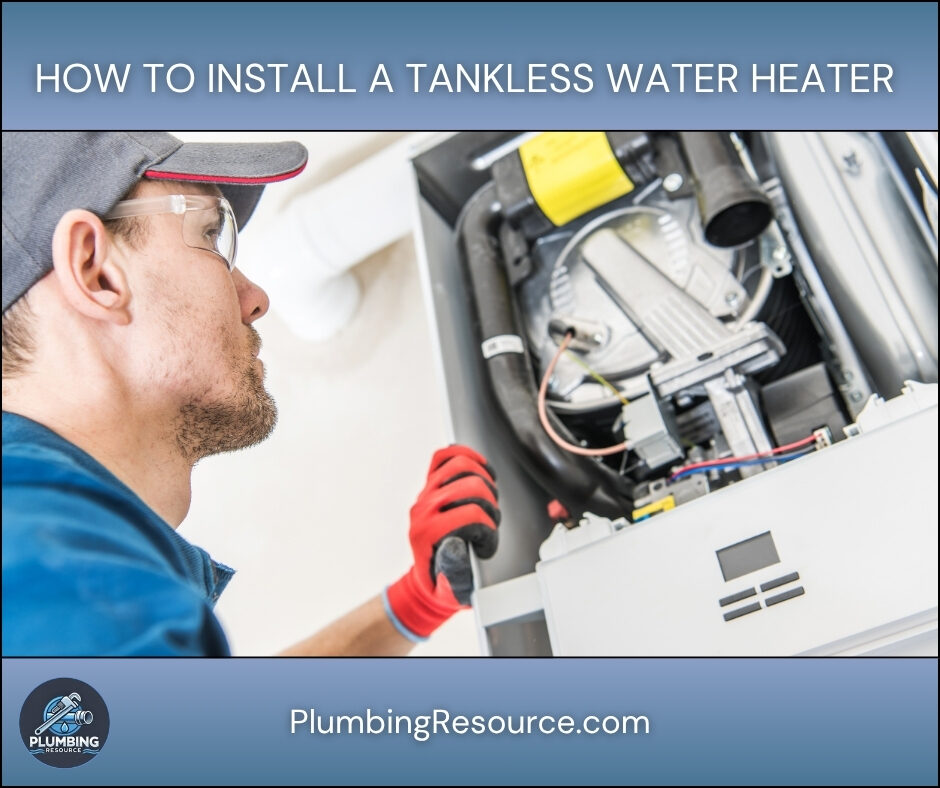
Installing a tankless water heater can improve energy efficiency and provide endless hot water throughout your home. However, proper planning matters because tankless systems require the correct gas supply, electrical setup, venting, and water connections. In this guide, you will learn how to install a tankless water heater step by step while avoiding common installation mistakes.
🔍 Understanding the Project
A tankless water heater heats water only when you need it. Therefore, it does not store hot water in a large tank like traditional water heaters. Instead, cold water passes through a heat exchanger that instantly heats the water before it reaches your fixtures.
Proper installation matters because tankless systems demand precise sizing and utility connections. For example, an undersized gas line can prevent the heater from operating correctly. In addition, improper venting can create dangerous exhaust problems and poor performance.
Before starting, you should verify:
- Fuel type compatibility
- Available electrical capacity
- Gas line sizing
- Venting requirements
- Water pressure conditions
- Installation clearances
- Local plumbing and gas code requirements
Many homeowners also underestimate the installation complexity. Because of this, planning the project carefully can prevent expensive corrections later.
🧰 Tools & Materials
- Tankless water heater
- Pipe wrenches
- Adjustable wrenches
- Channel-lock pliers
- Drill and drill bits
- Stud finder
- Level
- Screwdrivers
- Copper pipe or PEX tubing
- Tubing cutter
- PEX Cutter
- Coper fittings or PEX fittings
- Water shutoff valves
- Isolation valve kit
- Gas piping and fittings
- Pipe thread sealant
- Vent pipe and fittings
- PVC or stainless vent components
- Condensate drain tubing
- Electrical wire and connectors
- Circuit breaker
- Mounting screws and anchors
- Leak detection solution
- Teflon tape
- Safety glasses
- Gloves
🛠️ Step-By-Step Guide: How To Install a Tankless Water Heater
1️⃣ Choose the Correct Tankless Water Heater
First, determine whether you need a gas or electric tankless water heater.
Gas units usually provide higher flow rates. Therefore, they work better for larger homes with multiple fixtures running at the same time. Electric units are smaller and simpler, although they often require major electrical upgrades.
Next, calculate your required gallons per minute (GPM). Add the flow rates of fixtures that may operate simultaneously.
For example:
- Shower = 2.0 GPM
- Kitchen sink = 1.5 GPM
- Washing machine = 2.0 GPM
This setup would require at least 5.5 GPM.
You must also calculate the temperature rise based on your incoming groundwater temperature and desired hot water temperature.
2️⃣ Check Local Codes and Permit Requirements
Before beginning the installation, contact your local building department.
Many cities require:
- Plumbing permits
- Gas permits
- Electrical permits
- Final inspections
In addition, some manufacturers require professional installation to maintain warranty coverage. Therefore, always verify the requirements before purchasing materials.
3️⃣ Shut Off Utilities
Turn off all utilities connected to the old water heater.
For gas units:
- Shut off the gas valve
- Turn off electrical power if applicable
For electric units:
- Turn off the dedicated breaker
- Verify power is off with a voltage tester
Next, shut off the cold-water supply valve feeding the old water heater.
4️⃣ Drain and Remove the Existing Water Heater
Connect a garden hose to the drain valve on the old tank water heater.
Then:
- Open a nearby hot water faucet
- Open the drain valve
- Allow the tank to fully drain
After draining:
- Disconnect the water lines
- Disconnect the vent pipe
- Disconnect the gas or electrical connections
Because old tanks can remain heavy even when drained, use a dolly when moving the unit.
5️⃣ Select the Installation Location
Choose a location that meets the manufacturer’s clearance requirements.
The location should provide:
- Easy access for maintenance
- Proper vent routing
- Adequate combustion air
- Freeze protection
- Sufficient wall support
Most indoor units mount in:
- Garages
- Utility rooms
- Basements
- Mechanical closets
Outdoor-rated models may mount outside if local weather conditions allow it.
6️⃣ Mount the Tankless Water Heater
Use a stud finder to locate wall studs.
Then:
- Mark mounting locations
- Drill pilot holes
- Install mounting screws or anchors
- Hang the unit securely
Use a level to ensure the heater sits straight. Because vibration can loosen hardware over time, tighten all mounting fasteners securely.
7️⃣ Install the Water Connections
Install isolation valves on both the hot and cold connections. These valves simplify future maintenance and flushing procedures.
Next:
- Connect the cold-water inlet
- Connect the hot-water outlet
- Secure all piping properly
Copper piping is common near the heater because high temperatures can affect some materials. However, many installations transition to PEX further away from the unit.
Always follow local plumbing code requirements for approved piping materials.
8️⃣ Install the Pressure Relief Valve
Most tankless systems require a pressure relief valve.
Install the valve according to the manufacturer’s instructions. Then run the discharge pipe downward to an approved location.
The discharge line should:
- Remain unobstructed
- Point downward
- Avoid threaded ends
- Terminate near a drain or approved location
9️⃣ Connect the Gas Line
Gas tankless water heaters require significant fuel volume. Therefore, many older gas lines are too small.
Check the manufacturer’s BTU requirements carefully.
Then:
- Install a dedicated gas shutoff valve
- Install a sediment trap
- Connect the gas piping
- Use approved gas-rated sealant
After completing the connections, test every joint using leak detection solution.
Never use an open flame to test for gas leaks.
1️⃣0️⃣ Install the Venting System
Tankless gas water heaters require specific vent materials.
Depending on the model, approved venting may include:
- PVC
- CPVC
- Polypropylene
- Stainless steel
Follow all vent length limitations from the manufacturer.
Then:
- Install vent pipe supports
- Maintain proper pitch
- Seal wall penetrations
- Install intake and exhaust terminations
Improper venting can cause combustion issues and shutdown errors. Therefore, never substitute unapproved vent materials.
1️⃣1️⃣ Connect Electrical Power
Even gas tankless water heaters require electrical power for controls and ignition.
Connect the unit to the required electrical circuit.
For electric tankless units:
- Install the required breakers
- Run properly sized wire
- Follow all electrical code requirements
Because electric tankless heaters draw high amperage, many homes require panel upgrades.
1️⃣2️⃣ Install the Condensate Drain
High-efficiency condensing tankless units produce acidic condensate.
Install:
- Condensate tubing
- Neutralizer if required
- Proper drainage routing
The drain line should slope continuously downward to prevent backups.
1️⃣3️⃣ Flush the System Before Startup
Before operating the heater:
- Open the cold-water supply
- Purge air from the lines
- Open several hot water fixtures
This process removes debris and trapped air from the system.
Next, inspect all water connections for leaks.
1️⃣4️⃣ Start the Tankless Water Heater
Turn on:
- Water supply
- Gas supply
- Electrical power
Then follow the manufacturer’s startup procedure.
Set the desired outlet temperature, which is commonly 120°F for residential systems.
Run hot water fixtures to confirm operation.
Check:
- Water temperature
- Error codes
- Gas leaks
- Water leaks
- Vent operation
1️⃣5️⃣ Test System Performance
Finally, verify the system performs correctly under normal household demand.
Run multiple fixtures simultaneously and confirm:
- Stable hot water
- Proper pressure
- Consistent temperature
- No unusual noises
If temperature fluctuates, you may have:
- Incorrect sizing
- Flow restriction
- Improper gas supply
- Venting problems
⚠️ Common Mistakes
- Installing an undersized gas line
- Ignoring vent length limits
- Skipping isolation valves
- Using incorrect vent materials
- Mounting the unit without proper support
- Failing to flush the lines
- Overlooking electrical requirements
- Installing the wrong heater size
- Forgetting condensate drainage
- Ignoring local code requirements
💡 Pro Tips
- Install a water softener in hard water areas.
- Use a manufacturer isolation valve kit.
- Label shutoff valves for easier servicing.
- Insulate hot water lines to reduce heat loss.
- Keep the installation manual near the heater.
- Schedule annual flushing maintenance.
- Install a sediment filter if your water contains debris.
🔧 Troubleshooting
No Hot Water
Check:
- Gas supply
- Electrical power
- Water flow rate
- Error codes
Fluctuating Temperature
Possible causes include:
- Clogged inlet filter
- Undersized unit
- Improper gas pressure
- Cross connection in plumbing
Heater Shuts Down
This may result from:
- Vent blockage
- Overheating
- Low gas pressure
- Condensate backup
Low Water Pressure
Inspect:
- Isolation valves
- Water filters
- Scale buildup
- Pipe restrictions
👨🏻🔧 When to Call a Professional
You should contact a licensed plumber or gas professional if:
- You must modify gas piping
- Your electrical panel requires upgrades
- Vent routing becomes complicated
- Local codes require licensed installation
- You see recurring error codes
- You smell gas during installation
- The heater will not ignite
Professional installation may also help maintain manufacturer warranties.
❓ FAQ
How long does tankless water heater installation take?
Most installations take one full day. However, complex gas, venting, or electrical upgrades may extend the project.
Can you replace a tank water heater with a tankless system?
Yes, many homeowners replace tank systems with tankless units. However, gas line and venting upgrades are often necessary.
Do tankless water heaters need maintenance?
Yes. Tankless systems require regular flushing to remove mineral buildup, especially in hard water areas.
How much gas does a tankless water heater use?
Tankless units use high BTU input while operating. However, they usually save energy because they heat water only on demand.
Is electric or gas tankless water heater installation better?
Gas systems usually perform better for whole-house applications. Electric units work well for smaller homes or point-of-use installations.
✅ Conclusion
Learning how to install a tankless water heater can help you upgrade your home’s efficiency and hot water performance. However, successful installation requires careful planning, proper sizing, safe utility connections, and code-compliant venting. When installed correctly, a tankless system can provide reliable hot water for many years.
👋🏼 Before You Go…
If this guide helped you understand how to install a tankless water heater, save this page for future reference and share it with someone planning a water heater upgrade.