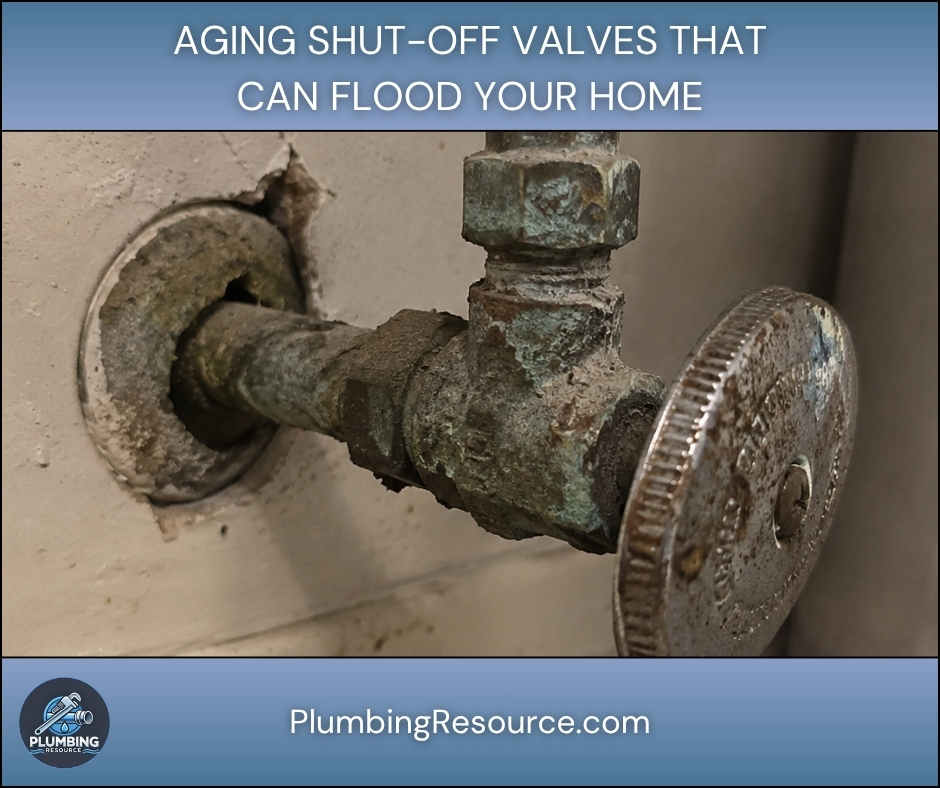
You decide to replace a bathroom faucet over the weekend. Everything seems simple at first. Therefore, you turn the shut-off valves under the sink to stop the water supply.
However, the old valve suddenly starts dripping when you turn it back on. Minutes later, the leak becomes a steady stream of water soaking the cabinet floor.
Aging shut-off valves that can flood your home are far more common than many homeowners realize. Because these valves often sit untouched for years, they slowly deteriorate inside the plumbing system without obvious warning signs.
❌ Why Homeowners Make This Mistake
Most homeowners rarely think about shut-off valves unless an emergency happens. As a result, these small plumbing components often get ignored for decades.
Many people also assume shut-off valves last forever because they appear simple and durable. However, constant water exposure slowly wears down the internal seals and moving parts.
In addition, older valves often remain hidden under sinks, behind toilets, or near fixtures where homeowners rarely inspect them.
Some homeowners also avoid touching older valves because they fear causing a leak. Unfortunately, leaving aging shut-off valves unused for years usually increases the risk of failure.
🔍 What Happens Inside the Plumbing System
Aging shut-off valves slowly break down from the inside out. Over time, mineral deposits collect inside the valve body due to hard water and normal water flow.
Eventually, corrosion begins forming around internal seals, stems, and threaded connections. Therefore, the valve may stop sealing correctly or become difficult to operate.
Older multi-turn valves are especially vulnerable because they contain rubber washers and moving components that wear out over time.
As corrosion spreads, the valve stem packing may weaken and allow water to seep around the handle. In addition, buildup inside the valve can restrict water flow to nearby fixtures.
When homeowners finally attempt to use the valve during a repair or emergency, the weakened parts may crack or fail completely under water pressure.
⚠️ Early Warning Signs Most People Miss
Aging shut-off valves that can flood your home usually show small warning signs before major failure occurs.
Corrosion Around the Valve
Green, white, or rust-colored buildup often signals moisture exposure and valve deterioration.
Stiff or Hard-to-Turn Handles
If the handle feels stuck, internal corrosion is likely developing inside the valve body.
Small Water Stains Under Fixtures
Tiny water marks under sinks or around toilets may indicate slow valve seepage.
Dripping Sounds Inside Cabinets
Small leaks can create faint dripping noises that homeowners often overlook.
Reduced Water Flow
Internal buildup may partially block the water supply line feeding the fixture.
🛠️ Short-Term Plumbing Problems
Failing shut-off valves can quickly create frustrating plumbing problems throughout the home.
For example, a leaking angle stop under a bathroom sink can damage cabinets within days. In addition, moisture may spread into nearby drywall and flooring.
A worn toilet shut-off valve may also fail to stop water flow during repairs. Therefore, even simple plumbing maintenance can become stressful and messy.
Some valves begin leaking only after being turned. As a result, homeowners may unknowingly trigger a hidden problem while attempting basic fixture work.
In severe cases, the valve body can crack suddenly and release pressurized water into the home.
💸 Long-Term Damage This Can Cause
Aging shut-off valves that can flood your home may eventually create major property damage.
Hidden leaks often damage:
- Cabinets
- Flooring
- Baseboards
- Drywall
- Wood framing
- Insulation
Over time, constant moisture can also lead to mold growth and poor indoor air quality.
In addition, leaking shut-off valves may weaken nearby pipe connections and supply lines. Therefore, the surrounding plumbing system becomes more vulnerable to additional leaks.
If water continues leaking unnoticed, structural wood rot may eventually develop behind walls and inside cabinets.
Some homeowners also face expensive emergency restoration costs after sudden valve failures flood bathrooms, kitchens, or laundry rooms.
🚫 Common Myths and Bad Advice
Many homeowners receive misleading advice about shut-off valves.
“If the Valve Isn’t Leaking, Leave It Alone”
Unused valves often become more likely to fail over time.
“All Shut-Off Valves Last Forever”
Like any plumbing component, valves eventually wear out and deteriorate.
“A Small Drip Is Harmless”
Even slow leaks can quietly cause major water damage over time.
“Spraying Lubricant Fixes the Problem”
Lubricants may loosen the handle temporarily. However, they do not repair internal corrosion or failing seals.
✅ The Correct Way to Handle the Situation
Homeowners should inspect shut-off valves regularly throughout the house.
Check valves located near:
- Toilets
- Bathroom sinks
- Kitchen sinks
- Washing machines
- Water heaters
- Refrigerators
In addition, carefully exercise the valves once or twice per year. Slowly turn them off and back on while checking for leaks around the stem and pipe connections.
Modern quarter-turn valves are usually more reliable than older multi-turn designs. Therefore, replacing aging valves proactively can reduce the risk of sudden flooding.
If corrosion, leaking, or stiffness appears, replacement is often the safest long-term solution.
👨🏻🔧 DIY vs When to Call a Licensed Plumber
Some shut-off valve tasks are safe for homeowners. However, others require professional plumbing experience.
Safe DIY Tasks
Homeowners can typically:
- Inspect visible valves
- Check for corrosion
- Monitor small leaks
- Test valve operation carefully
- Clean light surface buildup
When to Call a Licensed Plumber
Professional plumbing service is recommended when:
- The valve leaks around the stem
- The valve will not shut off completely
- Corrosion is severe
- The supply pipe is damaged
- Soldering is required
- Water pressure problems exist
- The valve body cracks or breaks
A licensed plumber can also inspect the surrounding plumbing system for hidden damage and weakened fittings.
🧰 Prevention Tips That Actually Work
Preventing aging shut-off valve problems starts with regular plumbing maintenance.
Exercise Valves Regularly
Turning valves periodically helps prevent mineral buildup and internal sticking.
Replace Old Multi-Turn Valves
Modern quarter-turn valves generally provide better long-term reliability.
Inspect Cabinets Frequently
Check under sinks for moisture, stains, or musty odors.
Address Small Leaks Immediately
Minor leaks often become expensive repairs if ignored.
Monitor Water Pressure
Excessive water pressure can increase stress on shut-off valves and pipe connections.
Know Your Main Water Shut-Off Location
Every homeowner should know how to quickly stop water flow during an emergency.
❓ FAQ
Why do aging shut-off valves fail?
Shut-off valves usually fail due to corrosion, mineral buildup, worn seals, and years of inactivity.
How long do shut-off valves last?
Many shut-off valves last 10 to 20 years depending on water quality, usage, and valve type.
Can an old shut-off valve suddenly burst?
Yes. Aging shut-off valves can crack or fail suddenly under water pressure, especially after being turned.
Should old shut-off valves be replaced proactively?
Many plumbers recommend replacing older valves before failure occurs, especially if corrosion or leaking is present.
Are quarter-turn shut-off valves better?
Quarter-turn valves are generally more reliable because they contain fewer moving parts than older multi-turn valves.
✅ Conclusion
Aging shut-off valves that can flood your home often remain unnoticed until serious water damage occurs. However, regular inspections and preventative maintenance can help homeowners avoid expensive plumbing emergencies.
Because shut-off valves sit quietly behind fixtures for years, many people overlook the warning signs of corrosion and deterioration. Therefore, even small leaks or stiff valve handles should never be ignored.
Replacing worn valves before they fail can protect your plumbing system, fixtures, cabinets, and flooring from costly water damage later.
👋🏼 Before You Go…
If you found this article helpful, save it for future reference and share it with other homeowners. Small plumbing components can create major problems when hidden warning signs get ignored.