You finish a small plumbing repair under the sink and turn the water back on. Everything looks fine at first, so you move on with your day. However, several days later, you notice a damp cabinet floor, a musty smell, or water stains nearby.
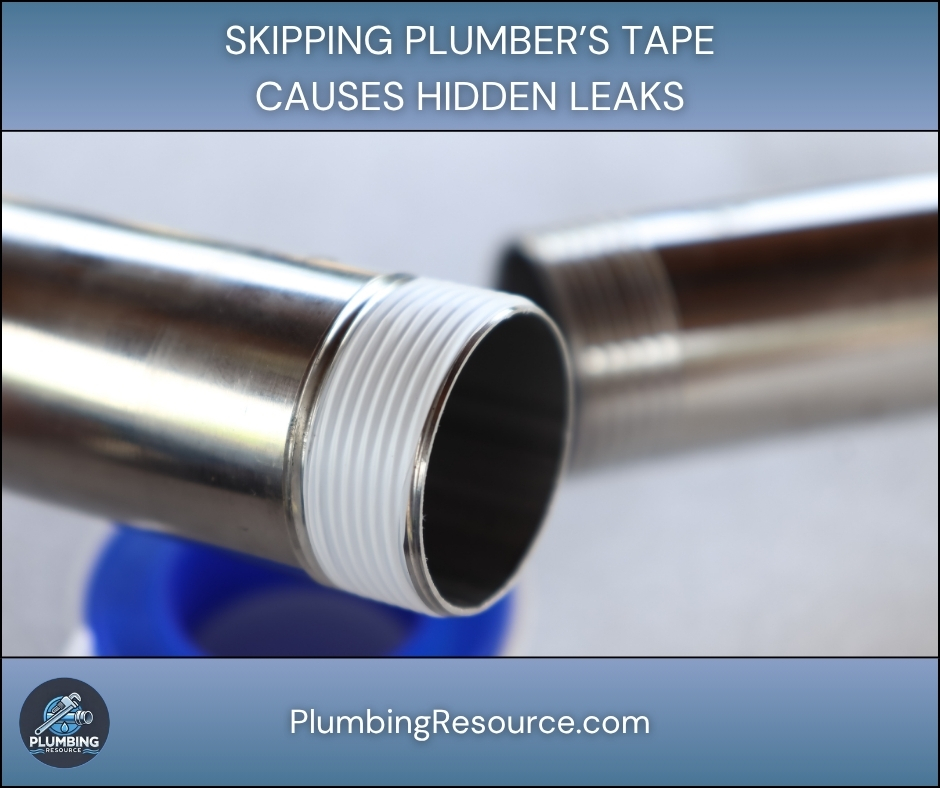
In many homes, Skipping Plumber’s Tape Causes Hidden Leaks that slowly damage the plumbing system over time. Although the threaded fitting may feel tight, tiny gaps inside the connection can still allow water to escape.
Unfortunately, many homeowners do not realize the leak exists until the damage becomes expensive.
❌ Why Homeowners Make This Mistake
Many DIY homeowners believe threaded plumbing fittings seal themselves when tightened. Because the connection feels secure, plumber’s tape often seems unnecessary.
In addition, some people assume overtightening the fitting will stop leaks. However, tightening alone usually does not seal microscopic gaps between the threads.
Internet tutorials also contribute to the problem. For example, quick DIY videos sometimes skip proper thread sealing steps entirely.
Some homeowners confuse plumber’s tape with glue or pipe cement. As a result, they either use the wrong product or skip sealing altogether.
🔍 What Happens Inside the Plumbing System
Threaded plumbing fittings contain small spaces between the male and female threads. Although those spaces are difficult to see, pressurized water can still move through them.
Plumber’s tape helps fill those tiny gaps while also helping the threads tighten smoothly. Without proper sealing, water slowly escapes around the threaded connection.
At first, the leak may only create a few drops of moisture. However, repeated exposure gradually damages nearby materials and plumbing components.
Inside the plumbing system, hidden leaks can contribute to:
- Corrosion around pipe threads
- Mineral buildup near fittings
- Moisture inside cabinets or walls
- Damage to surrounding fixtures
- Weakening of pipe connections
In drain or vent piping systems, poor thread sealing may also allow sewer odors to escape into the home.
⚠️ Early Warning Signs Most People Miss
Small threaded leaks often develop slowly. Therefore, homeowners may overlook the warning signs for months.
Common early symptoms include:
- Moisture around threaded fittings
- Water stains under sinks
- Musty odors near plumbing fixtures
- Corrosion on metal fittings
- Mineral residue around pipe joints
- Damp drywall or cabinetry
- Small dripping sounds inside walls
In some situations, the leak may only appear when a fixture is actively running. Because of this, intermittent leaks can remain hidden for long periods.
🛠️ Short-Term Plumbing Problems
At first, the damage from a small threaded leak may seem minor. However, even slow dripping creates plumbing problems quickly.
Short-term issues often include:
Cabinet and Fixture Damage
Water under sinks can damage cabinet materials, flooring, and nearby fixtures.
Corrosion Around Pipe Threads
Constant moisture accelerates rust and corrosion on threaded fittings.
Mold and Mildew Growth
Damp environments allow mold and mildew to begin forming surprisingly fast.
Increased Plumbing Maintenance
Leaking threaded fittings often require repeated tightening or repair attempts.
💸 Long-Term Damage This Can Cause
Over time, Skipping Plumber’s Tape Causes Hidden Leaks that become much more expensive to repair.
Structural Water Damage
Hidden leaks can soak drywall, framing, flooring, and insulation. Eventually, structural repairs may become necessary.
Pipe Failure
Corrosion weakens threaded fittings and pipe walls over time. As a result, larger plumbing failures may occur later.
Mold Problems
Long-term moisture inside walls or cabinets creates ideal conditions for mold growth. In addition, indoor air quality may suffer.
Sewer Odor Issues
Improperly sealed drain or vent fittings may allow sewer gases into the home.
Expensive Repair Costs
Small leaks can eventually require wall removal, flooring replacement, or major plumbing repairs.
🚫 Common Myths and Bad Advice
“Hand Tight Is Tight Enough”
Threaded fittings usually require proper sealing materials in addition to tightening.
“More Tightening Stops Leaks”
Overtightening can crack fittings or damage threads. Therefore, it often makes leaks worse.
“Plumber’s Tape Works on Every Connection”
Plumber’s tape is designed for threaded fittings. Compression fittings and glued joints require different sealing methods.
“Any Tape Will Work”
Only approved thread seal tape should be used for plumbing applications.
“A Small Drip Is Harmless”
Even slow leaks can create major hidden water damage over time.
✅ The Correct Way to Handle the Situation
Before assembling threaded plumbing connections, inspect the threads carefully for damage or debris.
Next, wrap plumber’s tape clockwise around the male threads. Typically, two to four wraps provide a reliable seal for most residential plumbing applications.
In addition, keep the tape tight and smooth during installation. Loose tape can bunch up and interfere with sealing.
Carefully thread the fitting together while avoiding cross-threading. Then, tighten the connection securely without overtightening.
For some plumbing systems, pipe dope may also be recommended along with plumber’s tape. However, always verify compatibility with the fitting material.
Finally, test the plumbing system thoroughly after completing the repair.
👨🏻🔧 DIY vs When to Call a Licensed Plumber
Some threaded plumbing repairs are manageable for homeowners. For example, replacing a shower arm or reconnecting exposed threaded fittings may be simple DIY projects.
However, a licensed plumber should be contacted when:
- Leaks occur inside walls
- Pipe threads are damaged
- Corrosion is severe
- Sewer odors are present
- Water damage has spread
- Gas piping is involved
- Specialized plumbing tools are required
Professional plumbers can also inspect the plumbing system for additional hidden leaks or code-related concerns.
🧰 Prevention Tips That Actually Work
Preventing threaded pipe leaks is much easier than repairing water damage later.
Use these practical prevention methods:
- Always use approved plumber’s tape on threaded fittings
- Wrap tape clockwise around male threads
- Avoid overtightening pipe connections
- Inspect plumbing repairs for moisture afterward
- Check under sinks regularly for leaks
- Replace corroded fittings early
- Use the correct fittings for the application
- Follow manufacturer installation instructions
- Schedule routine plumbing inspections
In addition, homeowners should monitor hidden plumbing areas regularly for moisture or unusual odors.
❓ FAQ
Can skipping plumber’s tape cause leaks immediately?
Yes. Some threaded fittings leak right away, while others develop slow leaks over time.
How many wraps of plumber’s tape should I use?
Most residential threaded fittings require two to four wraps for proper sealing.
Does plumber’s tape stop every plumbing leak?
No. Plumber’s tape only works on threaded fittings and connections.
Can overtightening threaded fittings cause damage?
Yes. Overtightening may crack fittings or damage pipe threads.
Why are hidden threaded leaks dangerous?
Hidden leaks can cause mold growth, water damage, corrosion, and expensive structural repairs.
✅ Conclusion
Small plumbing shortcuts often create major repair problems later. In many homes, Skipping Plumber’s Tape Causes Hidden Leaks that slowly damage cabinets, walls, flooring, and pipe connections.
Because threaded leaks usually develop gradually, homeowners may not notice the problem until expensive repairs become necessary.
Fortunately, proper thread sealing is simple and inexpensive. Therefore, taking a few extra minutes during plumbing repairs can help protect the entire plumbing system from hidden water damage.
👋🏼 Before You Go…
If you found this helpful, save this page for future plumbing projects. Also, share it with someone who enjoys DIY repairs because this small plumbing mistake causes expensive problems more often than most homeowners realize.